Randomized trialObstetrics & Gynecology · Jun 7, 2023

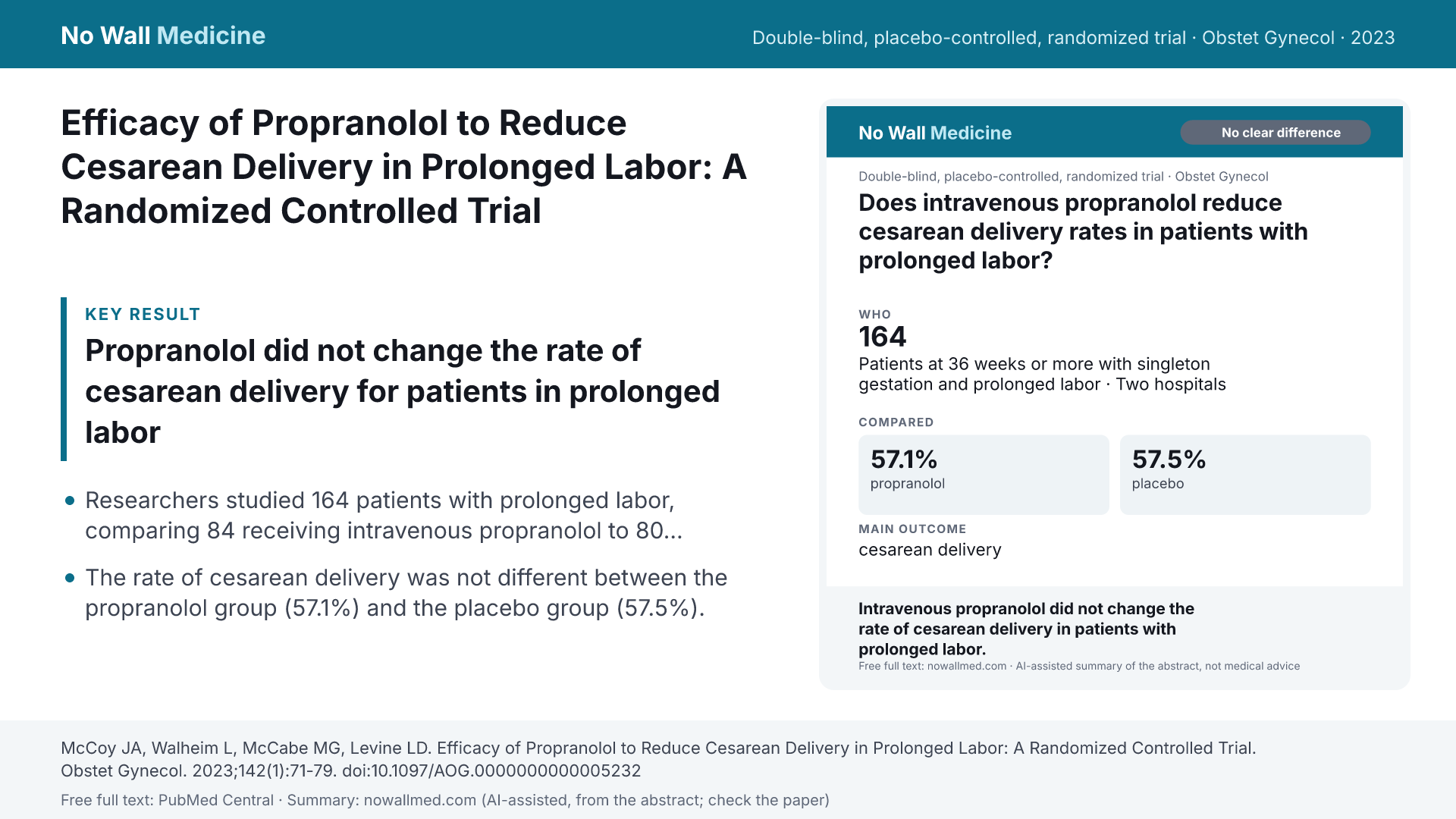
Propranolol did not change the rate of cesarean delivery for patients in prolonged labor

Efficacy of Propranolol to Reduce Cesarean Delivery in Prolonged Labor: A Randomized Controlled Trial

McCoy JA, Walheim L, McCabe MG, Levine LD
Obstetrics & GynecologyPediatric
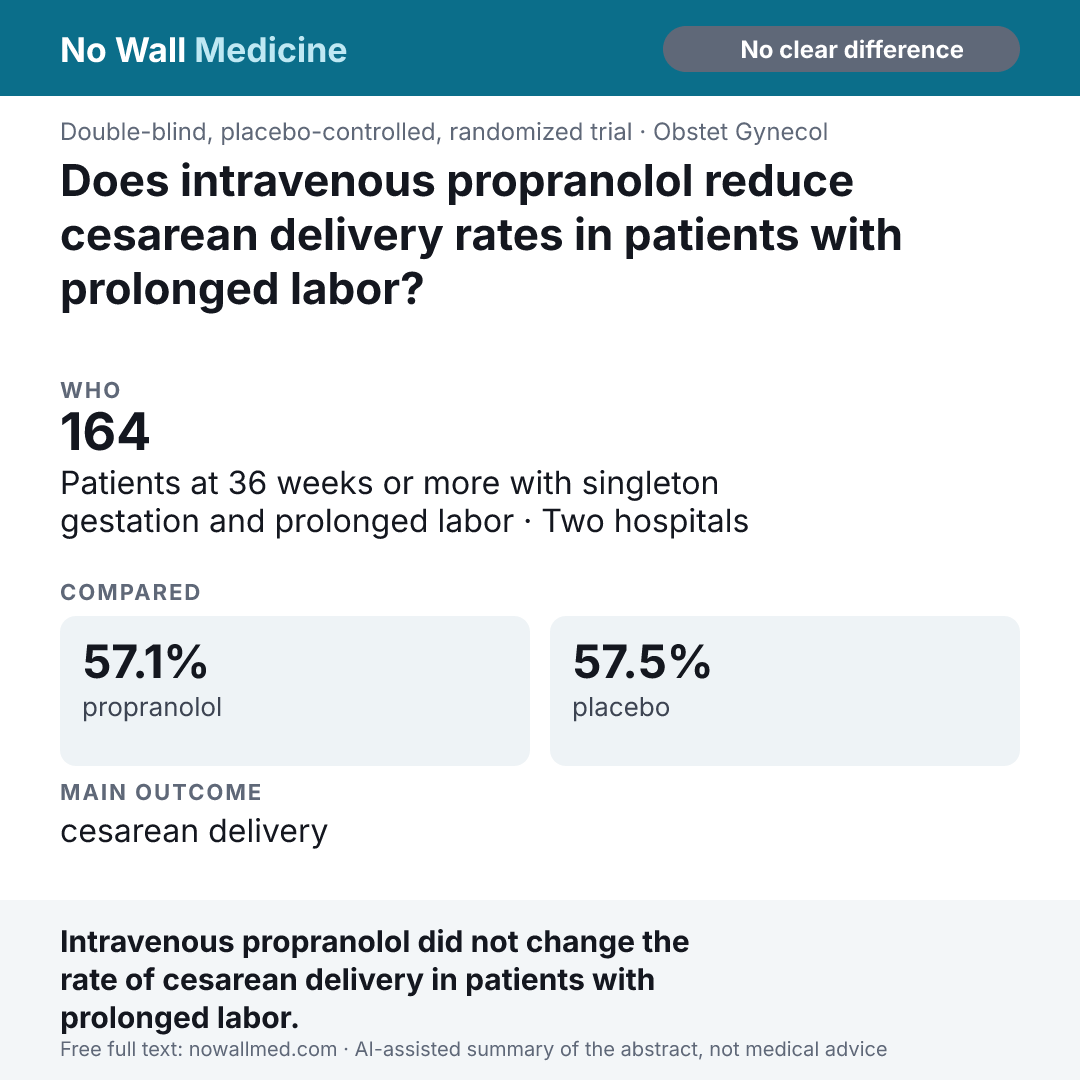
Double-blind, placebo-controlled, randomized trialNo clear difference
Does intravenous propranolol reduce cesarean delivery rates in patients with prolonged labor?
Who
164
Patients at 36 weeks or more with singleton gestation and prolonged labor · Two hospitals within a large academic health system
Compared
57.1%propranolol
57.5%placebo
Main outcome
cesarean delivery
Result: relative risk 0.99 (95% CI 0.76-1.29)
Bottom line: Intravenous propranolol did not change the rate of cesarean delivery in patients with prolonged labor.
Obstet Gynecol · 2023-06-07 · NCT04299438
Read the full paper free at PubMed Central ↗
Save PNG⬇ Slide🖨 Handout

Headline and visual abstract written with AI from the paper’s abstract, with every number checked against it. Read the paper before relying on them.

Was this summary helpful?

Subject terms

Pregnancy; Female; Infant, Newborn; Humans; Propranolol; Oxytocin; Cesarean Section; Labor, Obstetric; Postpartum Hemorrhage; Labor, Induced

DOI: 10.1097/AOG.0000000000005232 · PubMed: 37290102 · Registered: NCT04299438

Cite this article

McCoy JA, Walheim L, McCabe MG, Levine LD. Efficacy of Propranolol to Reduce Cesarean Delivery in Prolonged Labor: A Randomized Controlled Trial. Obstet Gynecol. 2023;142(1):71-79. doi:10.1097/AOG.0000000000005232

RIS (EndNote, Zotero, Mendeley)BibTeX

Spotted a mistake? Suggest a correction

Top Obstetrics & Gynecology studies every Monday

The week’s key trials and guidelines, free to read, in one short email. No account; unsubscribe in one click.

Choose specialties and topics

Similar articles

Meta-analysis · AJOG · Mar 18, 2025 · Pediatric · Obstetrics & Gynecology, Pediatrics

Stopping oxytocin during active labor was associated with lower rates of cesarean delivery

Secondary analysis of a trial · BJOG · Mar 10, 2022 · Obstetrics & Gynecology, Endocrinology & Diabetes

Obesity was associated with stronger uterine contractions but less frequent progression to active labor

Randomized trial · NEJM · Aug 9, 2018 · All ages · Obstetrics & Gynecology

Inducing labor at 39 weeks lowered cesarean rates in low-risk first-time mothers

Secondary analysis of a trial n = 194 · BJOG · Nov 30, 2021 · Obstetrics & Gynecology

Higher uterine pressure was associated with successful vaginal birth after a previous caesarean section

Meta-analysis · JAMA Netw Open · May 1, 2023 · Pediatric · Pediatrics, Obstetrics & Gynecology

Induction of labor at 39 weeks was associated with fewer complications for many women