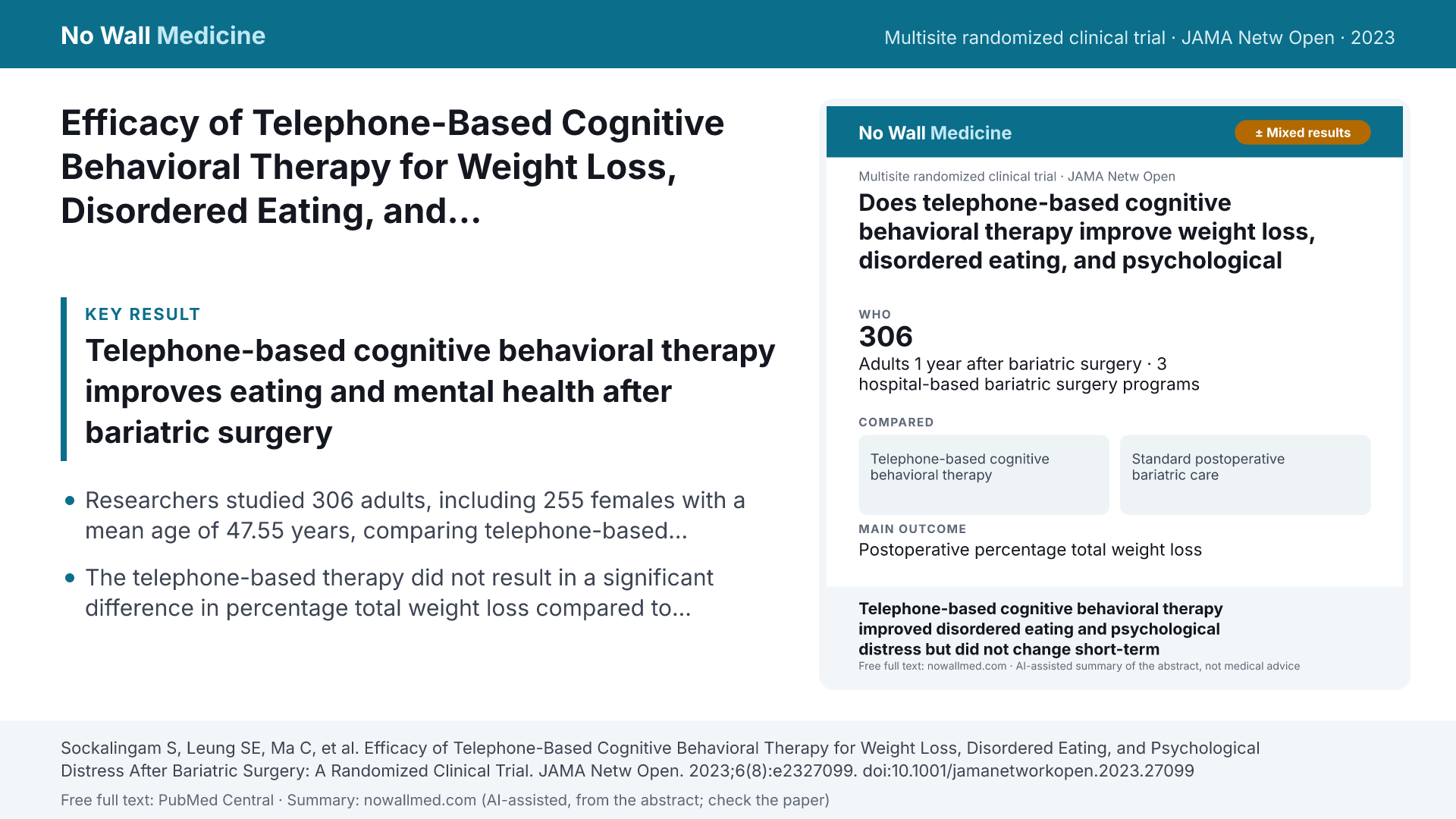
Telephone-based cognitive behavioral therapy improves eating and mental health after bariatric surgery
Efficacy of Telephone-Based Cognitive Behavioral Therapy for Weight Loss, Disordered Eating, and Psychological Distress After Bariatric Surgery: A Randomized Clinical Trial
Multisite randomized clinical trialMixed results
Does telephone-based cognitive behavioral therapy improve weight loss, disordered eating, and psychological distress after bariatric surgery?
Who
306
Adults 1 year after bariatric surgery · 3 hospital-based bariatric surgery programs
Compared
Telephone-based cognitive behavioral therapy
Standard postoperative bariatric care
Main outcome
Postoperative percentage total weight loss
Bottom line: Telephone-based cognitive behavioral therapy improved disordered eating and psychological distress but did not change short-term weight outcomes.
Limitation: The impact of psychosocial improvements on longer-term weight outcomes is currently being examined.
JAMA Netw Open · 2023-08-01Download image
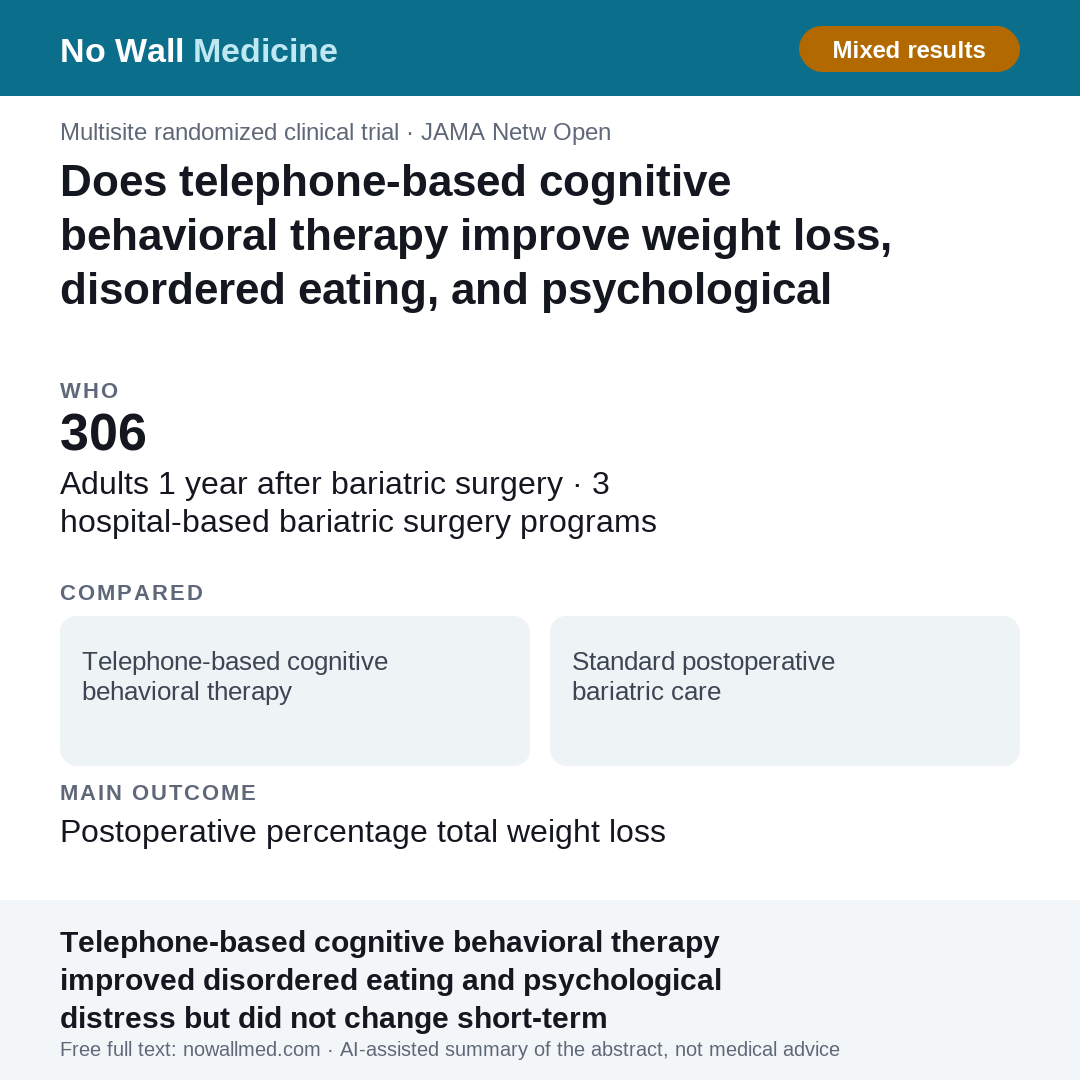
Clinical question: Does telephone-based cognitive behavioral therapy improve weight loss, disordered eating, and psychological distress after bariatric surgery?
Why it matters: It is unknown if telephone-based cognitive behavioral therapy can effectively address disordered eating and psychological distress following bariatric surgery.
Key points
- Researchers studied 306 adults, including 255 females with a mean age of 47.55 years, comparing telephone-based cognitive behavioral therapy to standard postoperative care.
- The telephone-based therapy did not result in a significant difference in percentage total weight loss compared to the control group.
- The intervention was associated with significant improvements in binge eating, emotional eating, and scores for depression and anxiety.
Headline and key points written with AI from the paper’s abstract, with every number checked against it. Read the paper before relying on them.
Was this summary helpful?
Subject terms
Cite this article
Sockalingam S, Leung SE, Ma C, Tomlinson G, Hawa R, Wnuk S. Efficacy of Telephone-Based Cognitive Behavioral Therapy for Weight Loss, Disordered Eating, and Psychological Distress After Bariatric Surgery: A Randomized Clinical Trial. JAMA Netw Open. 2023. doi:10.1001/jamanetworkopen.2023.27099
Spotted a mistake? Suggest a correction