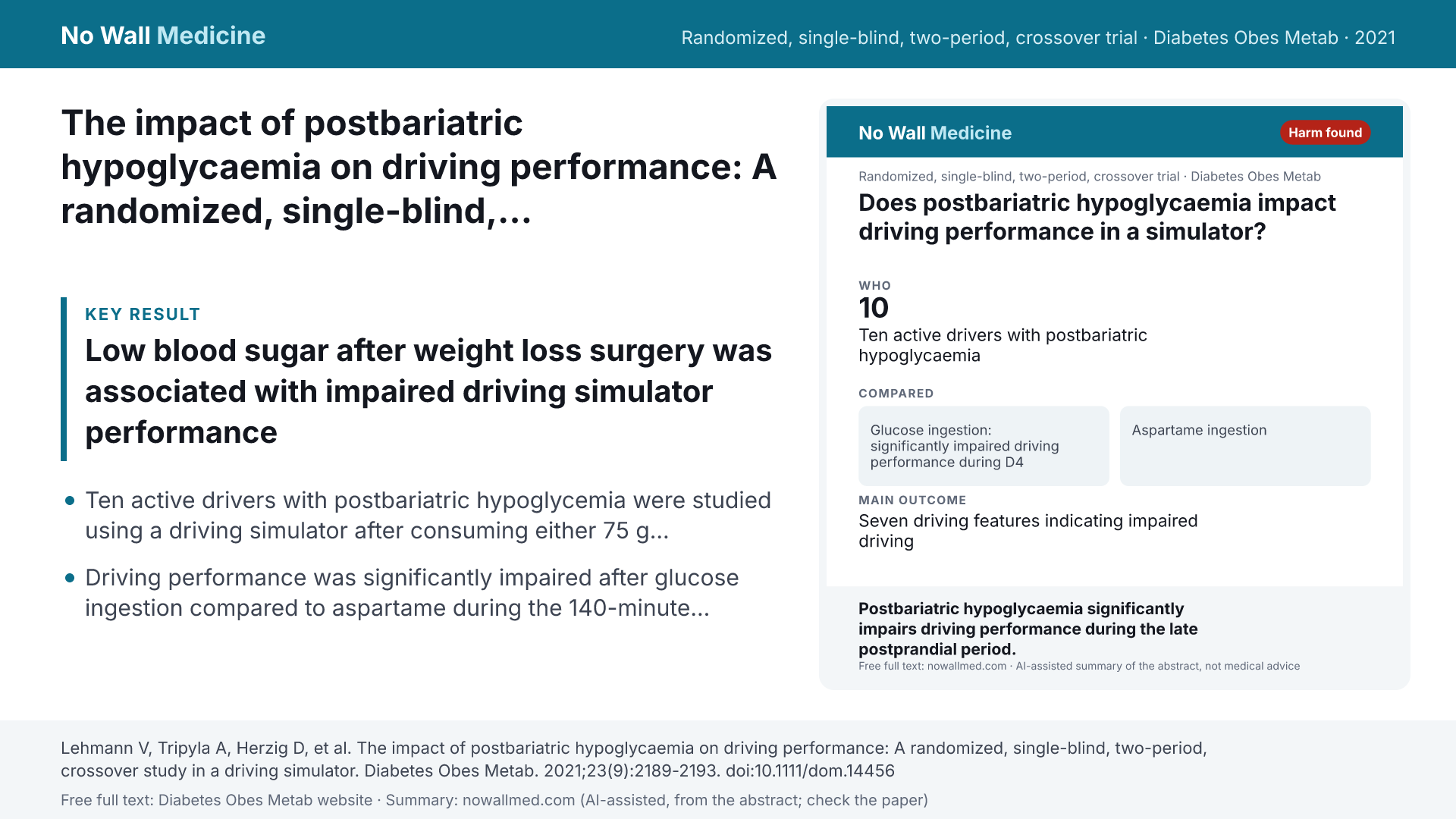
Low blood sugar after weight loss surgery was associated with impaired driving simulator performance
The impact of postbariatric hypoglycaemia on driving performance: A randomized, single-blind, two-period, crossover study in a driving simulator
Randomized, single-blind, two-period, crossover trialHarm found
Does postbariatric hypoglycaemia impact driving performance in a simulator?
Who
10
Ten active drivers with postbariatric hypoglycaemia
Compared
Glucose ingestion: significantly impaired driving performance during D4
Aspartame ingestion
Main outcome
Seven driving features indicating impaired driving
Result: posterior probability 98.2%
Bottom line: Postbariatric hypoglycaemia significantly impairs driving performance during the late postprandial period.
Diabetes Obes Metab · 2021-06-27Download image
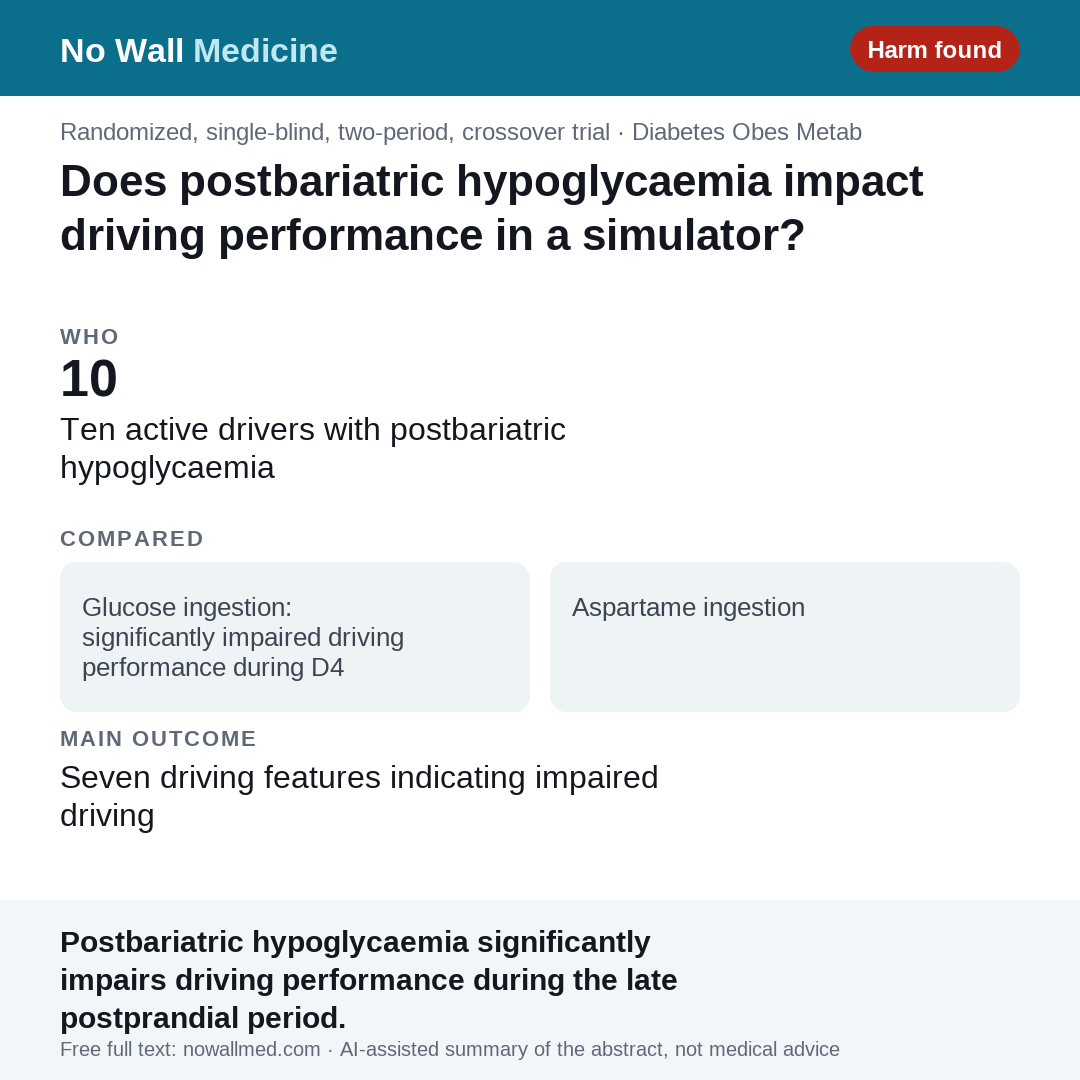
Clinical question: Does postbariatric hypoglycaemia impact driving performance in a simulator?
Why it matters: The effect of postbariatric hypoglycemia, a complication of weight loss surgery, on daily functioning such as driving remains unclear.
Key points
- Ten active drivers with postbariatric hypoglycemia were studied using a driving simulator after consuming either 75 g of glucose or aspartame.
- Driving performance was significantly impaired after glucose ingestion compared to aspartame during the 140-minute mark, with a posterior probability of 98.2%.
- Mean peak and lowest blood glucose levels after glucose ingestion were 182 ± 24 mg/dL and 47 ± 14 mg/dL, while aspartame kept blood glucose stable at 85 ± 4 mg/dL.
Headline and key points written with AI from the paper’s abstract, with every number checked against it. Read the paper before relying on them.
Was this summary helpful?
Subject terms
Cite this article
Lehmann V, Tripyla A, Herzig D, Meier J, Banholzer N, Maritsch M. The impact of postbariatric hypoglycaemia on driving performance: A randomized, single-blind, two-period, crossover study in a driving simulator. Diabetes Obes Metab. 2021. doi:10.1111/dom.14456
Spotted a mistake? Suggest a correction
Top studies every Monday
The week’s key trials and guidelines in your specialties, plus any topics you follow. By email, free.
Get the weekly digest