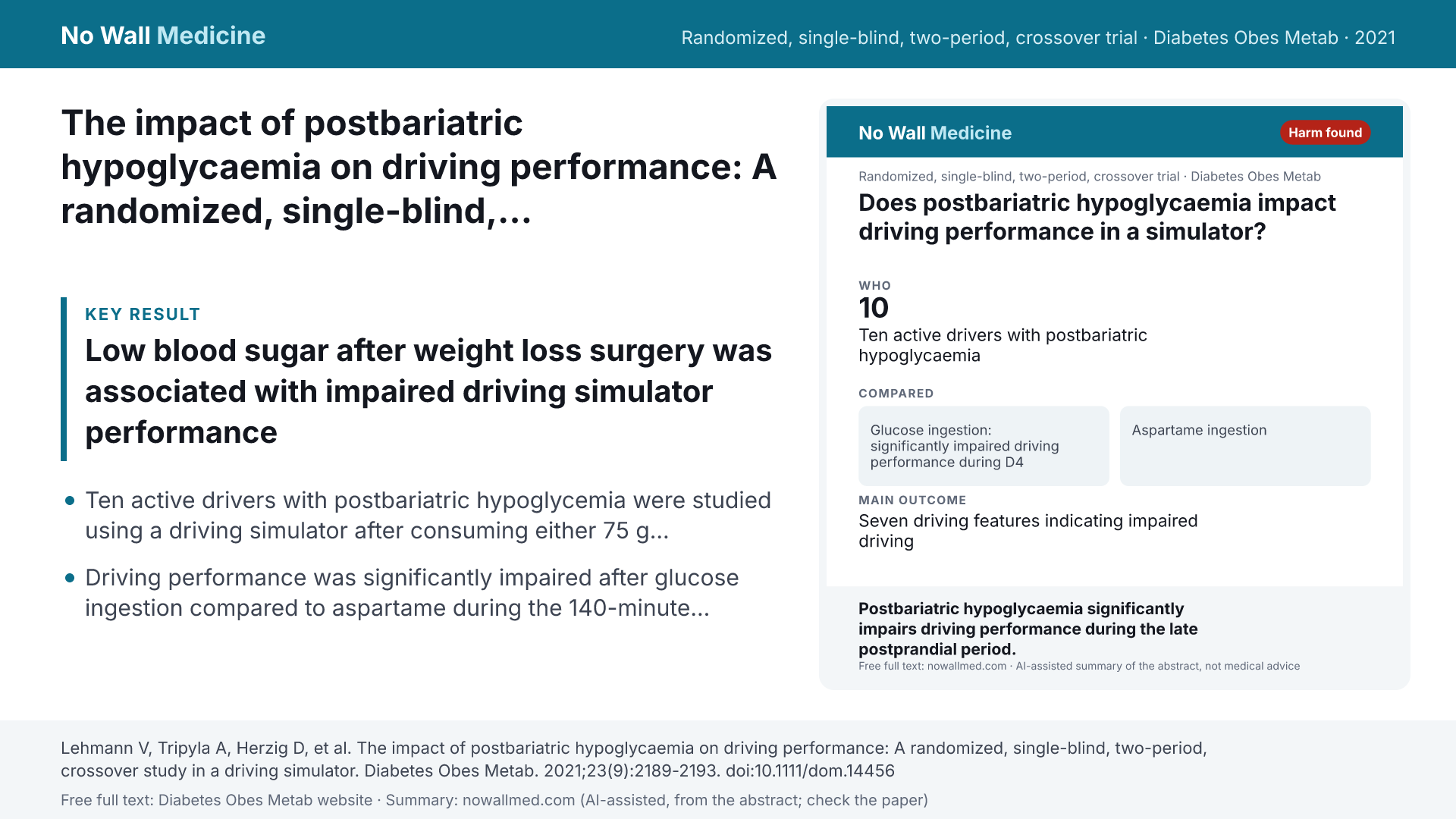
The impact of postbariatric hypoglycaemia on driving performance: A randomized, single-blind, two-period, crossover study in a driving simulator
Key result: Low blood sugar after weight loss surgery was associated with impaired driving simulator performance
Key points
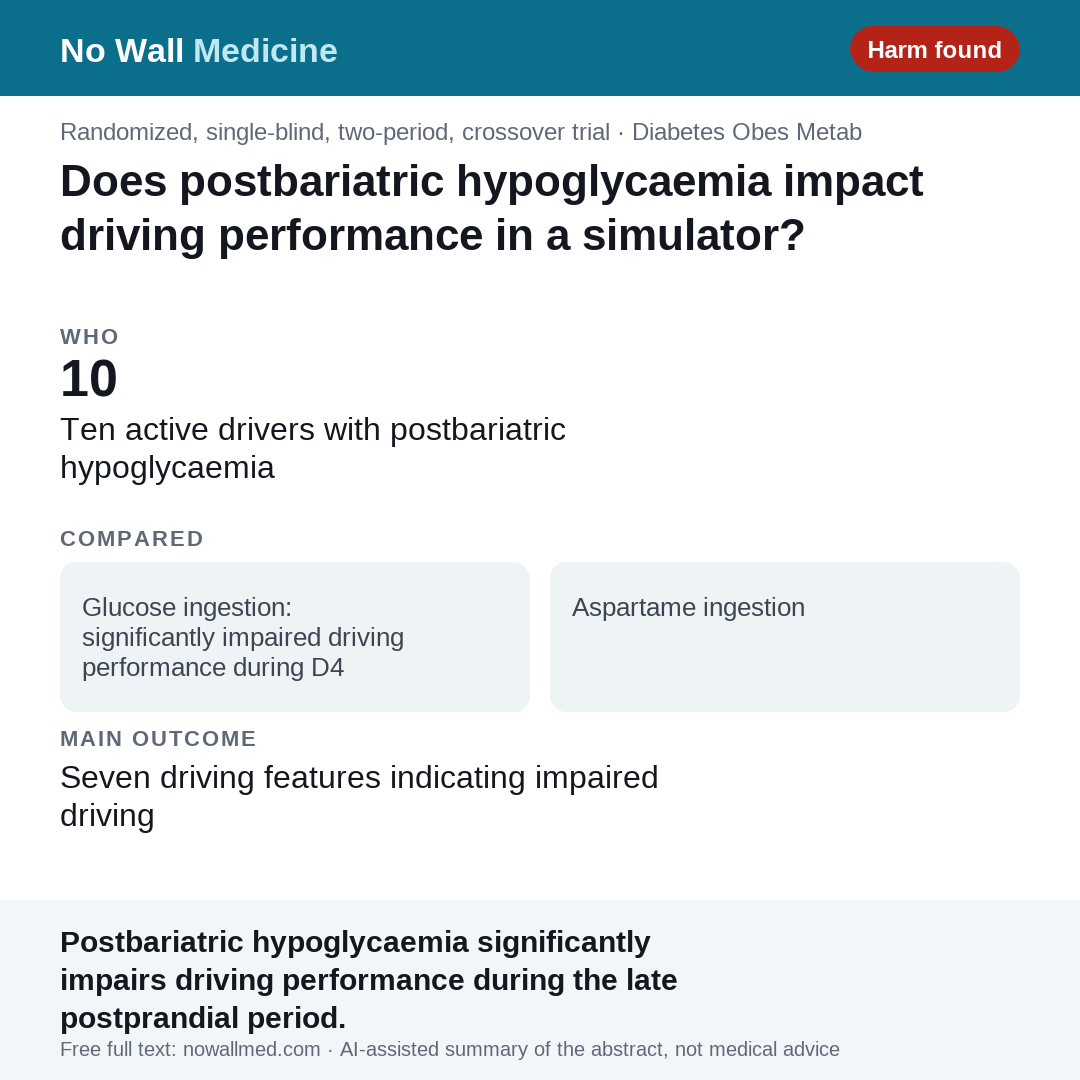
- Ten active drivers with postbariatric hypoglycemia were studied using a driving simulator after consuming either 75 g of glucose or aspartame.
- Driving performance was significantly impaired after glucose ingestion compared to aspartame during the 140-minute mark, with a posterior probability of 98.2%.
- Mean peak and lowest blood glucose levels after glucose ingestion were 182 ± 24 mg/dL and 47 ± 14 mg/dL, while aspartame kept blood glucose stable at 85 ± 4 mg/dL.
Why it matters: The effect of postbariatric hypoglycemia, a complication of weight loss surgery, on daily functioning such as driving remains unclear.
Discussion prompts
- Would these patients look like yours? Who was left out?
- Is the main outcome one that matters to patients?
- Is the difference large enough to change what you do?
Cite: Lehmann V, Tripyla A, Herzig D, Meier J, Banholzer N, Maritsch M. The impact of postbariatric hypoglycaemia on driving performance: A randomized, single-blind, two-period, crossover study in a driving simulator. Diabetes Obes Metab. 2021. doi:10.1111/dom.14456
Free full text: Diabetes Obes Metab website · Summary and visual abstract: nowallmed.com/a/the-impact-of-postbariatric-hypoglycaemia-on-driving-performance-a-lu2tab/ (AI-assisted from the abstract; check the paper before relying on it).