Efficacy of virtual reality training on motor performance, activity of daily living, and quality of life in patients with Parkinson's disease: an umbrella review comprising meta-analyses of randomized controlled trials
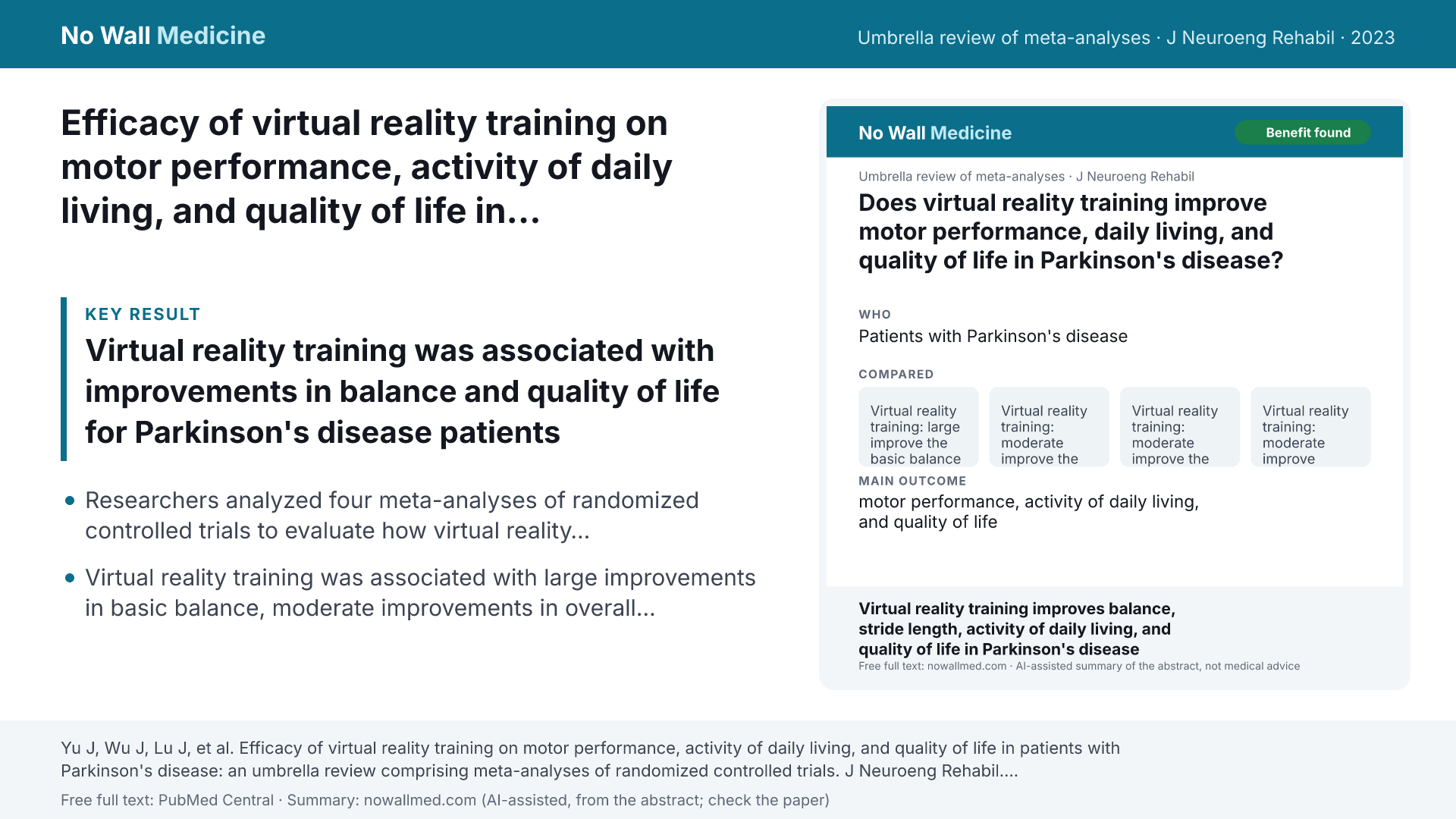
Key result: Virtual reality training was associated with improvements in balance and quality of life for Parkinson's disease patients
Key points
- Researchers analyzed four meta-analyses of randomized controlled trials to evaluate how virtual reality training affects motor performance, daily activities, and quality of life in people with Parkinson's disease.
- Virtual reality training was associated with large improvements in basic balance, moderate improvements in overall balance, stride length, activities of daily living, and quality of life.
- No statistically clear evidence was found regarding the effects of virtual reality training on walking speed, motor function, or gait function.
Why it matters: The strength, quality, and reproducibility of existing evidence regarding the efficacy of virtual reality training for Parkinson's disease outcomes had not been thoroughly evaluated.
Limitation the authors note: The analyzed meta-analyses showed low-to-moderate methodological quality and presented evidence of moderate-to-very low quality.
Discussion prompts
- Would these patients look like yours? Who was left out?
- Is the main outcome one that matters to patients?
- Is the difference large enough to change what you do?
Cite: Yu J, Wu J, Lu J, et al. Efficacy of virtual reality training on motor performance, activity of daily living, and quality of life in patients with Parkinson's disease: an umbrella review comprising meta-analyses of randomized controlled trials. J Neuroeng Rehabil. 2023;20(1):133. doi:10.1186/s12984-023-01256-y
Free full text: PubMed Central · Summary and visual abstract: nowallmed.com/a/efficacy-of-virtual-reality-training-on-motor-performance-activity-of-g819g3/ (AI-assisted from the abstract; check the paper before relying on it).