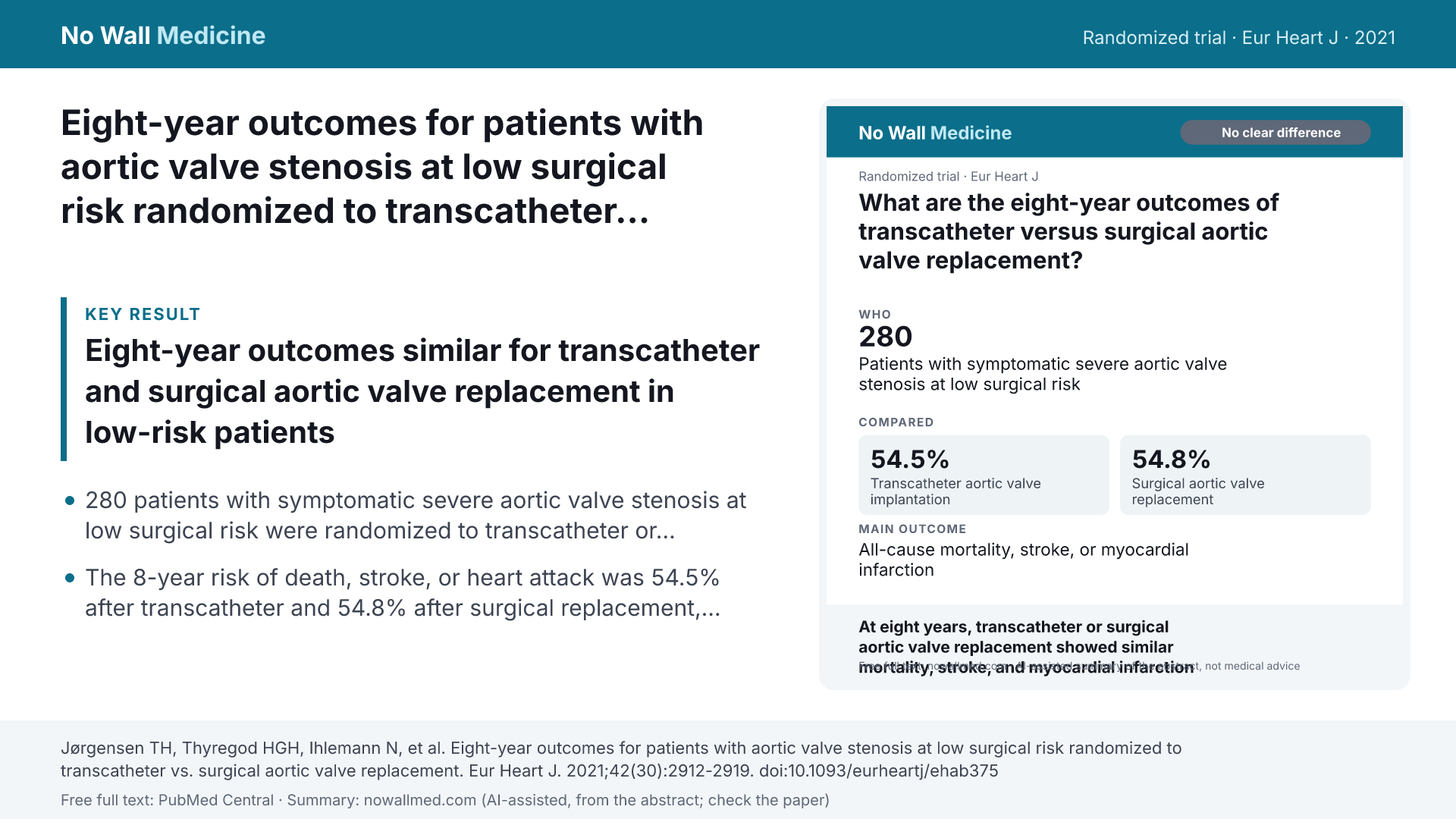
Eight-year outcomes similar for transcatheter and surgical aortic valve replacement in low-risk patients
Eight-year outcomes for patients with aortic valve stenosis at low surgical risk randomized to transcatheter vs. surgical aortic valve replacement
Randomized trialNo clear difference
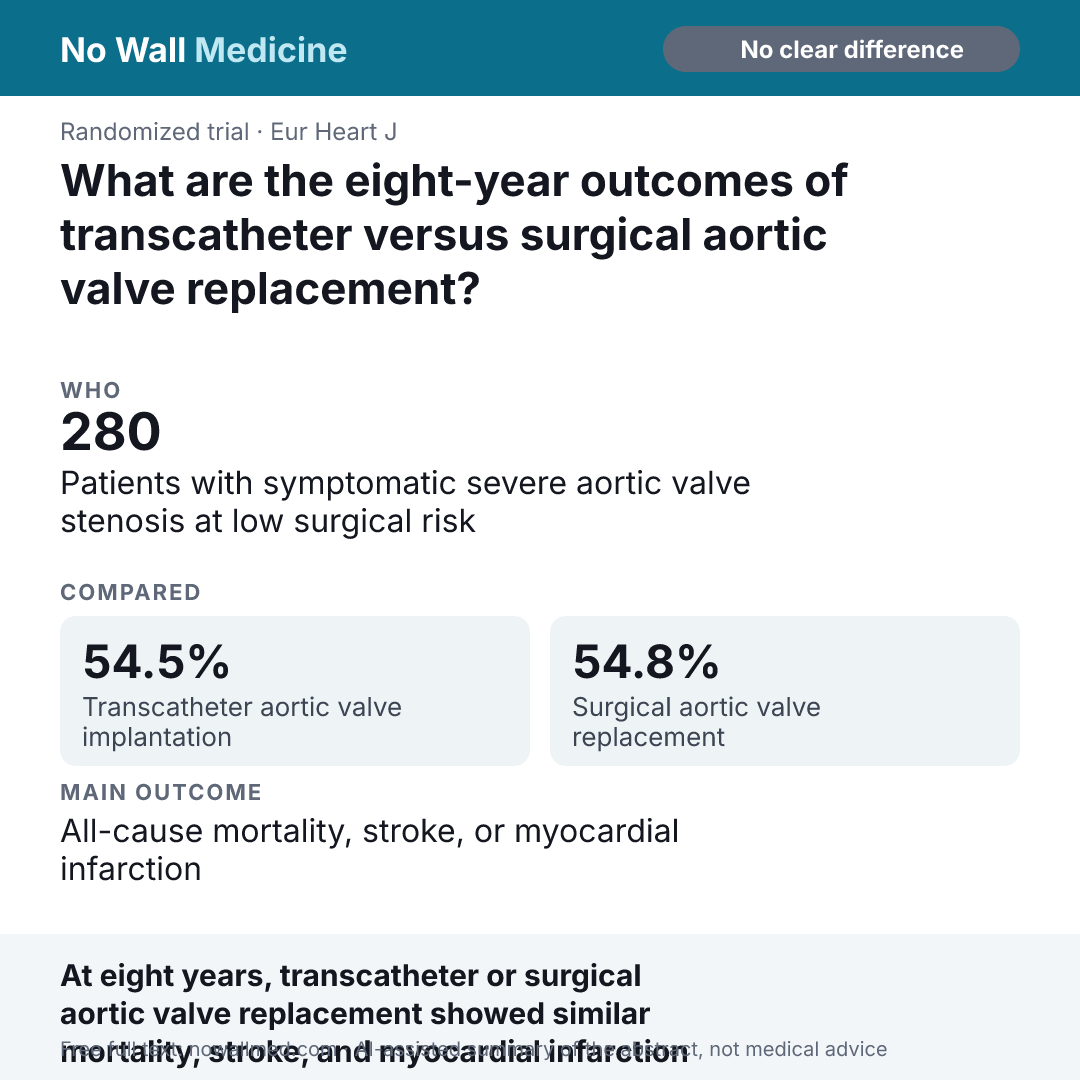
What are the eight-year outcomes of transcatheter versus surgical aortic valve replacement?
Who
280
Patients with symptomatic severe aortic valve stenosis at low surgical risk
Compared
54.5%Transcatheter aortic valve implantation
54.8%Surgical aortic valve replacement
Main outcome
All-cause mortality, stroke, or myocardial infarction
Bottom line: At eight years, transcatheter or surgical aortic valve replacement showed similar mortality, stroke, and myocardial infarction risks.
Eur Heart J · 2021-06-29 · Save PNG
Clinical question: What are the eight-year outcomes of transcatheter versus surgical aortic valve replacement?
Why it matters: Long-term data comparing the durability and safety of transcatheter versus surgical aortic valve replacement in low-risk patients were previously limited.
Key points
- 280 patients with symptomatic severe aortic valve stenosis at low surgical risk were randomized to transcatheter or surgical valve replacement.
- The 8-year risk of death, stroke, or heart attack was 54.5% after transcatheter and 54.8% after surgical replacement, with no significant difference.
- Structural valve deterioration was lower after transcatheter replacement (13.9%) than surgical (28.3%), but bioprosthetic valve failure rates were similar.
Headline and key points written with AI from the paper’s abstract, with every number checked against it. Read the paper before relying on them.
Was this summary helpful?
Subject terms
Headline, design, result, key points, caveat and citation as plain text.
Cite this article
Jørgensen TH, Thyregod HGH, Ihlemann N, et al. Eight-year outcomes for patients with aortic valve stenosis at low surgical risk randomized to transcatheter vs. surgical aortic valve replacement. Eur Heart J. 2021;42(30):2912-2919. doi:10.1093/eurheartj/ehab375
Spotted a mistake? Suggest a correction