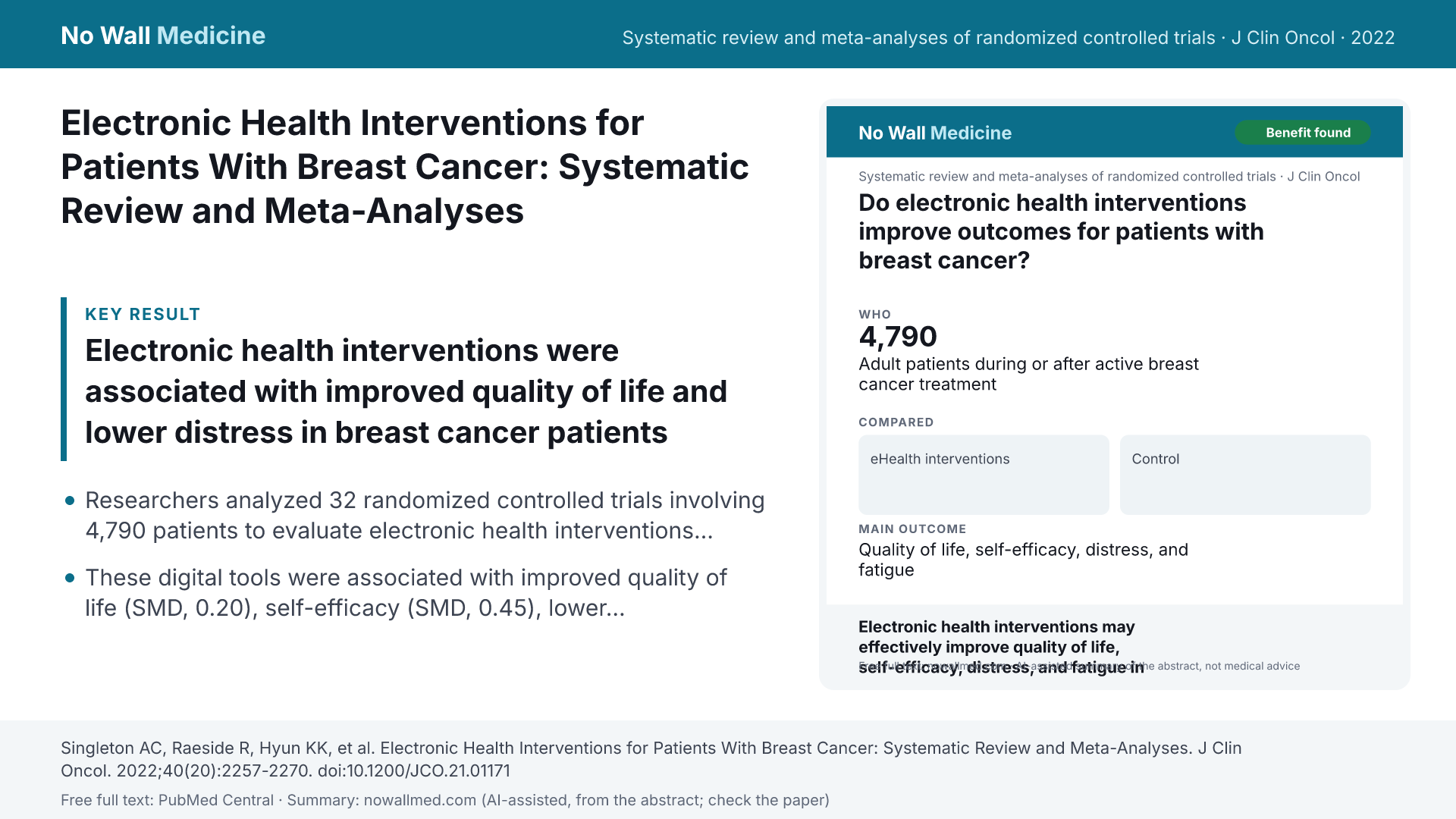
Electronic health interventions were associated with improved quality of life and lower distress in breast cancer patients
Electronic Health Interventions for Patients With Breast Cancer: Systematic Review and Meta-Analyses
Systematic review and meta-analyses of randomized controlled trialsBenefit found
Do electronic health interventions improve outcomes for patients with breast cancer?
Who
4,790
Adult patients during or after active breast cancer treatment
Compared
eHealth interventions
Control
Main outcome
Quality of life, self-efficacy, distress, and fatigue
Result: standardized mean difference 0.20 (95% CI, 0.03 to 0.36) for quality of life
Bottom line: Electronic health interventions may effectively improve quality of life, self-efficacy, distress, and fatigue in breast cancer patients.
J Clin Oncol · 2022-05-02 · Save PNG
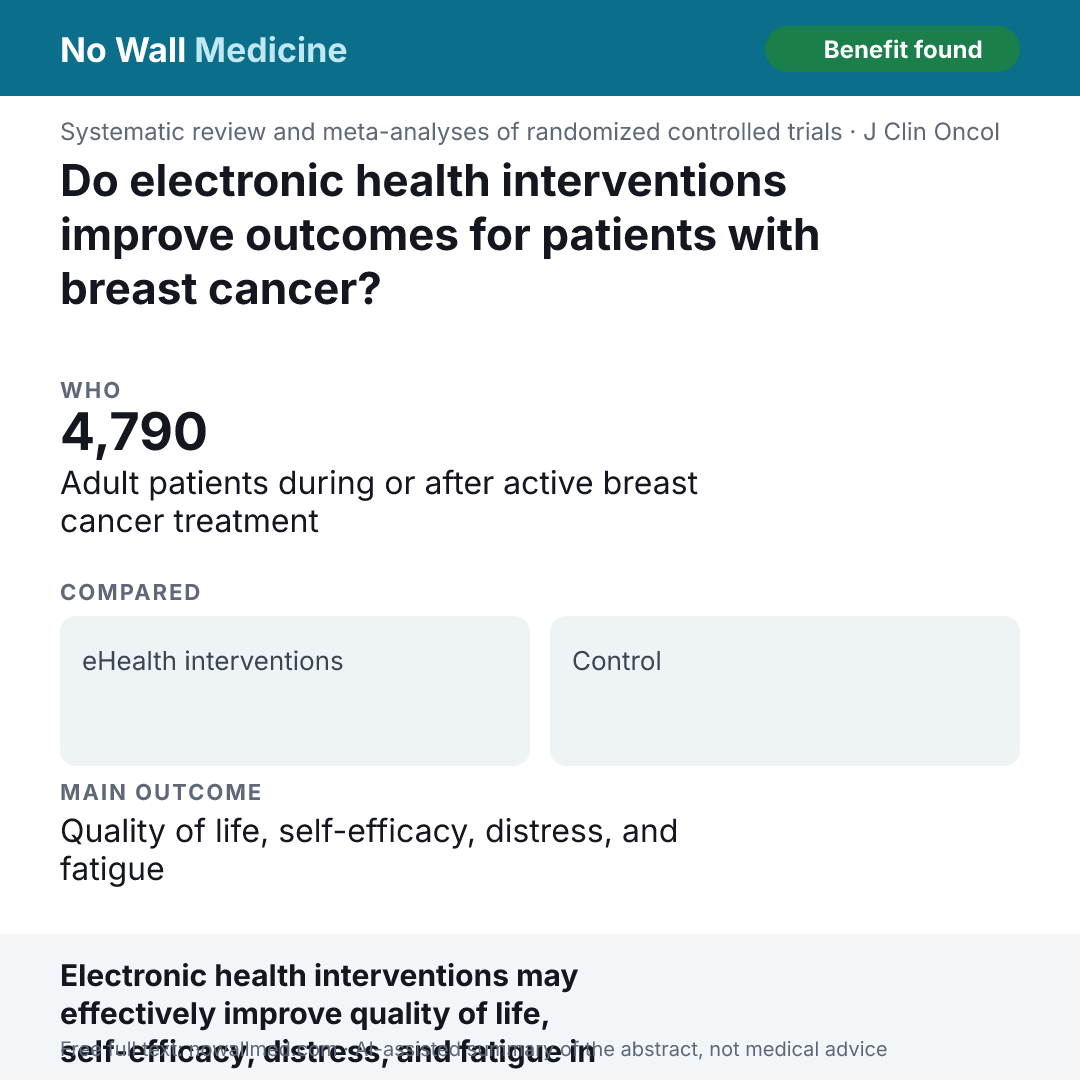
Clinical question: Do electronic health interventions improve outcomes for patients with breast cancer?
Key points
- Researchers analyzed 32 randomized controlled trials involving 4,790 patients to evaluate electronic health interventions for breast cancer support.
- These digital tools were associated with improved quality of life (SMD, 0.20), self-efficacy (SMD, 0.45), lower distress (SMD, -0.41), and lower fatigue (SMD, -0.37).
- Patient satisfaction with these tools ranged from 71% to 100%, while engagement tended to decrease over time.
Headline and key points written with AI from the paper’s abstract, with every number checked against it. Read the paper before relying on them.
Was this summary helpful?
Subject terms
Headline, design, result, key points, caveat and citation as plain text.
Cite this article
Singleton AC, Raeside R, Hyun KK, et al. Electronic Health Interventions for Patients With Breast Cancer: Systematic Review and Meta-Analyses. J Clin Oncol. 2022;40(20):2257-2270. doi:10.1200/JCO.21.01171
Spotted a mistake? Suggest a correction