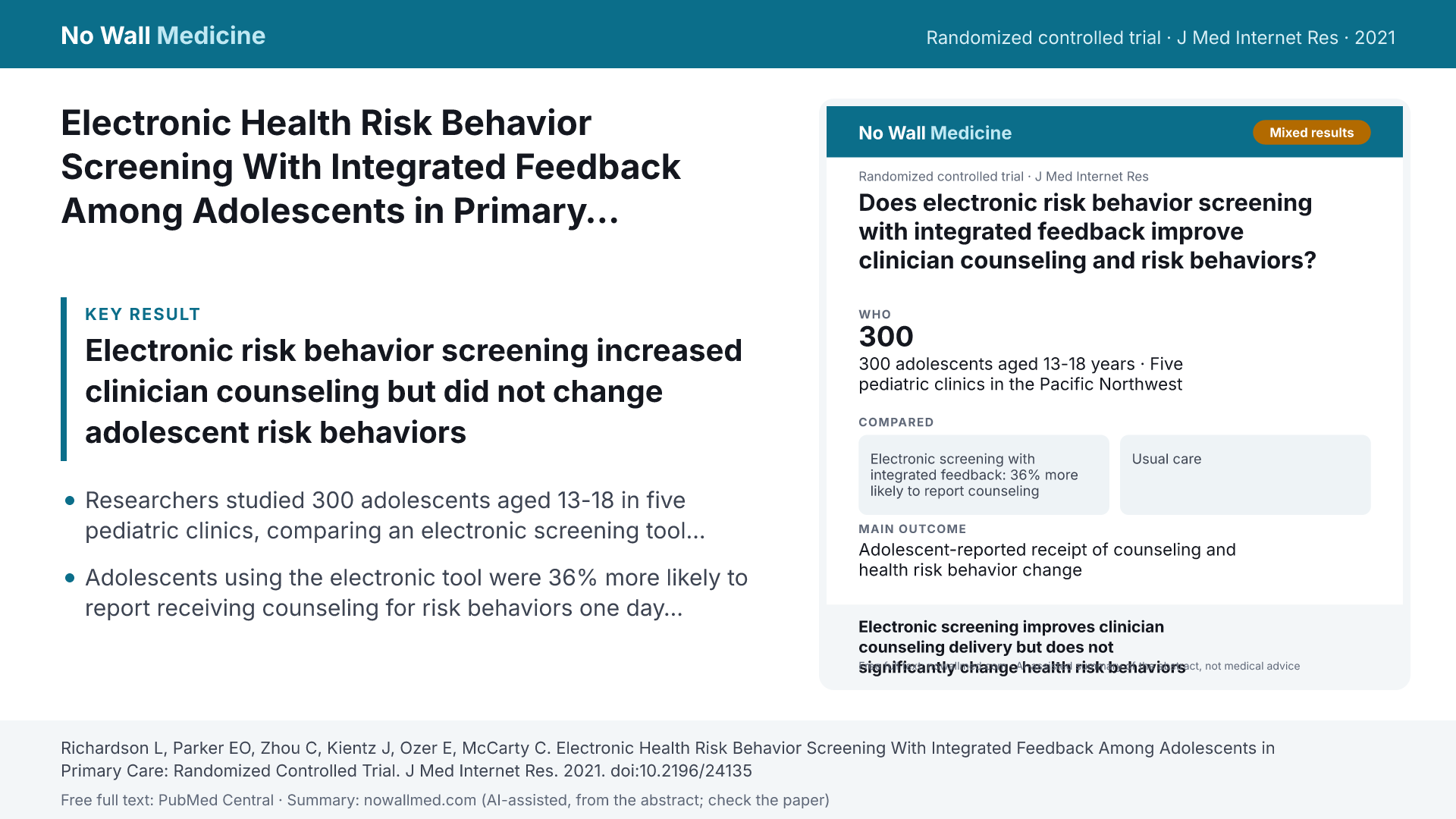
Electronic risk behavior screening increased clinician counseling but did not change adolescent risk behaviors
Electronic Health Risk Behavior Screening With Integrated Feedback Among Adolescents in Primary Care: Randomized Controlled Trial
Randomized controlled trialMixed results
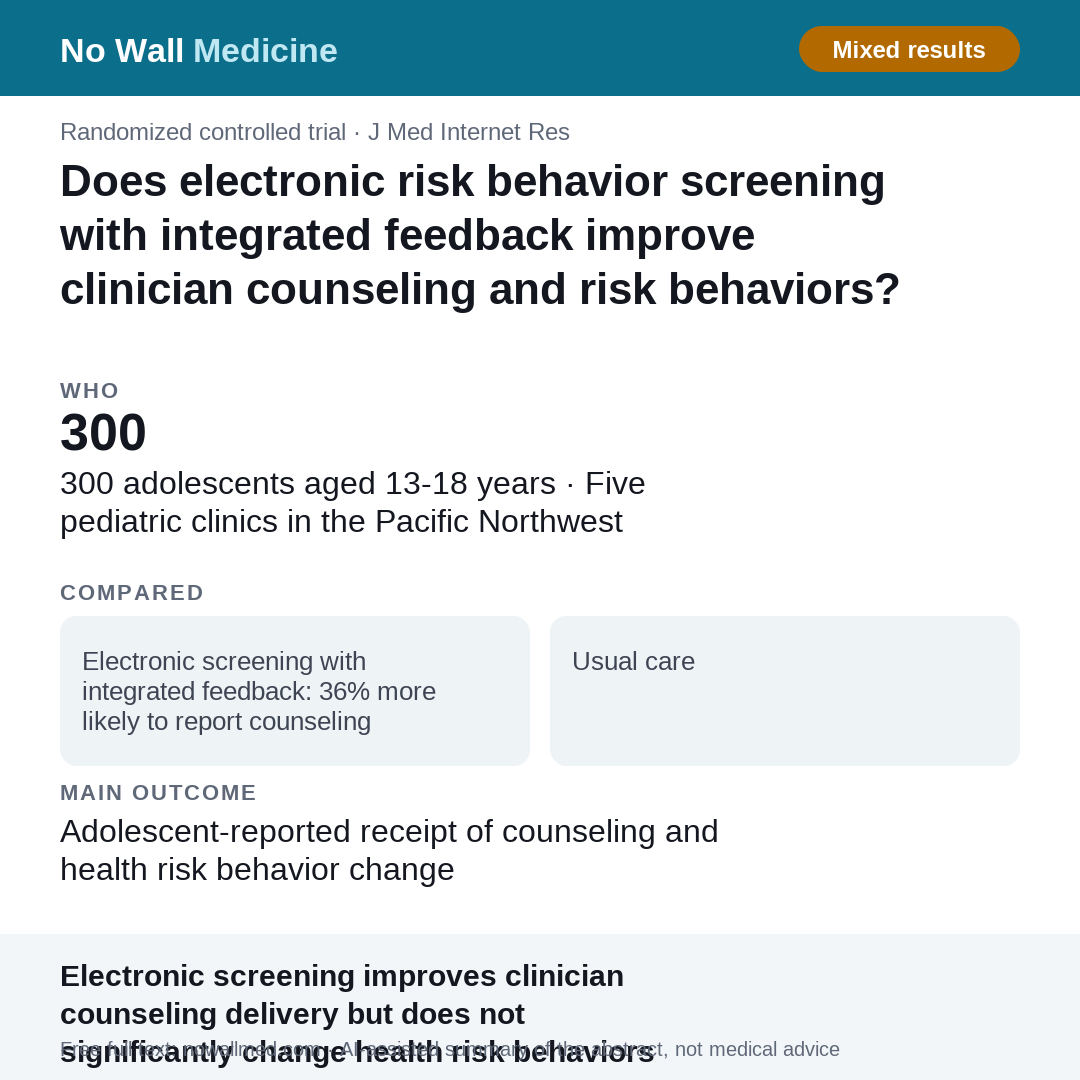
Does electronic risk behavior screening with integrated feedback improve clinician counseling and risk behaviors?
Who
300
300 adolescents aged 13-18 years · Five pediatric clinics in the Pacific Northwest
Compared
Electronic screening with integrated feedback: 36% more likely to report counseling
Usual care
Main outcome
Adolescent-reported receipt of counseling and health risk behavior change
Result: adjusted rate ratio 1.36 (95% CI 1.04 to 1.78)
Bottom line: Electronic screening improves clinician counseling delivery but does not significantly change health risk behaviors compared to usual care.
J Med Internet Res · 2021-03-12Download image
Clinical question: Does electronic risk behavior screening with integrated feedback improve clinician counseling and risk behaviors?
Why it matters: Implementation of adolescent health screening and counseling recommended by clinical guidelines is currently inconsistent in primary care settings.
Key points
- Researchers studied 300 adolescents aged 13-18 in five pediatric clinics, comparing an electronic screening tool with integrated feedback to usual care.
- Adolescents using the electronic tool were 36% more likely to report receiving counseling for risk behaviors one day after their visit.
- There were no significant differences between the intervention and control groups in risk behavior scores at the 3-month or 6-month follow-up.
Headline and key points written with AI from the paper’s abstract, with every number checked against it. Read the paper before relying on them.
Was this summary helpful?
Subject terms
Cite this article
Richardson L, Parker EO, Zhou C, Kientz J, Ozer E, McCarty C. Electronic Health Risk Behavior Screening With Integrated Feedback Among Adolescents in Primary Care: Randomized Controlled Trial. J Med Internet Res. 2021. doi:10.2196/24135
Spotted a mistake? Suggest a correction