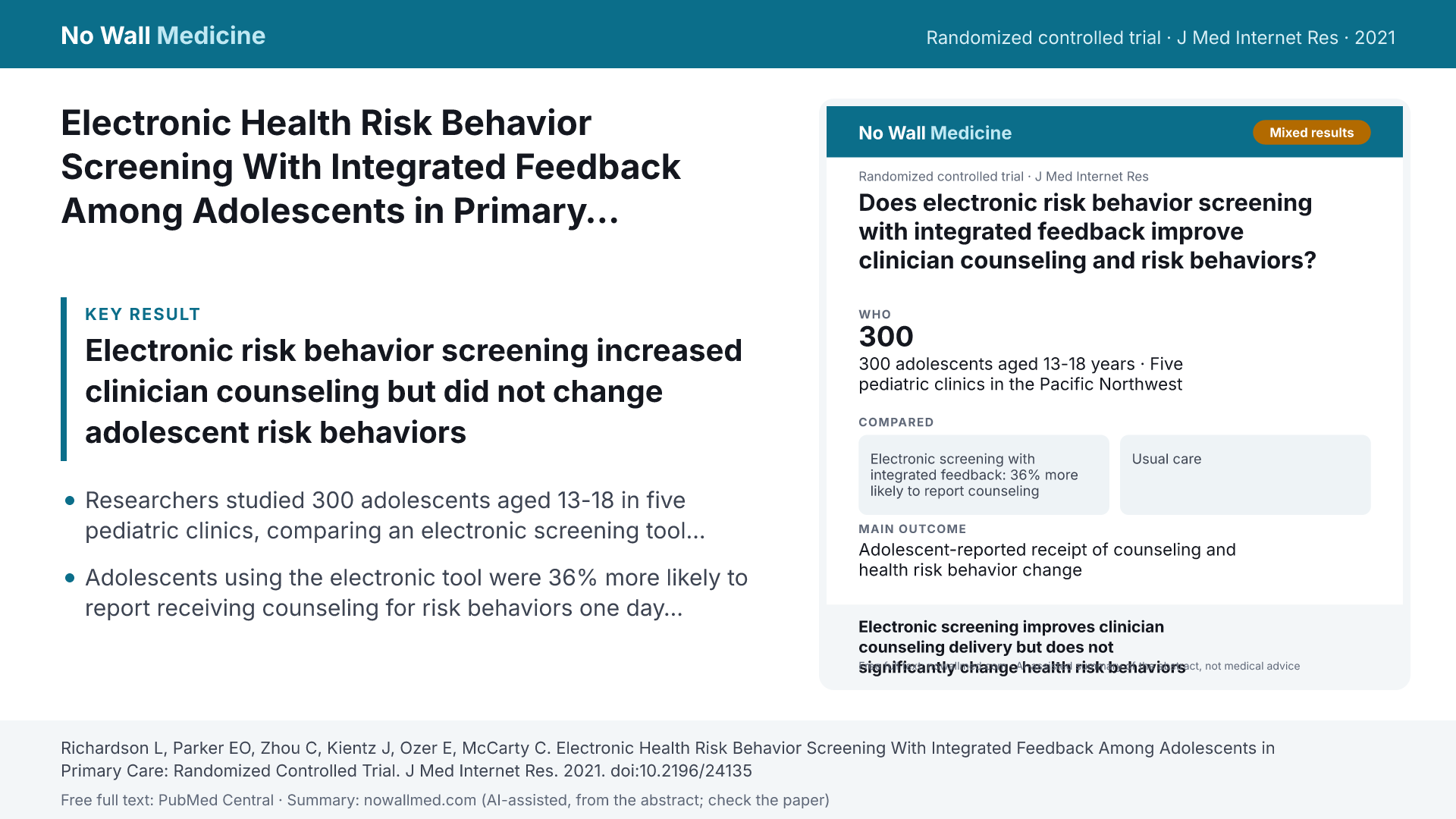
Electronic Health Risk Behavior Screening With Integrated Feedback Among Adolescents in Primary Care: Randomized Controlled Trial
Key result: Electronic risk behavior screening increased clinician counseling but did not change adolescent risk behaviors
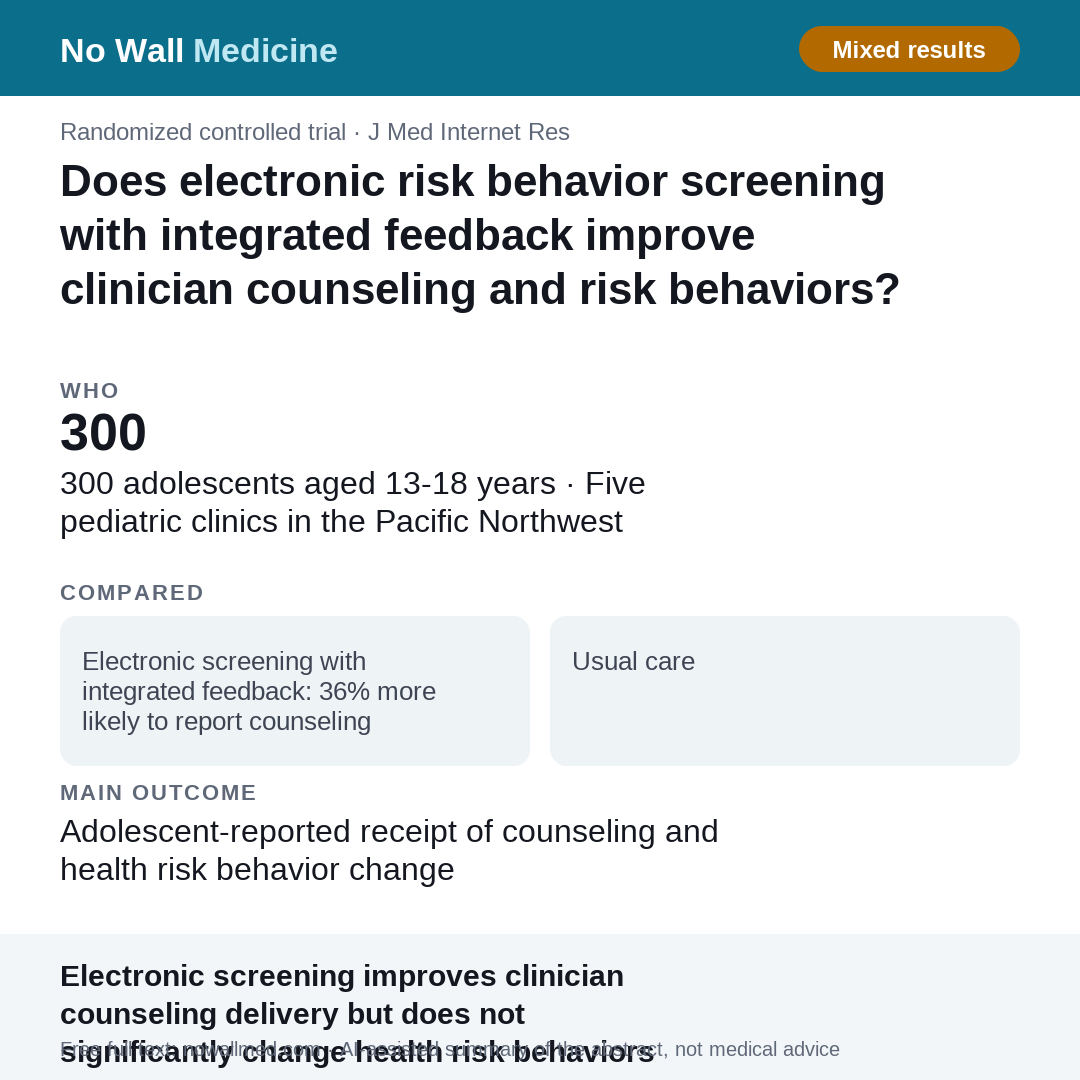
Key points
- Researchers studied 300 adolescents aged 13-18 in five pediatric clinics, comparing an electronic screening tool with integrated feedback to usual care.
- Adolescents using the electronic tool were 36% more likely to report receiving counseling for risk behaviors one day after their visit.
- There were no significant differences between the intervention and control groups in risk behavior scores at the 3-month or 6-month follow-up.
Why it matters: Implementation of adolescent health screening and counseling recommended by clinical guidelines is currently inconsistent in primary care settings.
Discussion prompts
- Would these patients look like yours? Who was left out?
- Is the main outcome one that matters to patients?
- Is the difference large enough to change what you do?
Cite: Richardson L, Parker EO, Zhou C, Kientz J, Ozer E, McCarty C. Electronic Health Risk Behavior Screening With Integrated Feedback Among Adolescents in Primary Care: Randomized Controlled Trial. J Med Internet Res. 2021. doi:10.2196/24135
Free full text: PubMed Central · Summary and visual abstract: nowallmed.com/a/electronic-health-risk-behavior-screening-with-integrated-feedback-bqvjga/ (AI-assisted from the abstract; check the paper before relying on it).