Low-pass whole-genome sequencing of circulating tumour DNA provides prognostic information in metastatic prostate cancer
Elucidating Prostate Cancer Behaviour During Treatment via Low-pass Whole-genome Sequencing of Circulating Tumour DNA
Randomized trialsBenefit found
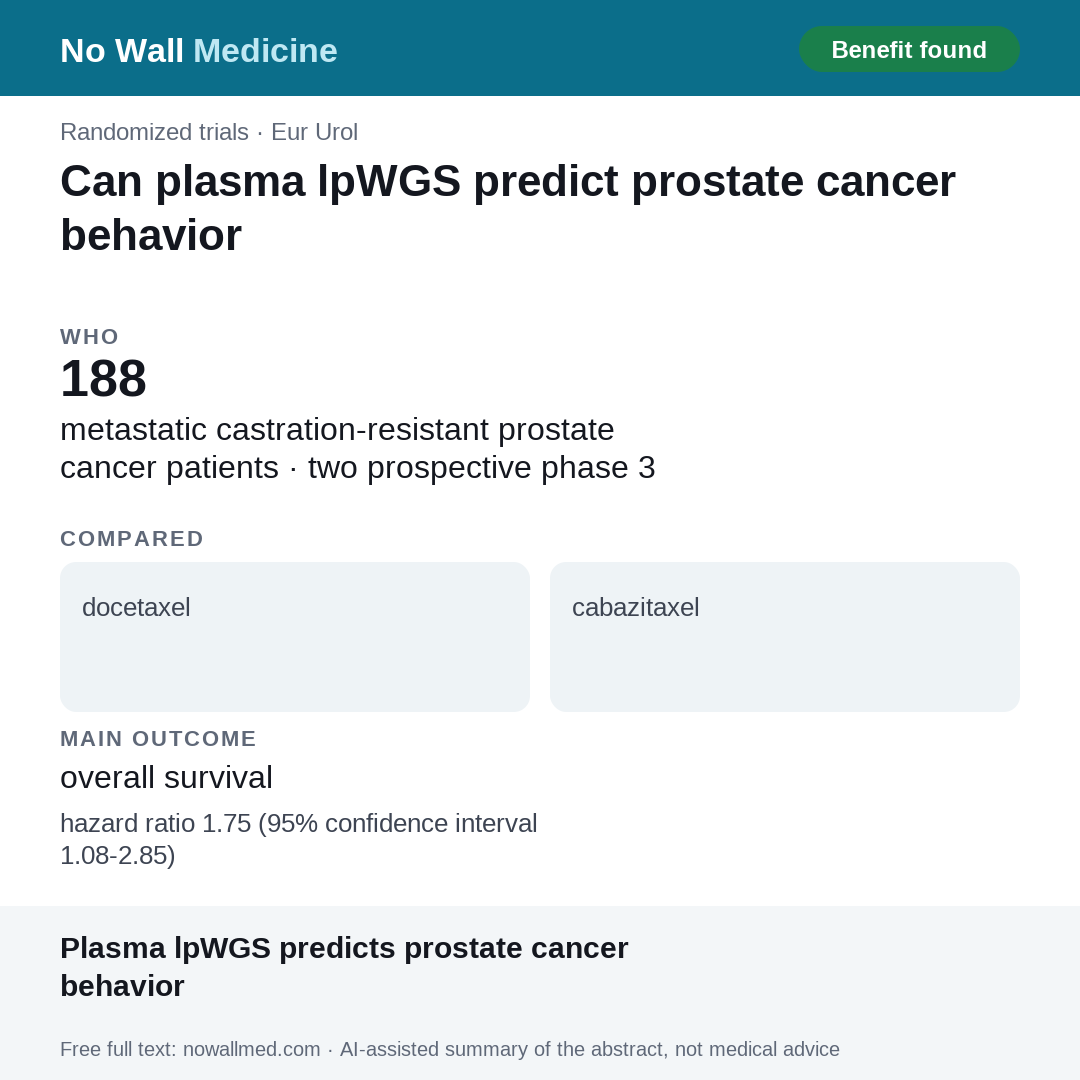
Can plasma lpWGS predict prostate cancer behavior
Who
188
metastatic castration-resistant prostate cancer patients · two prospective phase 3 trials
Compared
docetaxel
cabazitaxel
Main outcome
overall survival
Result: hazard ratio 1.75 (95% confidence interval 1.08-2.85)
Bottom line: Plasma lpWGS predicts prostate cancer behavior
Limitation: requires further study
Eur Urol · 2021-06-05Download image
Why it matters: Better blood tests are needed to understand the behaviour of metastatic castration-resistant prostate cancer to help guide therapeutic decisions.
Key points
- Researchers analyzed 540 blood samples from 188 patients with metastatic castration-resistant prostate cancer across two phase 3 clinical trials.
- The plasma tumour fraction was associated with overall survival (hazard ratio 1.75, 95% confidence interval 1.08-2.85; p = 0.024) and provided added value over existing biomarkers.
- Longitudinal changes in tumour DNA were associated with drug response, and certain genomic instability markers were associated with prior abiraterone and enzalutamide treatment.
Headline and key points written with AI from the paper’s abstract, with every number checked against it. Read the paper before relying on them.
Was this summary helpful?

Subject terms
Cite this article
Sumanasuriya S, Seed G, Parr H, et al. Elucidating Prostate Cancer Behaviour During Treatment via Low-pass Whole-genome Sequencing of Circulating Tumour DNA. Eur Urol. 2021. doi:10.1016/j.eururo.2021.05.030
Spotted a mistake? Suggest a correction