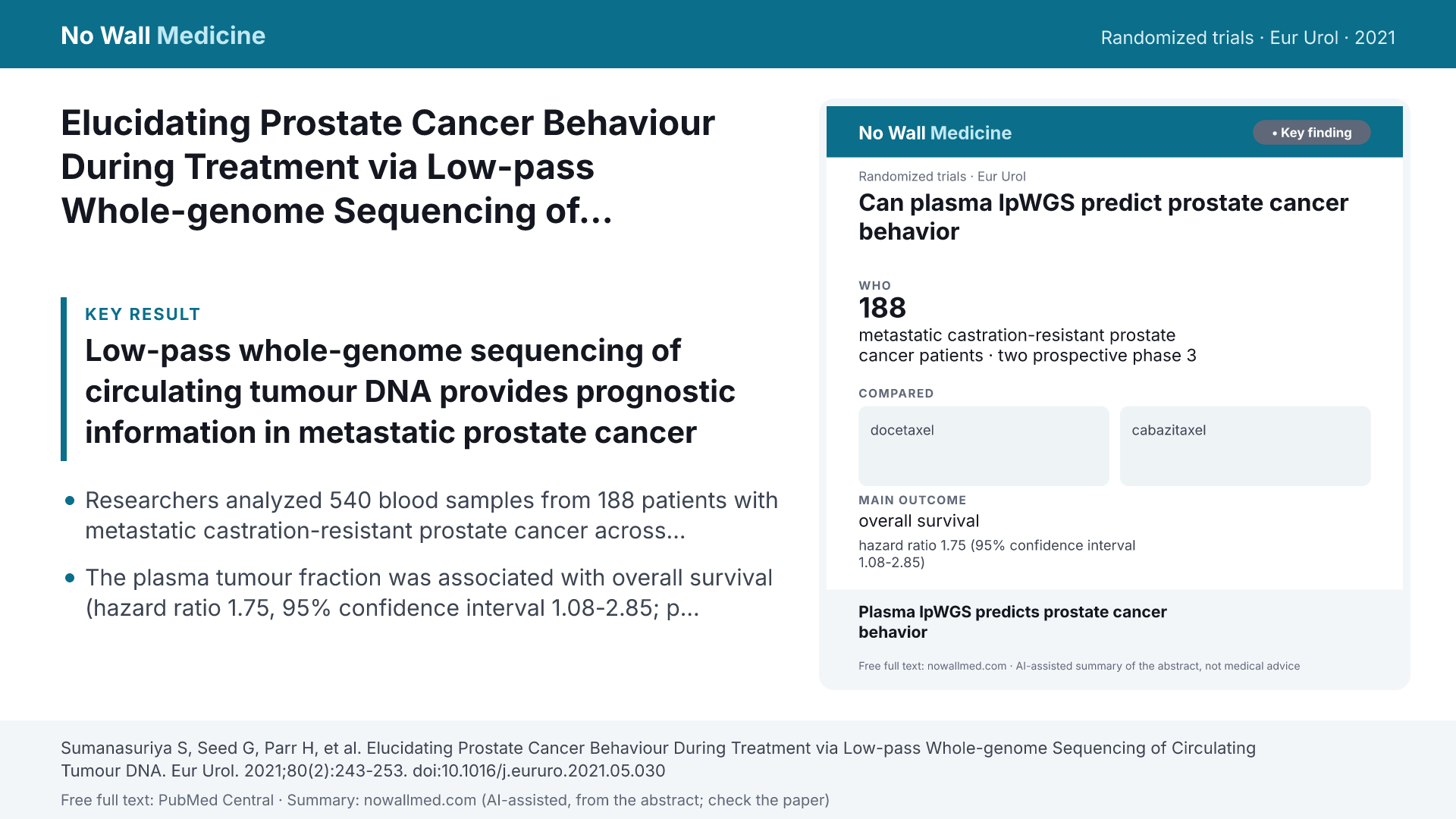
Elucidating Prostate Cancer Behaviour During Treatment via Low-pass Whole-genome Sequencing of Circulating Tumour DNA
Key result: Low-pass whole-genome sequencing of circulating tumour DNA provides prognostic information in metastatic prostate cancer
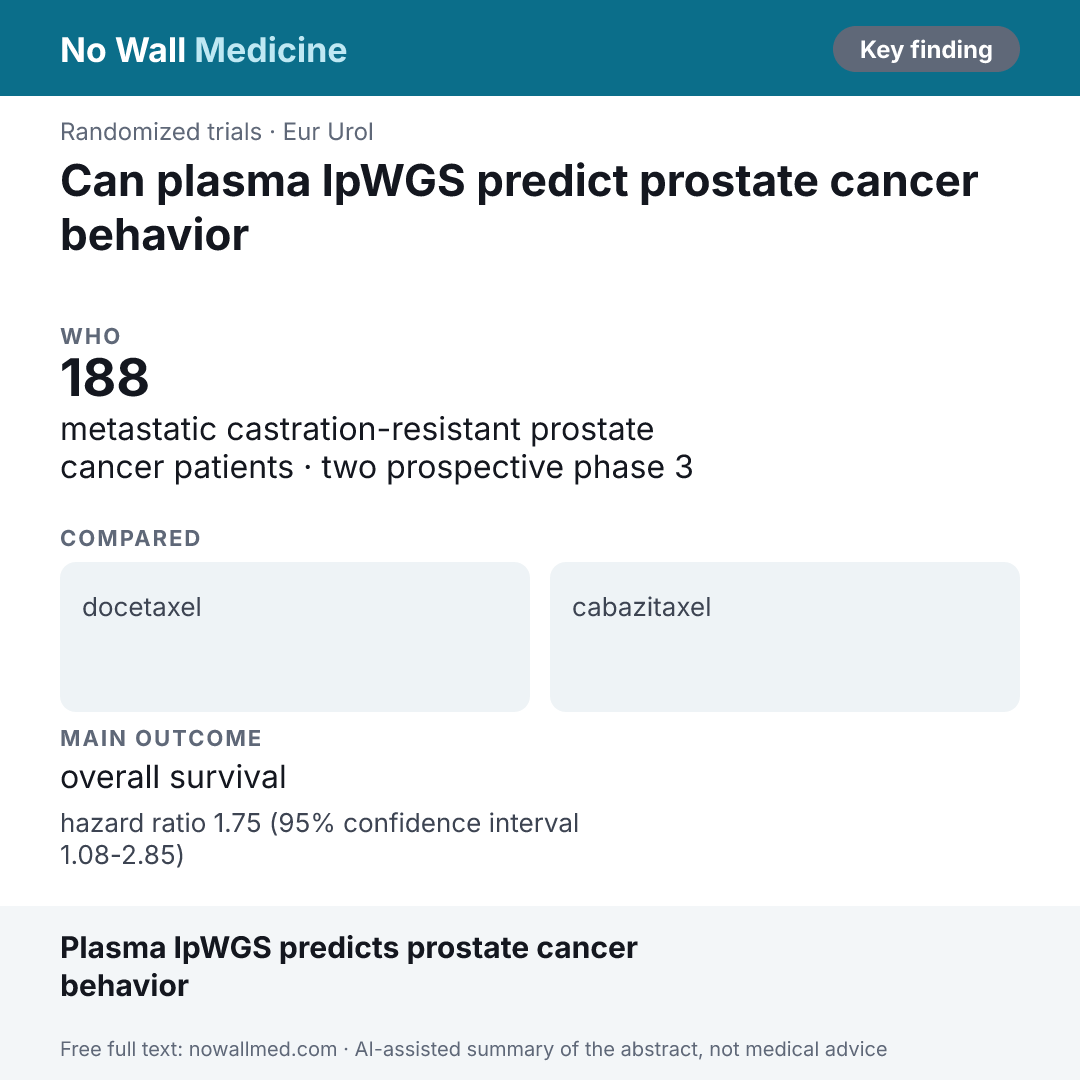
Randomized trialsKey finding
Can plasma lpWGS predict prostate cancer behavior
Who
188
metastatic castration-resistant prostate cancer patients · two prospective phase 3 trials
Compared
docetaxel
cabazitaxel
Main outcome
overall survival
Result: hazard ratio 1.75 (95% confidence interval 1.08-2.85)
Bottom line: Plasma lpWGS predicts prostate cancer behavior
Limitation: requires further study
Eur Urol · 2021-06-05 · Save PNG
Key points
- Researchers analyzed 540 blood samples from 188 patients with metastatic castration-resistant prostate cancer across two phase 3 clinical trials.
- The plasma tumour fraction was associated with overall survival (hazard ratio 1.75, 95% confidence interval 1.08-2.85; p = 0.024) and provided added value over existing biomarkers.
- Longitudinal changes in tumour DNA were associated with drug response, and certain genomic instability markers were associated with prior abiraterone and enzalutamide treatment.
Why it matters: Better blood tests are needed to understand the behaviour of metastatic castration-resistant prostate cancer to help guide therapeutic decisions.
Discussion prompts
- Would these patients look like yours? Who was left out?
- Is the main outcome one that matters to patients?
- Is the difference large enough to change what you do?
Cite: Sumanasuriya S, Seed G, Parr H, et al. Elucidating Prostate Cancer Behaviour During Treatment via Low-pass Whole-genome Sequencing of Circulating Tumour DNA. Eur Urol. 2021. doi:10.1016/j.eururo.2021.05.030
Free full text: PubMed Central · Summary and visual abstract: nowallmed.com/a/elucidating-prostate-cancer-behaviour-during-treatment-via-low-pass-wk8vwu/ (AI-assisted from the abstract; check the paper before relying on it).