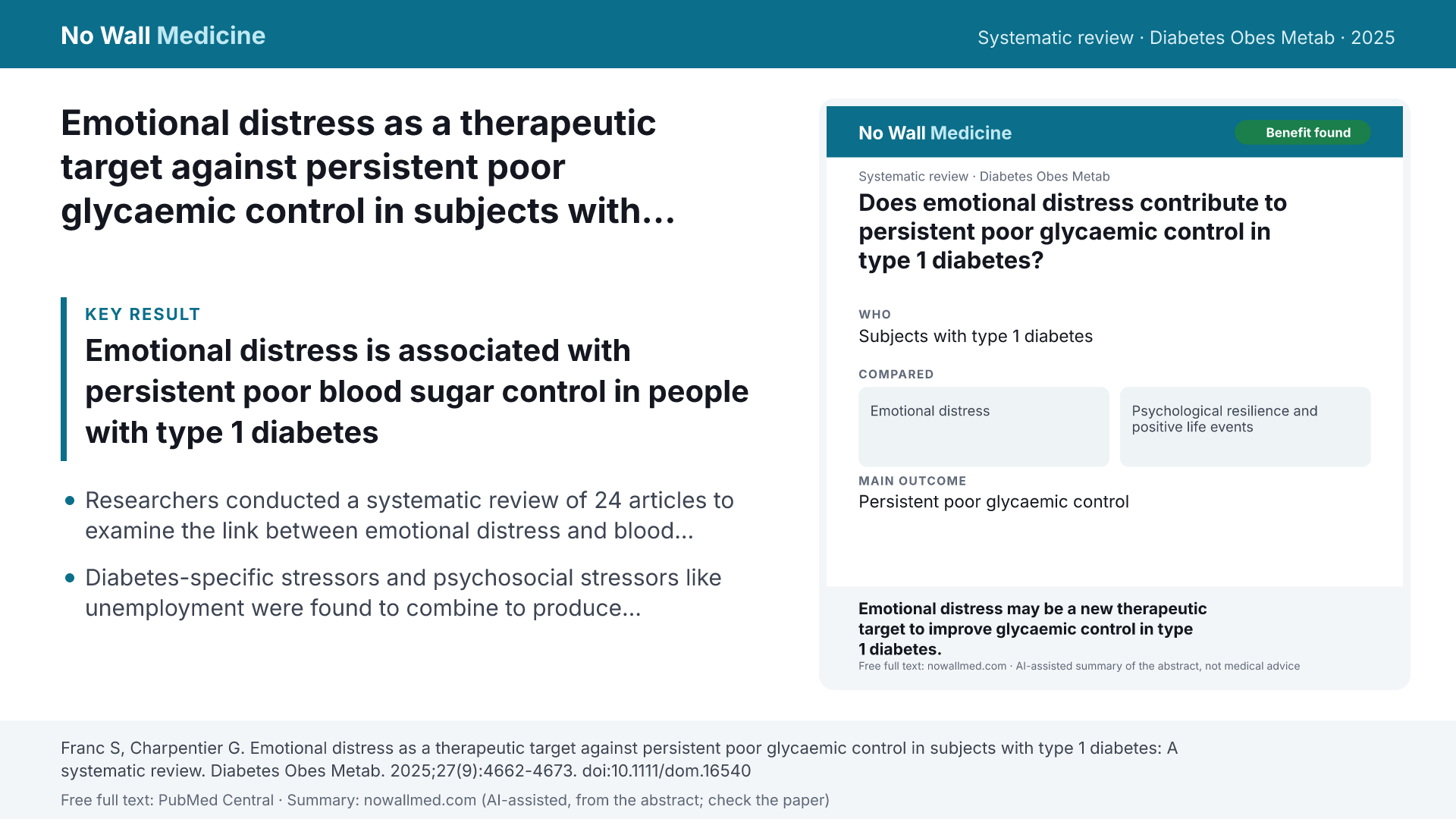
Emotional distress as a therapeutic target against persistent poor glycaemic control in subjects with type 1 diabetes: A systematic review
Key result: Emotional distress is associated with persistent poor blood sugar control in people with type 1 diabetes
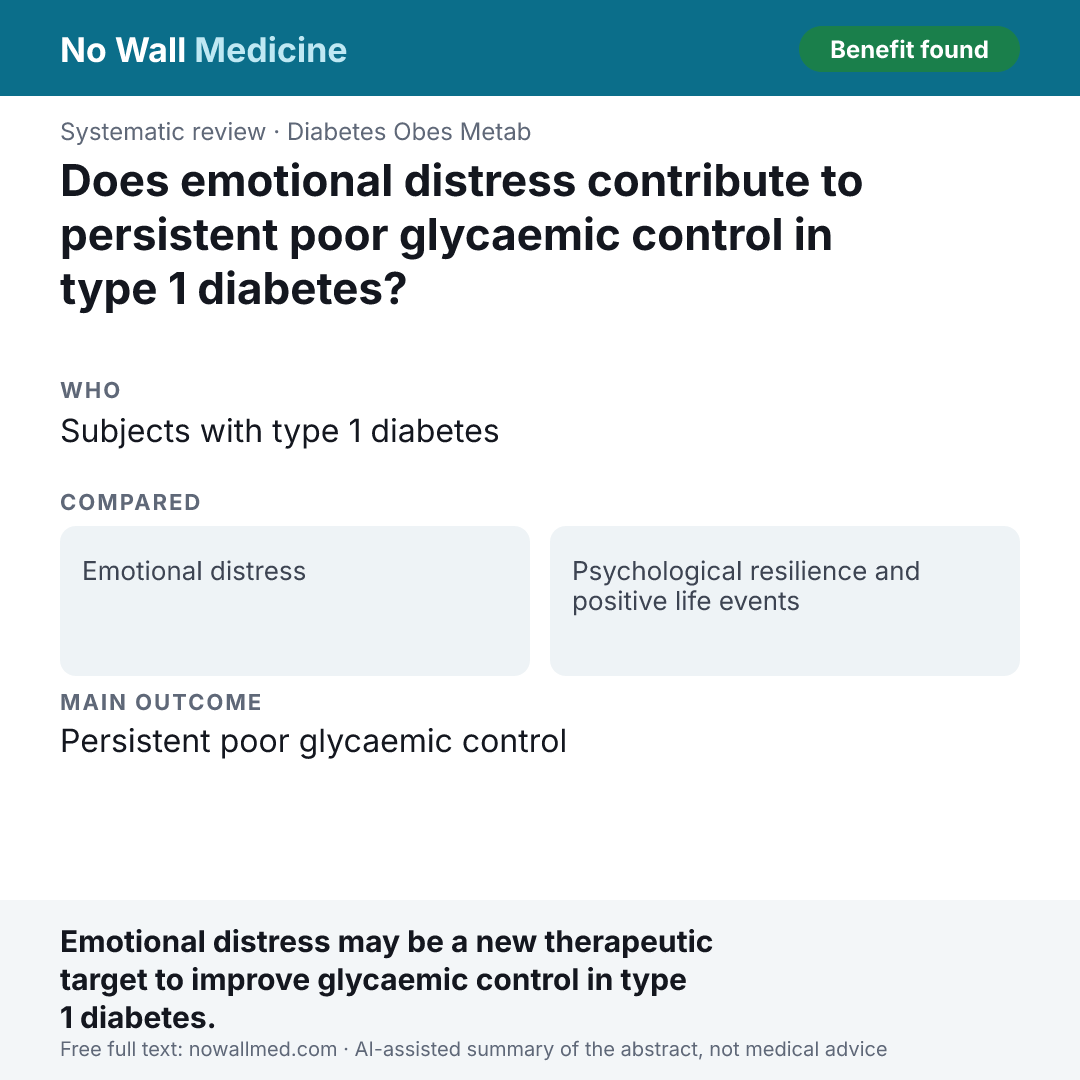
Key points
- Researchers conducted a systematic review of 24 articles to examine the link between emotional distress and blood sugar management in people with type 1 diabetes.
- Diabetes-specific stressors and psychosocial stressors like unemployment were found to combine to produce emotional distress and worsen glycaemic control.
- Psychological resilience and positive life events were associated with a reduced impact of emotional distress on blood sugar control.
Why it matters: Psychological interventions to reduce diabetes distress have only benefited certain groups of patients, leaving the role of emotional distress as a therapeutic target unclear.
Discussion prompts
- Would these patients look like yours? Who was left out?
- Is the main outcome one that matters to patients?
- Is the difference large enough to change what you do?
Cite: Franc S, Charpentier G. Emotional distress as a therapeutic target against persistent poor glycaemic control in subjects with type 1 diabetes: A systematic review. Diabetes Obes Metab. 2025;27(9):4662-4673. doi:10.1111/dom.16540
Free full text: PubMed Central · Summary and visual abstract: nowallmed.com/a/emotional-distress-as-a-therapeutic-target-against-persistent-poor-1h1kk89/ (AI-assisted from the abstract; check the paper before relying on it).