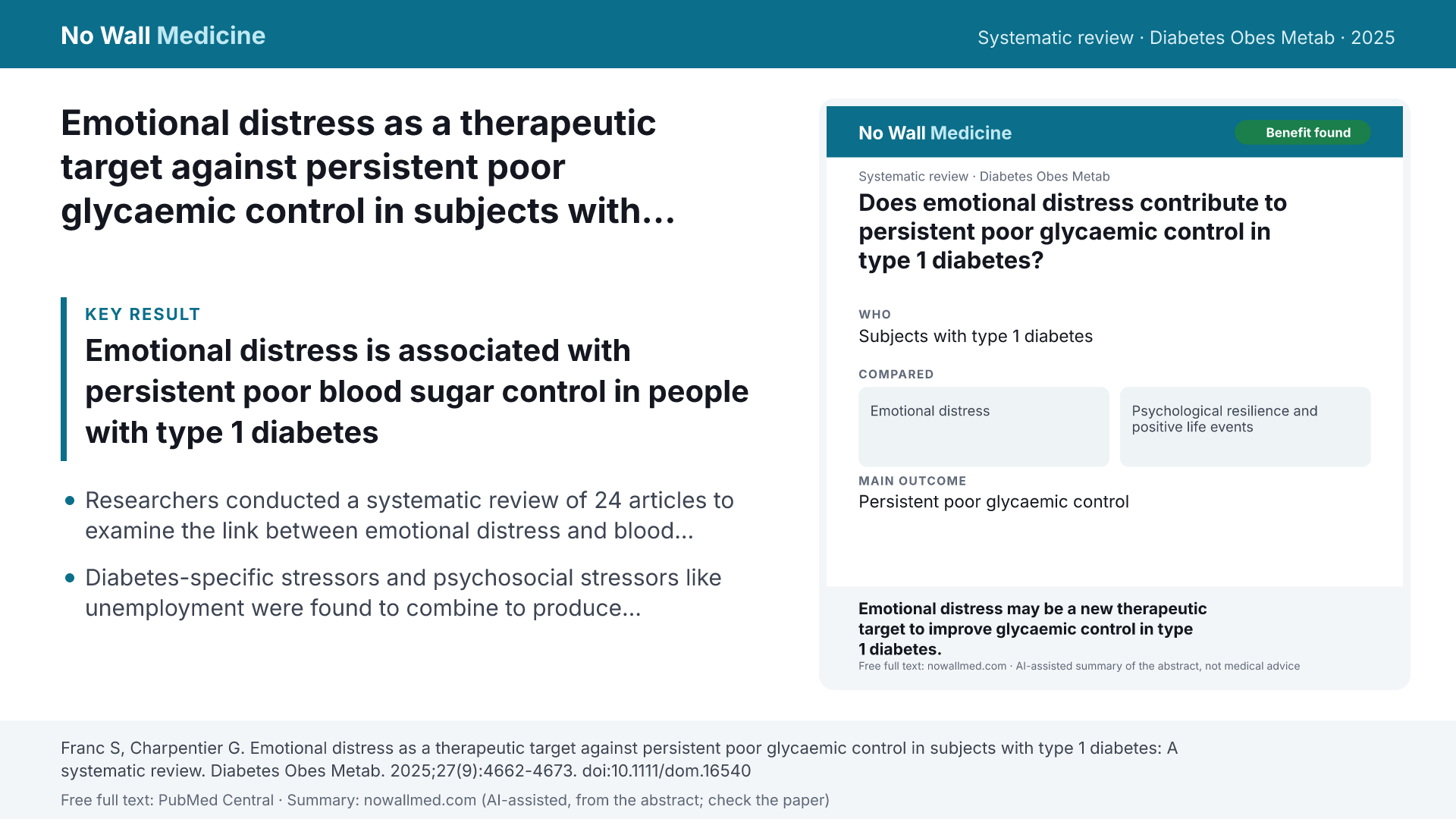
Emotional distress is associated with persistent poor blood sugar control in people with type 1 diabetes
Emotional distress as a therapeutic target against persistent poor glycaemic control in subjects with type 1 diabetes: A systematic review
Systematic reviewBenefit found
Does emotional distress contribute to persistent poor glycaemic control in type 1 diabetes?
Who
24
Subjects with type 1 diabetes
Compared
Emotional distress
Psychological resilience and positive life events
Main outcome
Persistent poor glycaemic control
Bottom line: Emotional distress may be a new therapeutic target to improve glycaemic control in type 1 diabetes.
Diabetes Obes Metab · 2025-06-25Download image
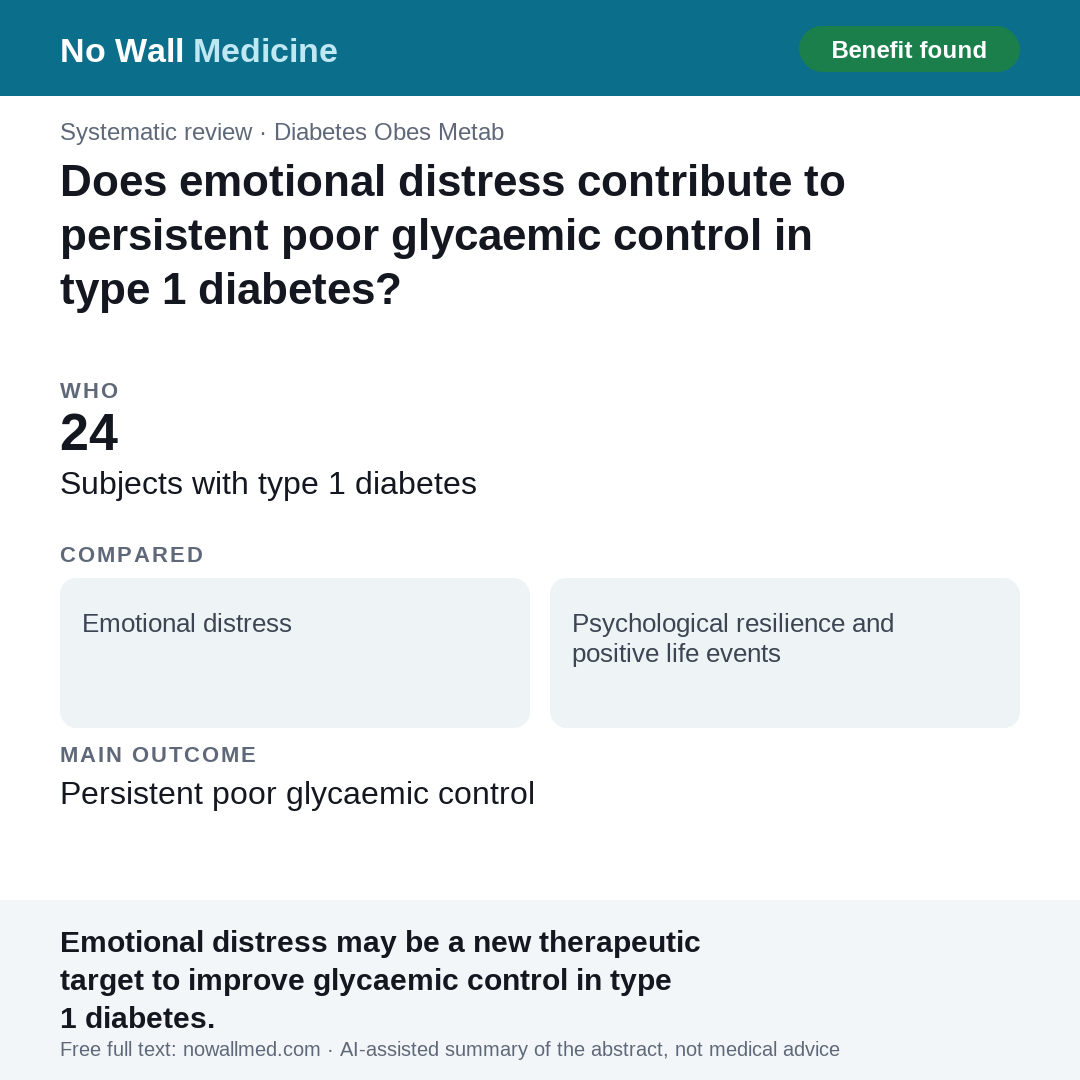
Clinical question: Does emotional distress contribute to persistent poor glycaemic control in type 1 diabetes?
Why it matters: Psychological interventions to reduce diabetes distress have only benefited certain groups of patients, leaving the role of emotional distress as a therapeutic target unclear.
Key points
- Researchers conducted a systematic review of 24 articles to examine the link between emotional distress and blood sugar management in people with type 1 diabetes.
- Diabetes-specific stressors and psychosocial stressors like unemployment were found to combine to produce emotional distress and worsen glycaemic control.
- Psychological resilience and positive life events were associated with a reduced impact of emotional distress on blood sugar control.
Headline and key points written with AI from the paper’s abstract, with every number checked against it. Read the paper before relying on them.
Was this summary helpful?
Subject terms
Cite this article
Franc S, Charpentier G. Emotional distress as a therapeutic target against persistent poor glycaemic control in subjects with type 1 diabetes: A systematic review. Diabetes Obes Metab. 2025. doi:10.1111/dom.16540
Spotted a mistake? Suggest a correction