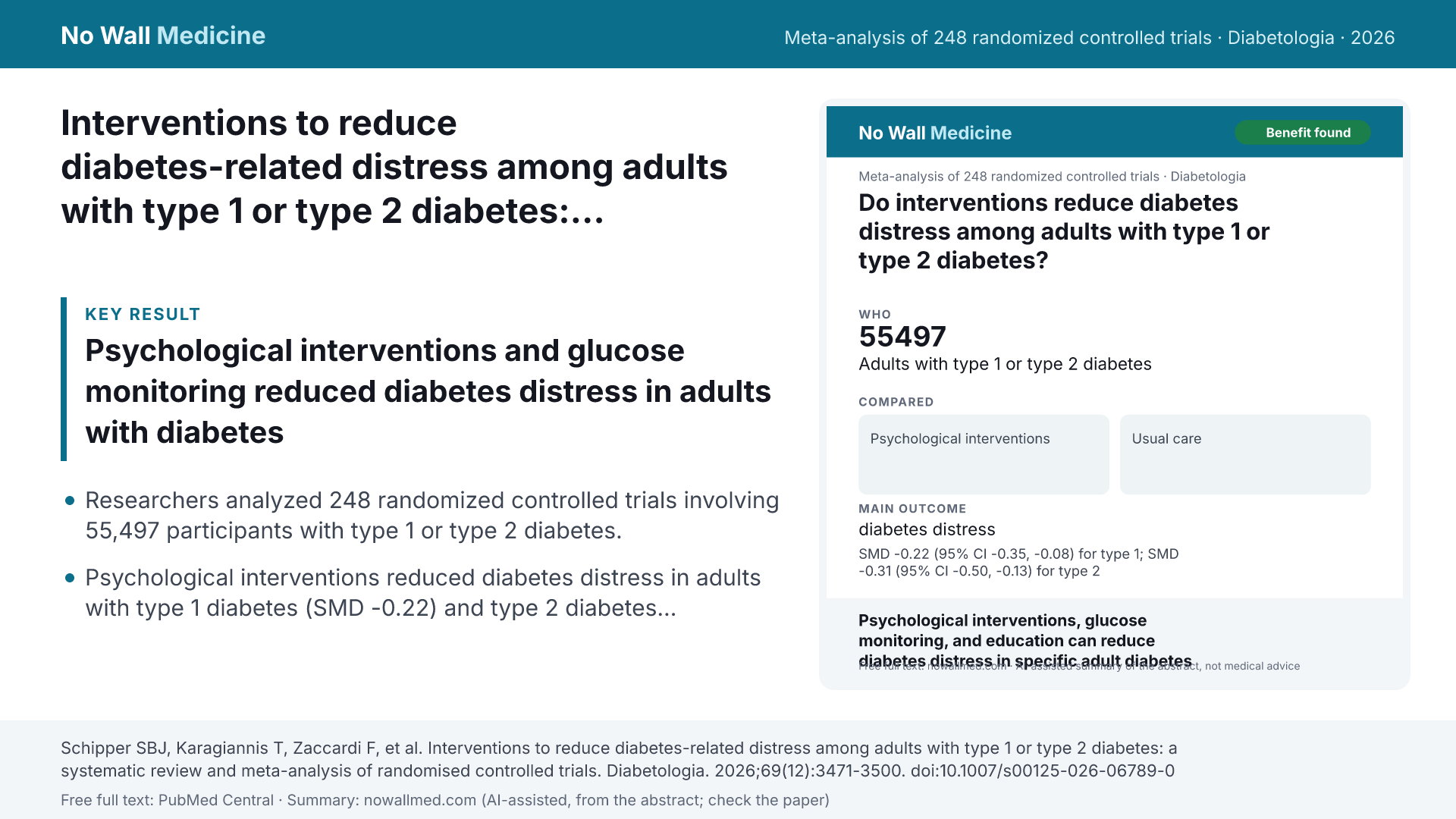
Psychological interventions and glucose monitoring reduced diabetes distress in adults with diabetes
Interventions to reduce diabetes-related distress among adults with type 1 or type 2 diabetes: a systematic review and meta-analysis of randomised controlled trials
Meta-analysis of 248 randomized controlled trialsBenefit found
Do interventions reduce diabetes distress among adults with type 1 or type 2 diabetes?
Who
55497
Adults with type 1 or type 2 diabetes
Compared
Psychological interventions
Usual care
Main outcome
diabetes distress
Result: SMD -0.22 (95% CI -0.35, -0.08) for type 1; SMD -0.31 (95% CI -0.50, -0.13) for type 2
Bottom line: Psychological interventions, glucose monitoring, and education can reduce diabetes distress in specific adult diabetes populations.
Limitation: Many analyzed trials had some concerns or high risk of bias.
Funded by: European Association for the Study of Diabetes
Diabetologia · 2026-09-11 · Save PNG
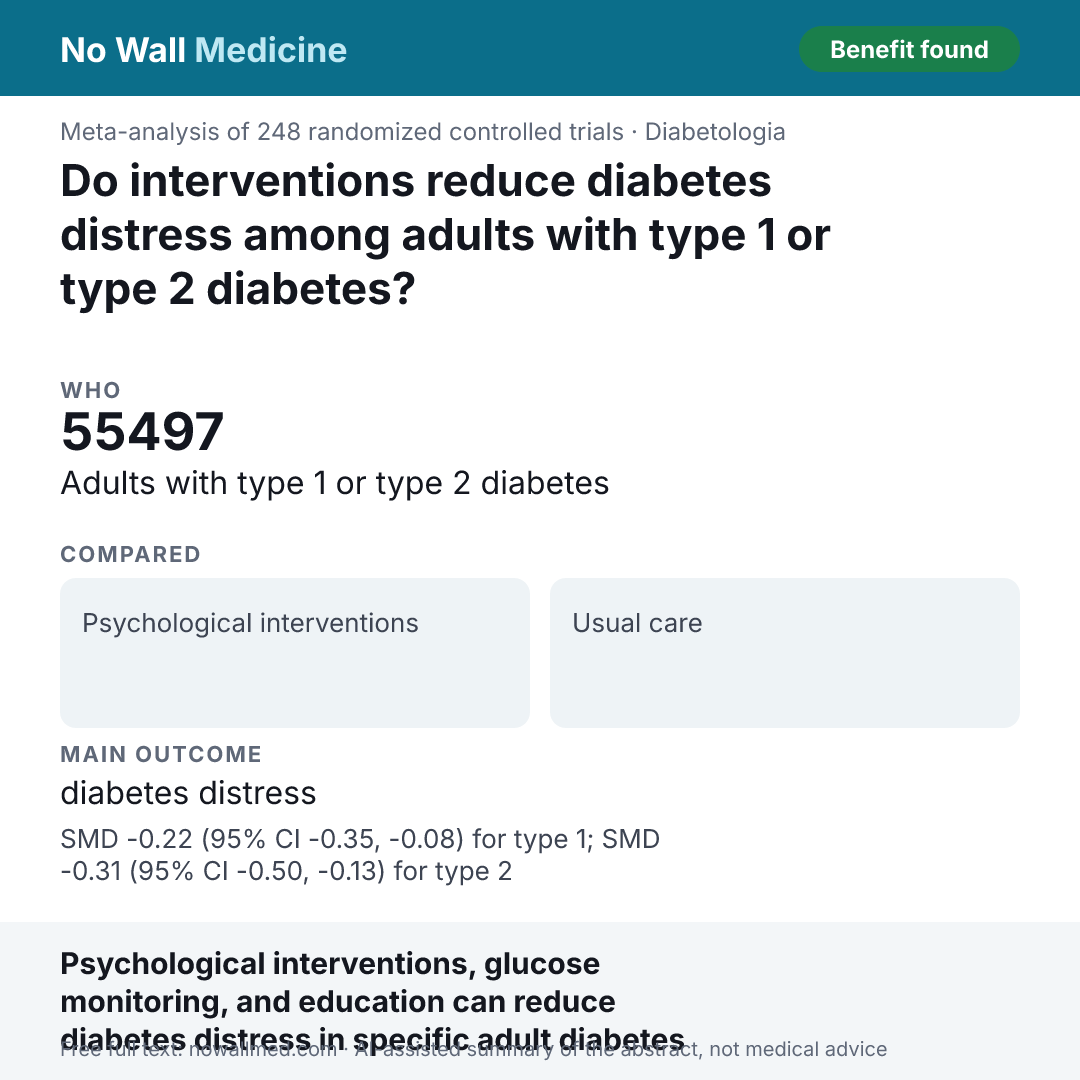
Clinical question: Do interventions reduce diabetes distress among adults with type 1 or type 2 diabetes?
Key points
- Researchers analyzed 248 randomized controlled trials involving 55,497 participants with type 1 or type 2 diabetes.
- Psychological interventions reduced diabetes distress in adults with type 1 diabetes (SMD -0.22) and type 2 diabetes (SMD -0.31) compared to usual care.
- Continuous or intermittently scanned glucose monitoring reduced distress in type 1 diabetes (SMD -0.26) and educational interventions reduced distress in type 2 diabetes (SMD -0.34).
Limitation the authors note: The analyzed trials were judged to have either some concerns for risk of bias (94 trials) or a high risk of bias (71 trials).
Headline and key points written with AI from the paper’s abstract, with every number checked against it. Read the paper before relying on them.
Was this summary helpful?
Subject terms
Headline, design, result, key points, caveat and citation as plain text.
Cite this article
Schipper SBJ, Karagiannis T, Zaccardi F, et al. Interventions to reduce diabetes-related distress among adults with type 1 or type 2 diabetes: a systematic review and meta-analysis of randomised controlled trials. Diabetologia. 2026;69(12):3471-3500. doi:10.1007/s00125-026-06789-0
Spotted a mistake? Suggest a correction