Three virtual group programs reduced diabetes distress and blood sugar levels in adults with type 1 diabetes
EMBARK: A Randomized, Controlled Trial Comparing Three Approaches to Reducing Diabetes Distress and Improving HbA1c in Adults With Type 1 Diabetes
Randomized controlled trialMixed results
Which virtual group-based program best reduces diabetes distress and improves HbA1c in type 1 diabetes?
Who
276
Adults with type 1 diabetes, elevated diabetes distress, and HbA1c >7.5% · Multiple settings
Compared
Streamline (educator-led): HbA1c reduction range -0.4 to -0.72%
TunedIn (psychologist-led): HbA1c reduction range -0.4 to -0.72%
FixIt (integrated): HbA1c reduction range -0.4 to -0.72%
Main outcome
Diabetes distress and HbA1c
Bottom line: All programs reduced diabetes distress and HbA1c, but TunedIn provided the most consistent benefits across both outcomes.
Diabetes Care · 2024-05-29Download image
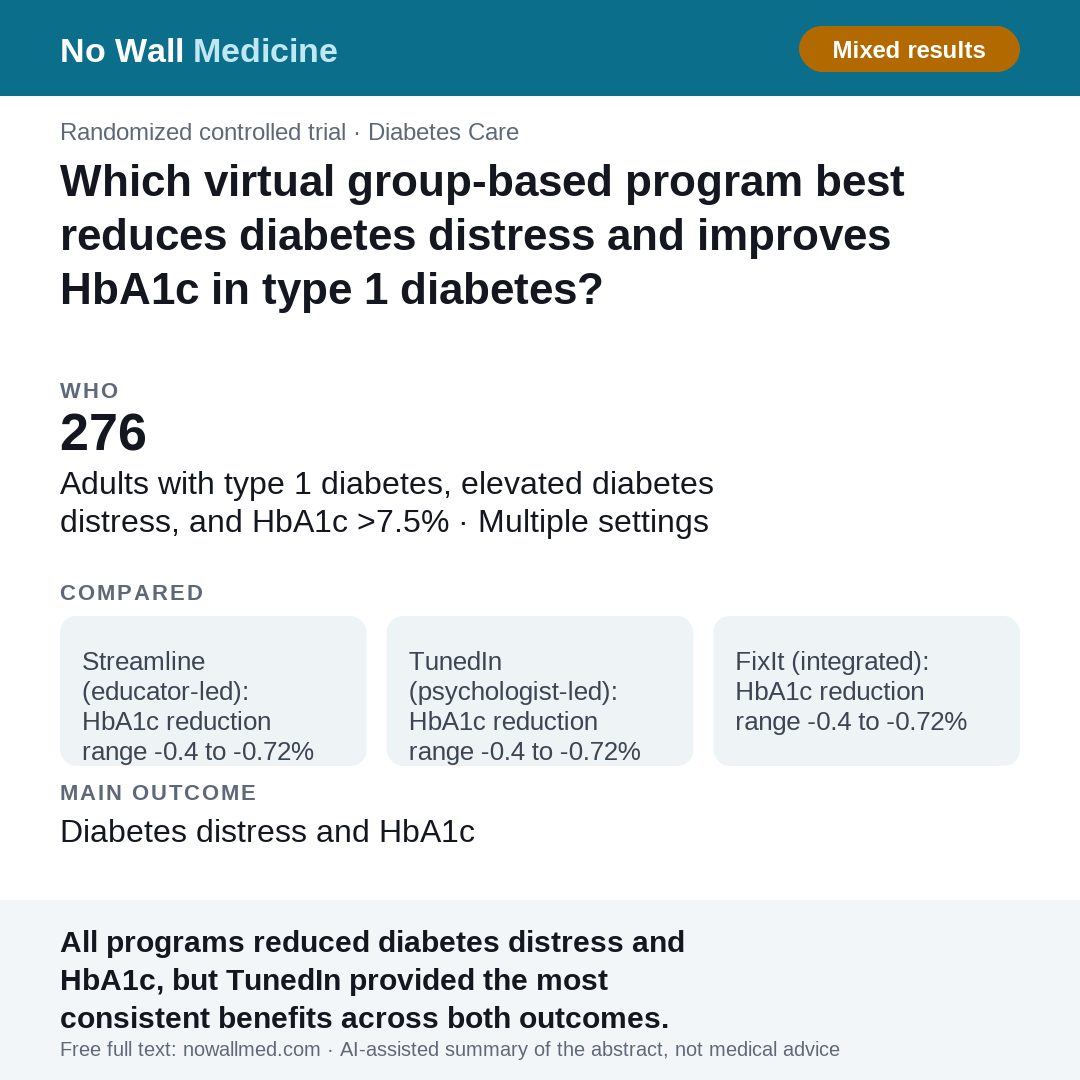
Clinical question: Which virtual group-based program best reduces diabetes distress and improves HbA1c in type 1 diabetes?
Why it matters: It was unknown which approach—educator-led education, psychologist-led emotional support, or a combination of both—is most effective for reducing diabetes distress and blood sugar levels.
Key points
- The study randomized 276 adults with type 1 diabetes and high diabetes distress and blood sugar levels into three virtual group programs.
- All three programs showed sustained reductions in diabetes distress and blood sugar levels (HbA1c) at the 12-month follow-up.
- TunedIn and FixIt programs showed greater diabetes distress reductions than Streamline, while Streamline and TunedIn showed greater blood sugar reductions than FixIt.
Headline and key points written with AI from the paper’s abstract, with every number checked against it. Read the paper before relying on them.
Was this summary helpful?
Subject terms
Cite this article
Hessler DM, Fisher L, Guzman S, Strycker L, Polonsky WH, Ahmann A. EMBARK: A Randomized, Controlled Trial Comparing Three Approaches to Reducing Diabetes Distress and Improving HbA1c in Adults With Type 1 Diabetes. Diabetes Care. 2024. doi:10.2337/dc23-2452
Spotted a mistake? Suggest a correction
Top studies every Monday
The week’s key trials and guidelines in your specialties, plus any topics you follow. By email, free.
Get the weekly digest