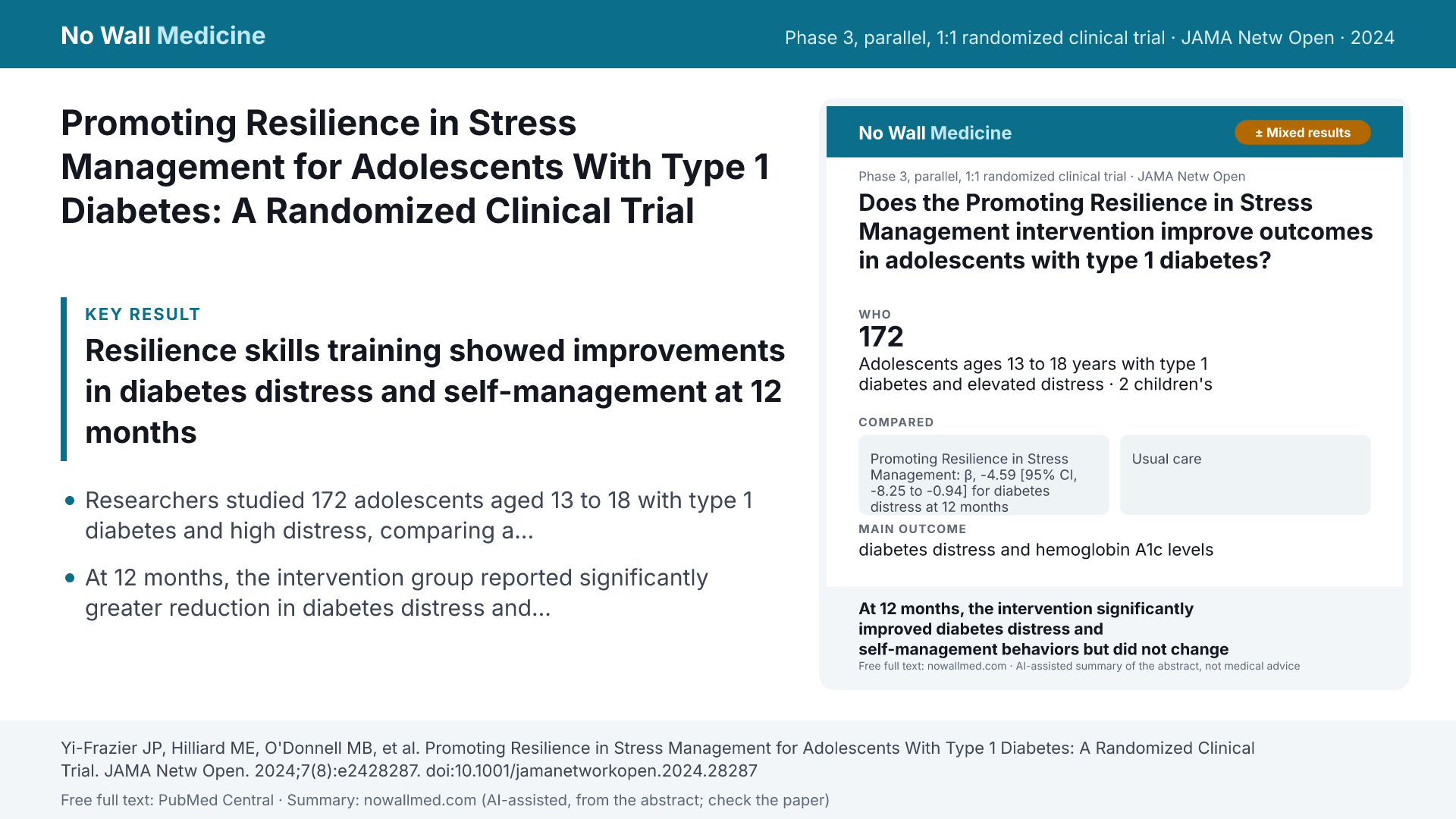
Resilience skills training showed improvements in diabetes distress and self-management at 12 months
Promoting Resilience in Stress Management for Adolescents With Type 1 Diabetes: A Randomized Clinical Trial
Phase 3, parallel, 1:1 randomized clinical trialMixed results
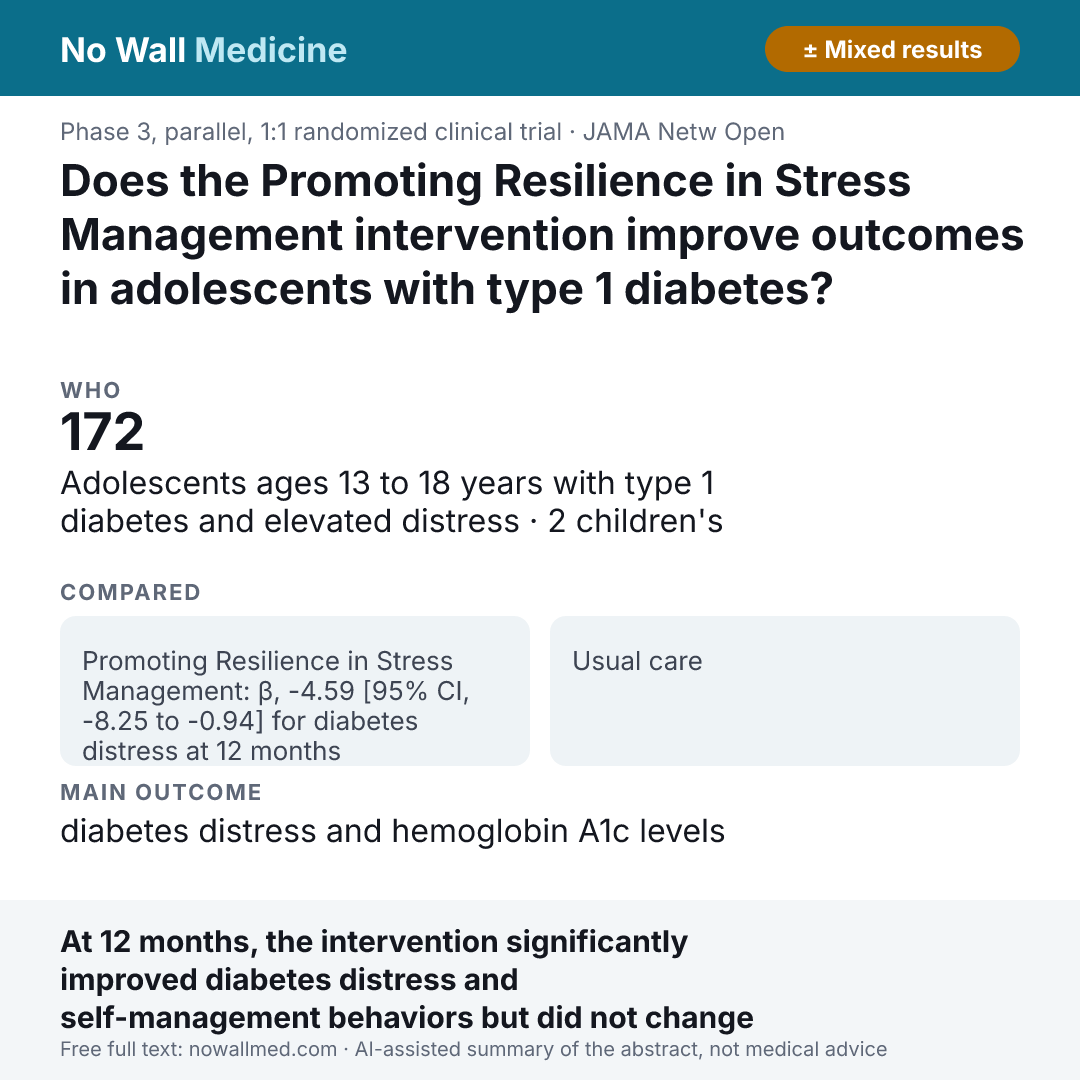
Does the Promoting Resilience in Stress Management intervention improve outcomes in adolescents with type 1 diabetes?
Who
172
Adolescents ages 13 to 18 years with type 1 diabetes and elevated distress · 2 children's hospitals in Seattle and Houston
Compared
Promoting Resilience in Stress Management: β, -4.59 [95% CI, -8.25 to -0.94] for diabetes distress at 12 months
Usual care
Main outcome
diabetes distress and hemoglobin A1c levels
Result: diabetes distress β, -4.59 (95% CI, -8.25 to -0.94)
Bottom line: At 12 months, the intervention significantly improved diabetes distress and self-management behaviors but did not change hemoglobin A1c levels.
JAMA Netw Open · 2024-08-01 · NCT03847194
Headline and visual abstract written with AI from the paper’s abstract, with every number checked against it. Read the paper before relying on them.
Was this summary helpful?
Subject terms
Cite this article
Yi-Frazier JP, Hilliard ME, O'Donnell MB, et al. Promoting Resilience in Stress Management for Adolescents With Type 1 Diabetes: A Randomized Clinical Trial. JAMA Netw Open. 2024;7(8):e2428287. doi:10.1001/jamanetworkopen.2024.28287
Spotted a mistake? Suggest a correction