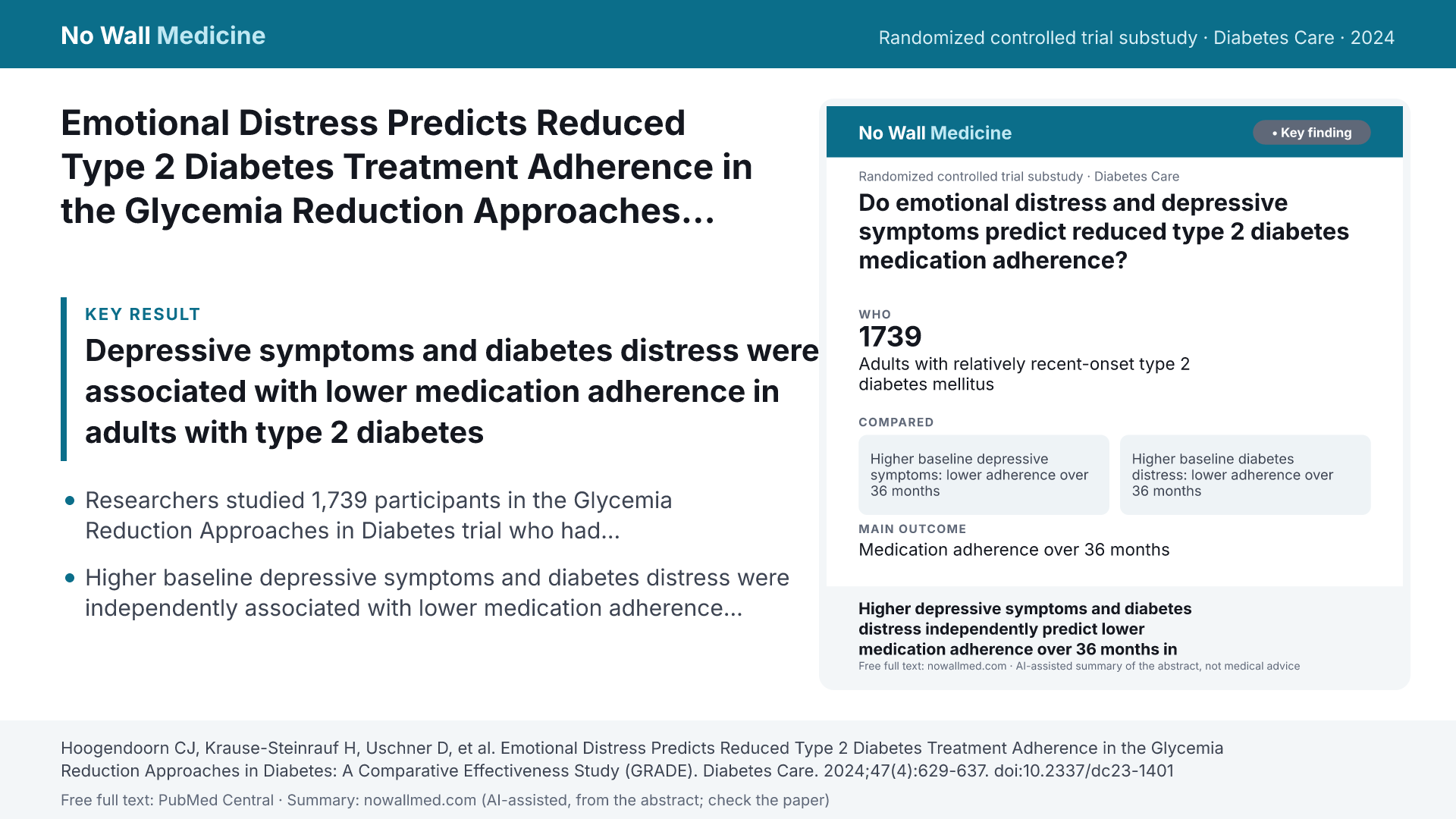
Depressive symptoms and diabetes distress were associated with lower medication adherence in adults with type 2 diabetes
Emotional Distress Predicts Reduced Type 2 Diabetes Treatment Adherence in the Glycemia Reduction Approaches in Diabetes: A Comparative Effectiveness Study (GRADE)
Randomized controlled trial substudyKey finding
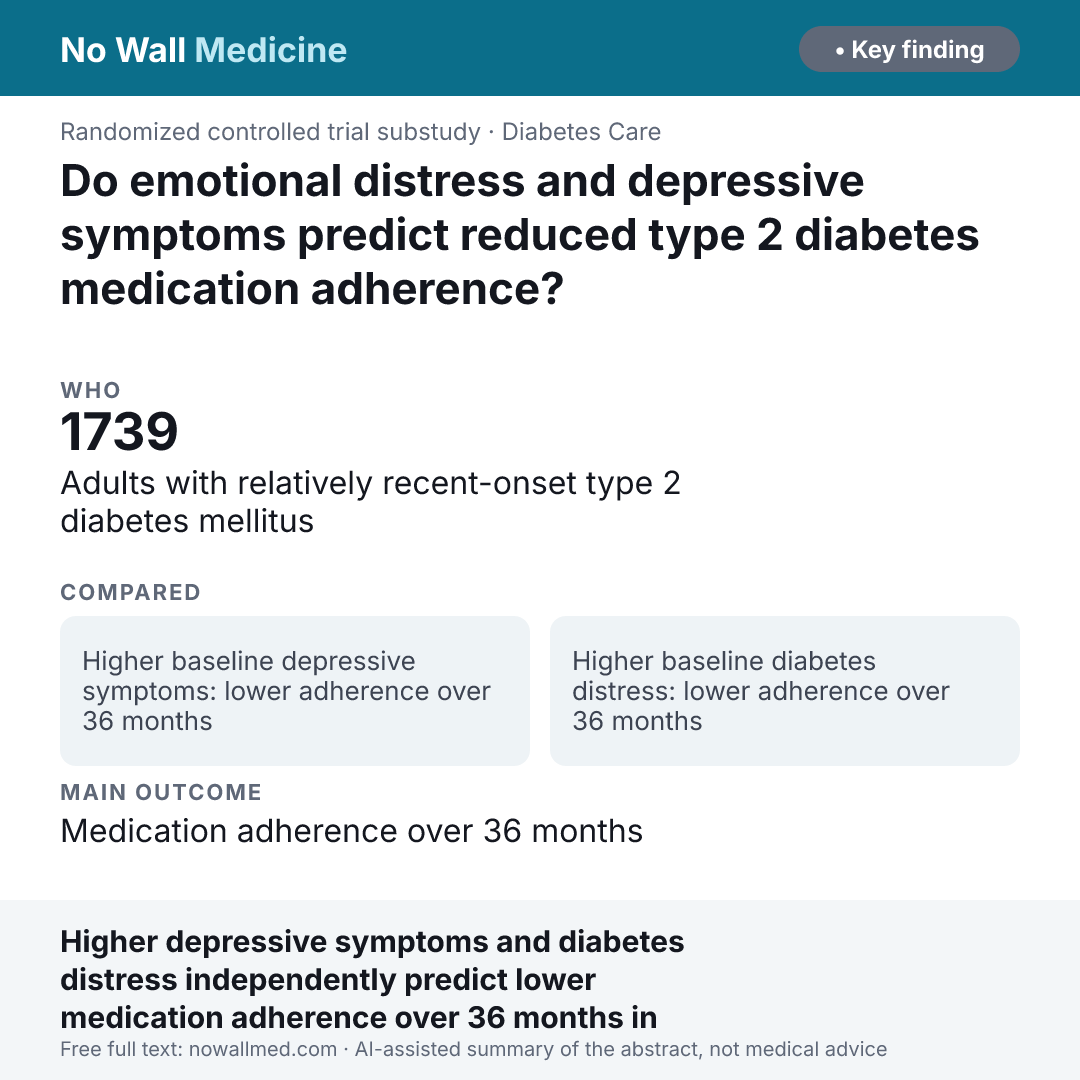
Do emotional distress and depressive symptoms predict reduced type 2 diabetes medication adherence?
Who
1739
Adults with relatively recent-onset type 2 diabetes mellitus
Compared
Higher baseline depressive symptoms: lower adherence over 36 months
Higher baseline diabetes distress: lower adherence over 36 months
Main outcome
Medication adherence over 36 months
Bottom line: Higher depressive symptoms and diabetes distress independently predict lower medication adherence over 36 months in adults with type 2 diabetes.
Diabetes Care · 2024-01-16
Headline and visual abstract written with AI from the paper’s abstract, with every number checked against it. Read the paper before relying on them.
Was this summary helpful?
Subject terms
Cite this article
Hoogendoorn CJ, Krause-Steinrauf H, Uschner D, et al. Emotional Distress Predicts Reduced Type 2 Diabetes Treatment Adherence in the Glycemia Reduction Approaches in Diabetes: A Comparative Effectiveness Study (GRADE). Diabetes Care. 2024;47(4):629-637. doi:10.2337/dc23-1401
Spotted a mistake? Suggest a correction