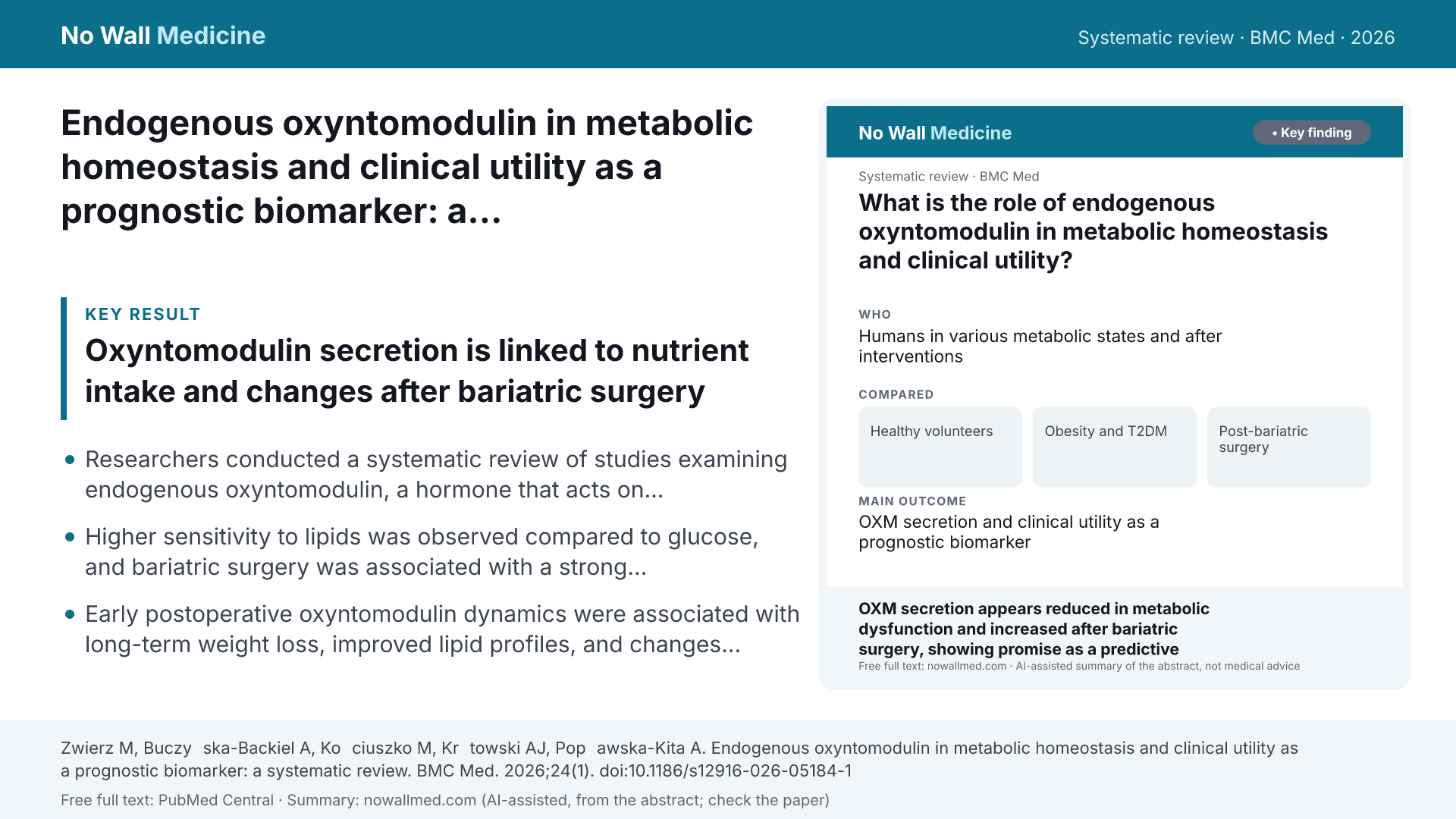
Oxyntomodulin secretion is linked to nutrient intake and changes after bariatric surgery
Endogenous oxyntomodulin in metabolic homeostasis and clinical utility as a prognostic biomarker: a systematic review
Systematic reviewUnclear result
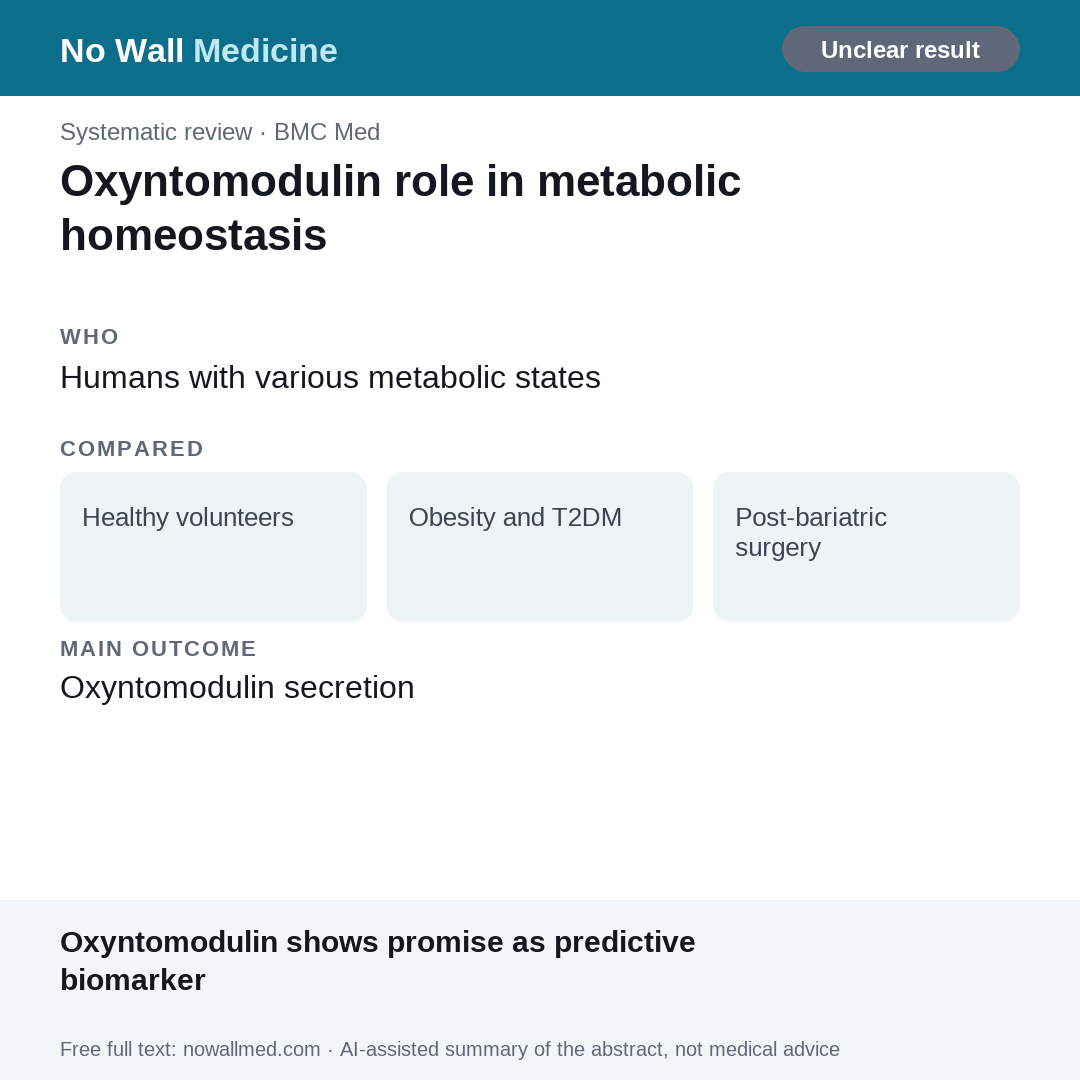
Oxyntomodulin role in metabolic homeostasis
Who
Humans with various metabolic states
Compared
Healthy volunteers
Obesity and T2DM
Post-bariatric surgery
Main outcome
Oxyntomodulin secretion
Bottom line: Oxyntomodulin shows promise as predictive biomarker
BMC Med · 2026-08-22Download image
Why it matters: The physiology of endogenous oxyntomodulin and its role in obesity and type 2 diabetes mellitus remain poorly defined.
Key points
- Researchers conducted a systematic review of studies examining endogenous oxyntomodulin, a hormone that acts on both glucagon-like peptide-1 and glucagon receptors, in humans.
- Higher sensitivity to lipids was observed compared to glucose, and bariatric surgery was associated with a strong and sustained increase in postprandial oxyntomodulin concentrations.
- Early postoperative oxyntomodulin dynamics were associated with long-term weight loss, improved lipid profiles, and changes in dietary preferences.
Limitation the authors note: The implementation of oxyntomodulin in clinical practice requires standardization of pre-analytical and measurement procedures.
Headline and key points written with AI from the paper’s abstract, with every number checked against it. Read the paper before relying on them.
Was this summary helpful?
Subject terms
Cite this article
Zwierz M, Buczyńska-Backiel A, Kościuszko M, Krętowski AJ, Popławska-Kita A. Endogenous oxyntomodulin in metabolic homeostasis and clinical utility as a prognostic biomarker: a systematic review. BMC Med. 2026. doi:10.1186/s12916-026-05184-1
Spotted a mistake? Suggest a correction