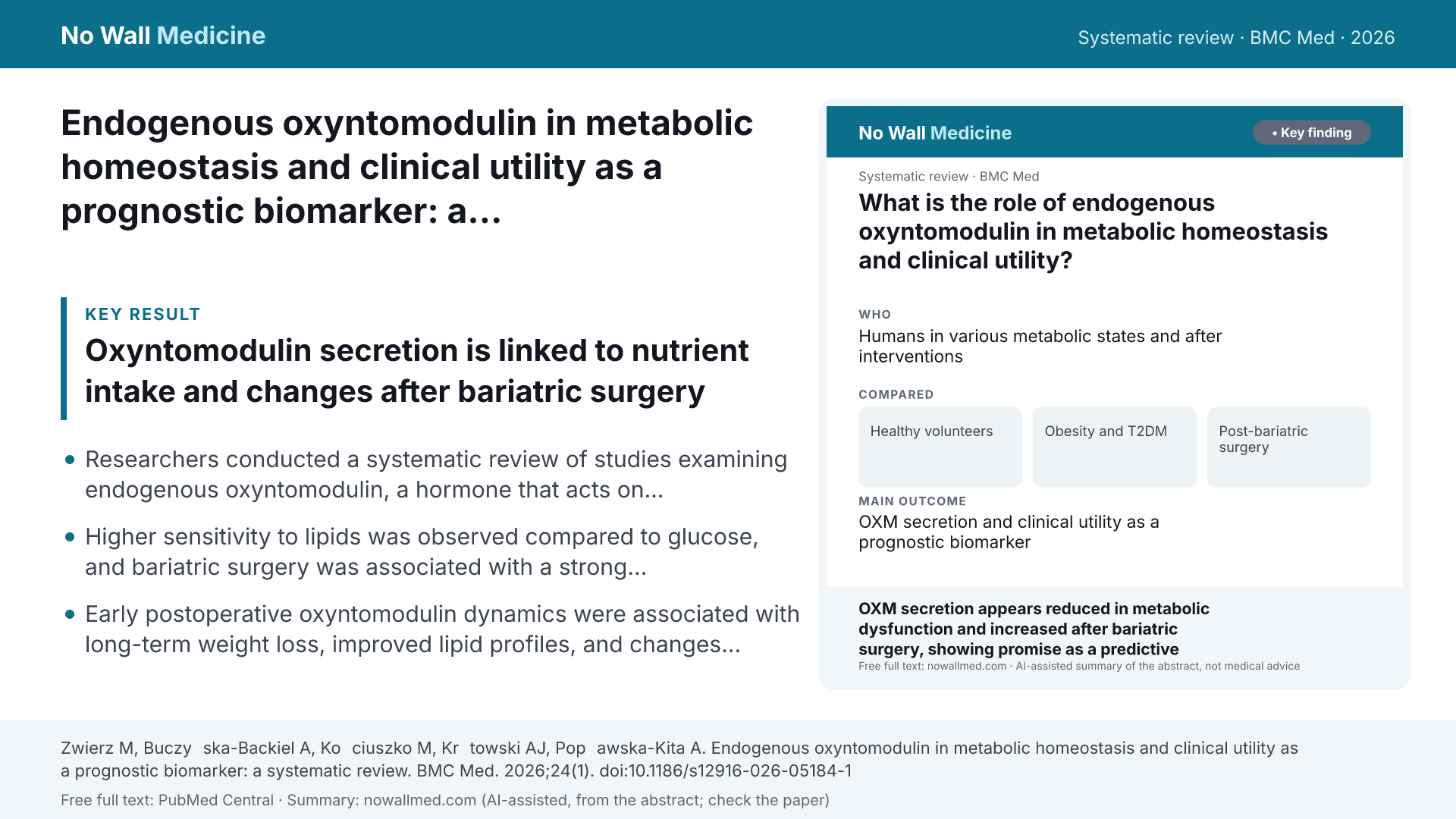
Endogenous oxyntomodulin in metabolic homeostasis and clinical utility as a prognostic biomarker: a systematic review
Key result: Oxyntomodulin secretion is linked to nutrient intake and changes after bariatric surgery
Key points
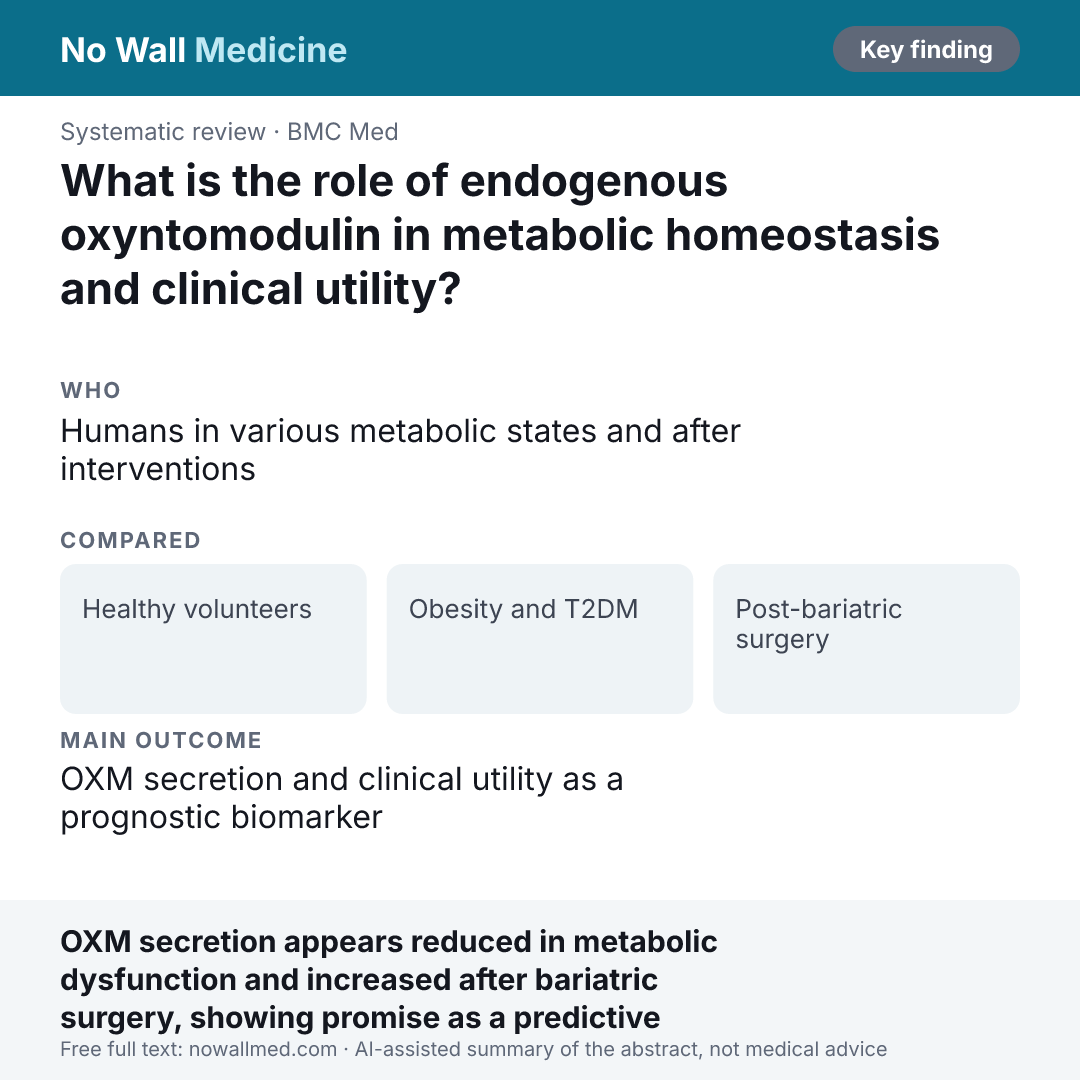
- Researchers conducted a systematic review of studies examining endogenous oxyntomodulin, a hormone that acts on both glucagon-like peptide-1 and glucagon receptors, in humans.
- Higher sensitivity to lipids was observed compared to glucose, and bariatric surgery was associated with a strong and sustained increase in postprandial oxyntomodulin concentrations.
- Early postoperative oxyntomodulin dynamics were associated with long-term weight loss, improved lipid profiles, and changes in dietary preferences.
Why it matters: The physiology of endogenous oxyntomodulin and its role in obesity and type 2 diabetes mellitus remain poorly defined.
Limitation the authors note: The implementation of oxyntomodulin in clinical practice requires standardization of pre-analytical and measurement procedures.
Discussion prompts
- Would these patients look like yours? Who was left out?
- Is the main outcome one that matters to patients?
- Is the difference large enough to change what you do?
Cite: Zwierz M, Buczyńska-Backiel A, Kościuszko M, Krętowski AJ, Popławska-Kita A. Endogenous oxyntomodulin in metabolic homeostasis and clinical utility as a prognostic biomarker: a systematic review. BMC Med. 2026;24(1). doi:10.1186/s12916-026-05184-1
Free full text: PubMed Central · Summary and visual abstract: nowallmed.com/a/endogenous-oxyntomodulin-in-metabolic-homeostasis-and-clinical-ufnxt/ (AI-assisted from the abstract; check the paper before relying on it).