Endothelial damage in septic shock patients as evidenced by circulating syndecan-1, sphingosine-1-phosphate and soluble VE-cadherin: a substudy of ALBIOS
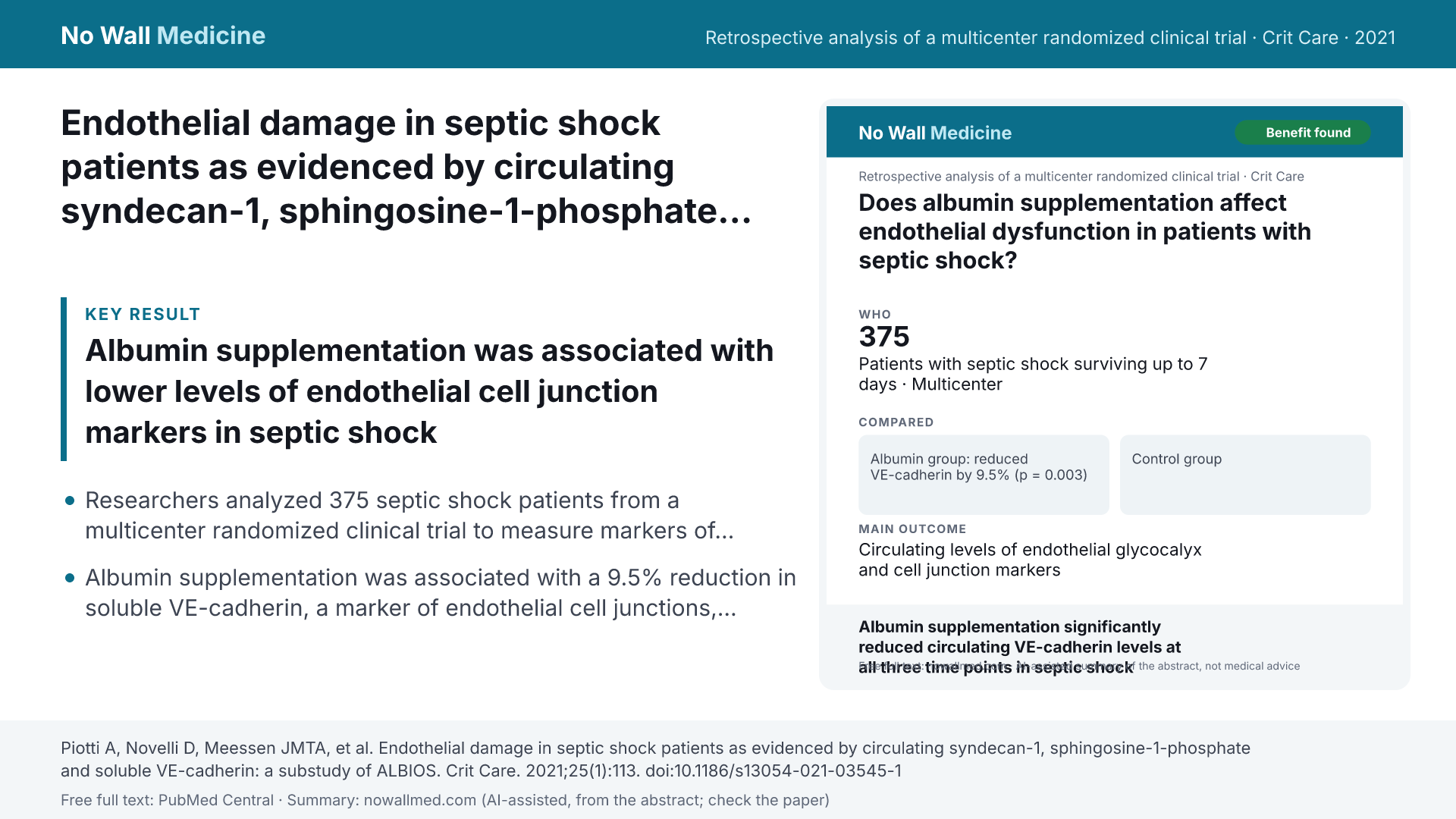
Key result: Albumin supplementation was associated with lower levels of endothelial cell junction markers in septic shock
Retrospective analysis of a multicenter randomized clinical trialBenefit found
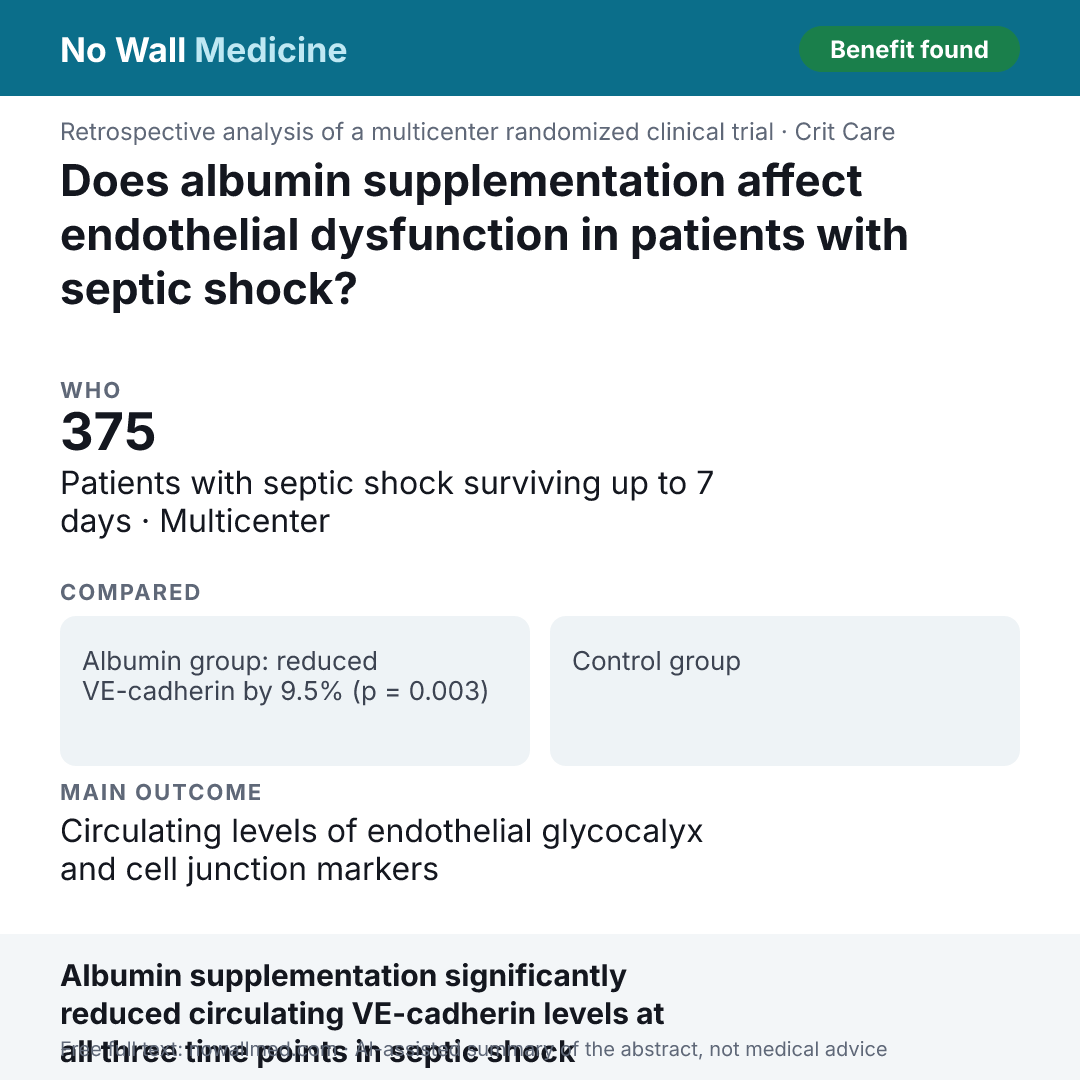
Does albumin supplementation affect endothelial dysfunction in patients with septic shock?
Who
375
Patients with septic shock surviving up to 7 days · Multicenter
Compared
Albumin group: reduced VE-cadherin by 9.5% (p = 0.003)
Control group
Main outcome
Circulating levels of endothelial glycocalyx and cell junction markers
Bottom line: Albumin supplementation significantly reduced circulating VE-cadherin levels at all three time points in septic shock patients.
Crit Care · 2021-03-19 · Save PNG
Key points
- Researchers analyzed 375 septic shock patients from a multicenter randomized clinical trial to measure markers of the endothelial glycocalyx and cell junctions.
- Albumin supplementation was associated with a 9.5% reduction in soluble VE-cadherin, a marker of endothelial cell junctions, at all three measured time points.
- Higher levels of syndecan-1 and soluble VE-cadherin were associated with organ failure, while syndecan-1 was associated with 90-day mortality.
Discussion prompts
- Would these patients look like yours? Who was left out?
- Is the main outcome one that matters to patients?
- Is the difference large enough to change what you do?
Cite: Piotti A, Novelli D, Meessen JMTA, et al. Endothelial damage in septic shock patients as evidenced by circulating syndecan-1, sphingosine-1-phosphate and soluble VE-cadherin: a substudy of ALBIOS. Crit Care. 2021;25(1):113. doi:10.1186/s13054-021-03545-1
Free full text: PubMed Central · Summary and visual abstract: nowallmed.com/a/endothelial-damage-in-septic-shock-patients-as-evidenced-by-fy8gkp/ (AI-assisted from the abstract; check the paper before relying on it).