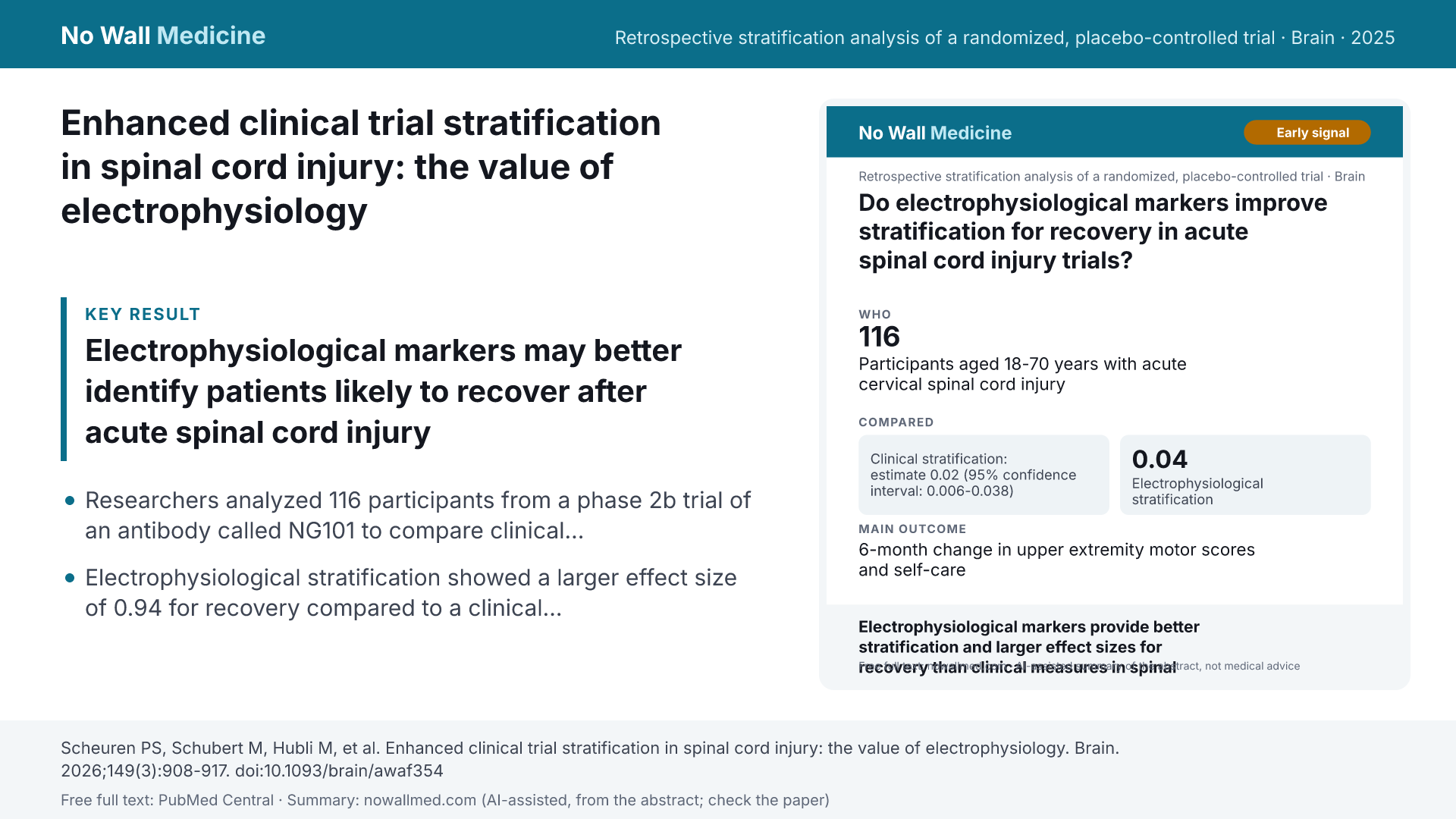
Electrophysiological markers may better identify patients likely to recover after acute spinal cord injury
Enhanced clinical trial stratification in spinal cord injury: the value of electrophysiology
Retrospective stratification analysis of a randomized, placebo-controlled trialEarly signal
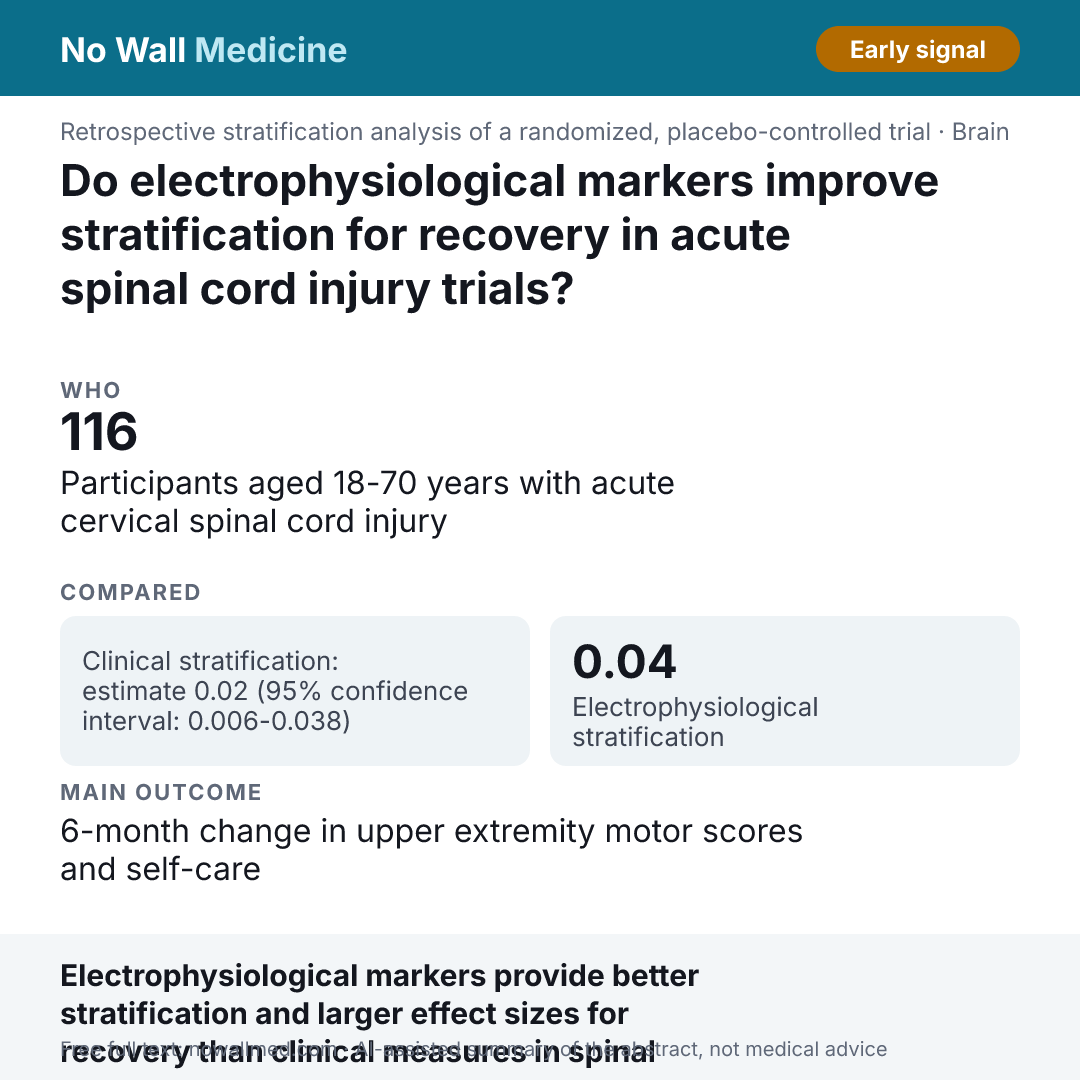
Do electrophysiological markers improve stratification for recovery in acute spinal cord injury trials?
Who
116
Participants aged 18-70 years with acute cervical spinal cord injury
Compared
Clinical stratification: estimate 0.02 (95% confidence interval: 0.006-0.038)
0.04Electrophysiological stratification (0.015-0.054)
Main outcome
6-month change in upper extremity motor scores and self-care
Result: Cohen's d = 0.94 for electrophysiological stratification
Bottom line: Electrophysiological markers provide better stratification and larger effect sizes for recovery than clinical measures in spinal cord injury trials.
Brain · 2025-09-24 · Save PNG
Same trial (NCT03935321)
Papers we list that report this registered trial, oldest first. Read a secondary analysis alongside the main results.
- Main results No clear difference
Intrathecal NG101 antibody showed no significant difference in motor recovery for acute cervical spinal cord injury Lancet Neurol 2024-12 - Related analysis Early signal
Wearable sensors detected changes in energy expenditure but not clinical motor scores in spinal cord injury trial Neurorehabil Neural Repair 2025-07 - Secondary analysis Early signal
This paper Brain 2025-09
Clinical question: Do electrophysiological markers improve stratification for recovery in acute spinal cord injury trials?
Why it matters: Current clinical standards lack biomarkers that surpass existing measures for identifying patients most likely to benefit from plasticity-inducing interventions in spinal cord injury trials.
Key points
- Researchers analyzed 116 participants from a phase 2b trial of an antibody called NG101 to compare clinical and electrophysiological methods for patient stratification.
- Electrophysiological stratification showed a larger effect size of 0.94 for recovery compared to a clinical stratification effect size of 0.46.
- Power analyses showed that electrophysiological stratification required a smaller sample size of 32 participants compared to 120 for clinical stratification.
Headline and key points written with AI from the paper’s abstract, with every number checked against it. Read the paper before relying on them.
Was this summary helpful?
Subject terms
Headline, design, result, key points, caveat and citation as plain text.
Cite this article
Scheuren PS, Schubert M, Hubli M, et al. Enhanced clinical trial stratification in spinal cord injury: the value of electrophysiology. Brain. 2026;149(3):908-917. doi:10.1093/brain/awaf354
Spotted a mistake? Suggest a correction