Enteral iron dose effect on iron storage, intestinal barrier, and gut microbiome in preterm infants: a randomized clinical trial
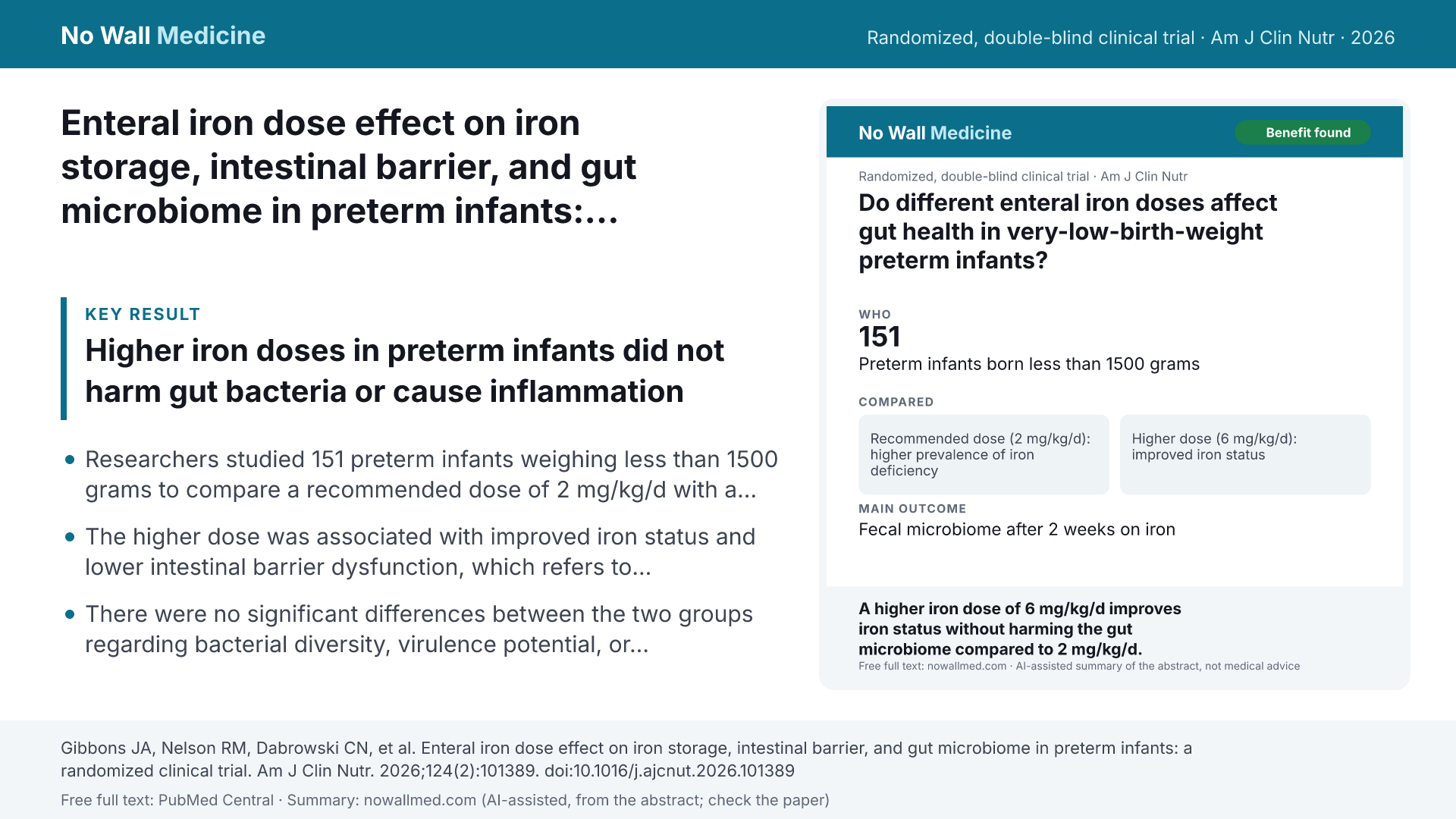
Key result: Higher iron doses in preterm infants did not harm gut bacteria or cause inflammation
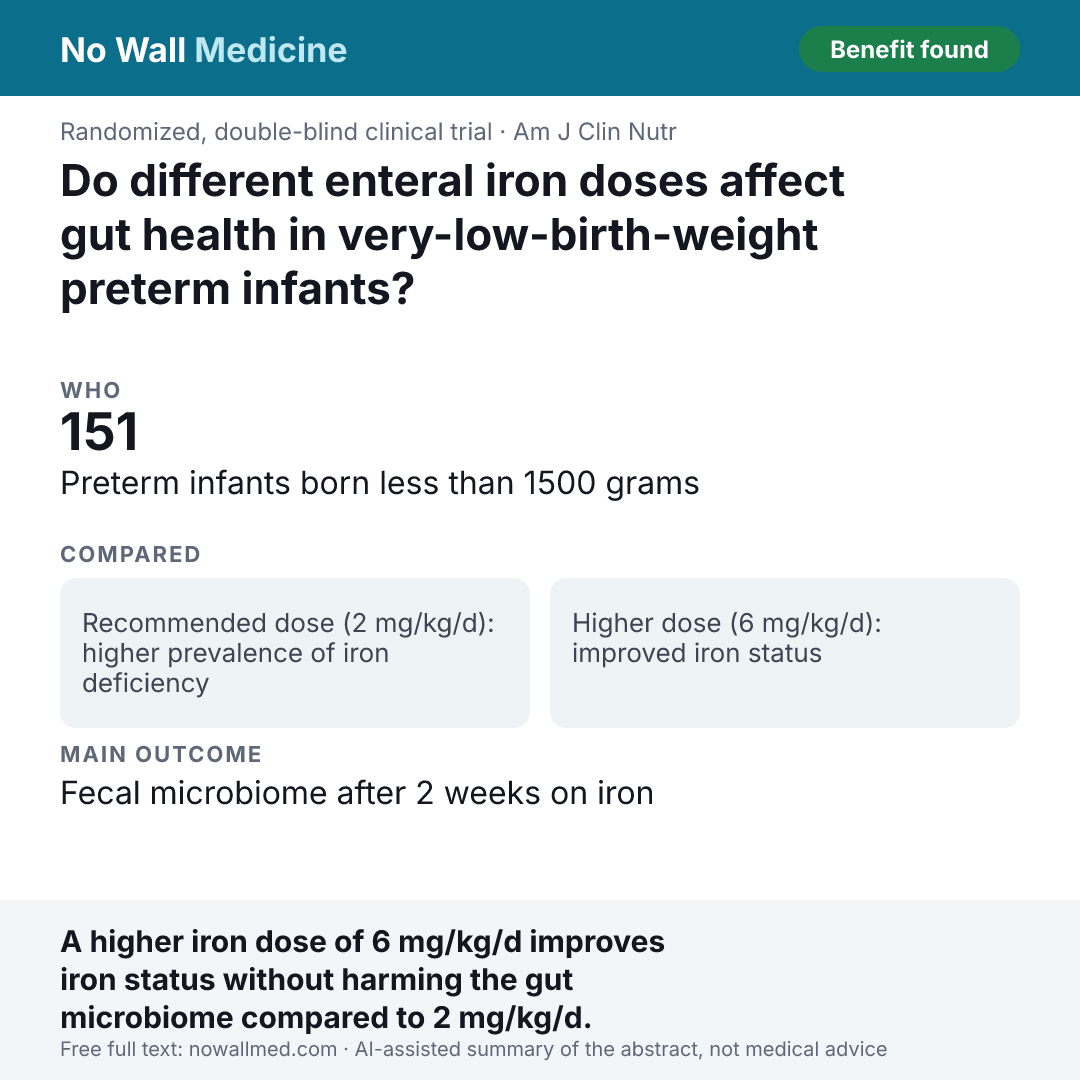
Randomized, double-blind clinical trialBenefit found
Do different enteral iron doses affect gut health in very-low-birth-weight preterm infants?
Who
151
Preterm infants born less than 1500 grams
Compared
Recommended dose (2 mg/kg/d): higher prevalence of iron deficiency
Higher dose (6 mg/kg/d): improved iron status
Main outcome
Fecal microbiome after 2 weeks on iron
Bottom line: A higher iron dose of 6 mg/kg/d improves iron status without harming the gut microbiome compared to 2 mg/kg/d.
Limitation: Subgroup analysis of singletons showed significant differences in temporal shifts in bacterial community structure.
Am J Clin Nutr · 2026-06-09 · Save PNG
Key points
- Researchers studied 151 preterm infants weighing less than 1500 grams to compare a recommended dose of 2 mg/kg/d with a higher dose of 6 mg/kg/d.
- The higher dose was associated with improved iron status and lower intestinal barrier dysfunction, which refers to the integrity of the gut lining.
- There were no significant differences between the two groups regarding bacterial diversity, virulence potential, or markers of intestinal inflammation.
Why it matters: Concerns regarding potential harms of iron supplementation on the gut microbiome have contributed to recommendations for lower dosing in preterm infants.
Discussion prompts
- Would these patients look like yours? Who was left out?
- Is the main outcome one that matters to patients?
- Is the difference large enough to change what you do?
Cite: Gibbons JA, Nelson RM, Dabrowski CN, et al. Enteral iron dose effect on iron storage, intestinal barrier, and gut microbiome in preterm infants: a randomized clinical trial. Am J Clin Nutr. 2026;124(2):101389. doi:10.1016/j.ajcnut.2026.101389
Free full text: PubMed Central · Summary and visual abstract: nowallmed.com/a/enteral-iron-dose-effect-on-iron-storage-intestinal-barrier-and-gut-blze8y/ (AI-assisted from the abstract; check the paper before relying on it).