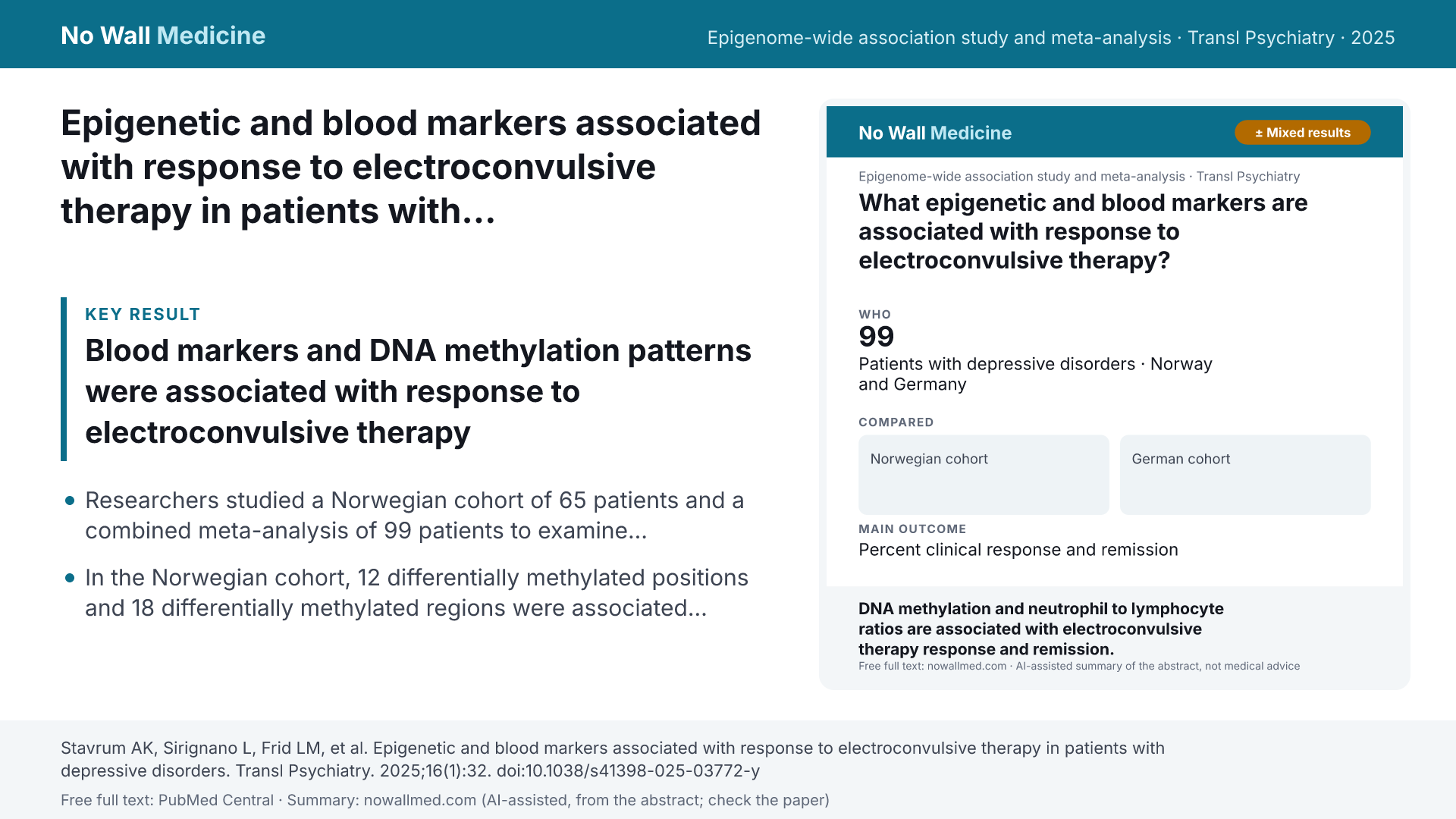
Blood markers and DNA methylation patterns were associated with response to electroconvulsive therapy
Epigenetic and blood markers associated with response to electroconvulsive therapy in patients with depressive disorders
Epigenome-wide association study and meta-analysisMixed results
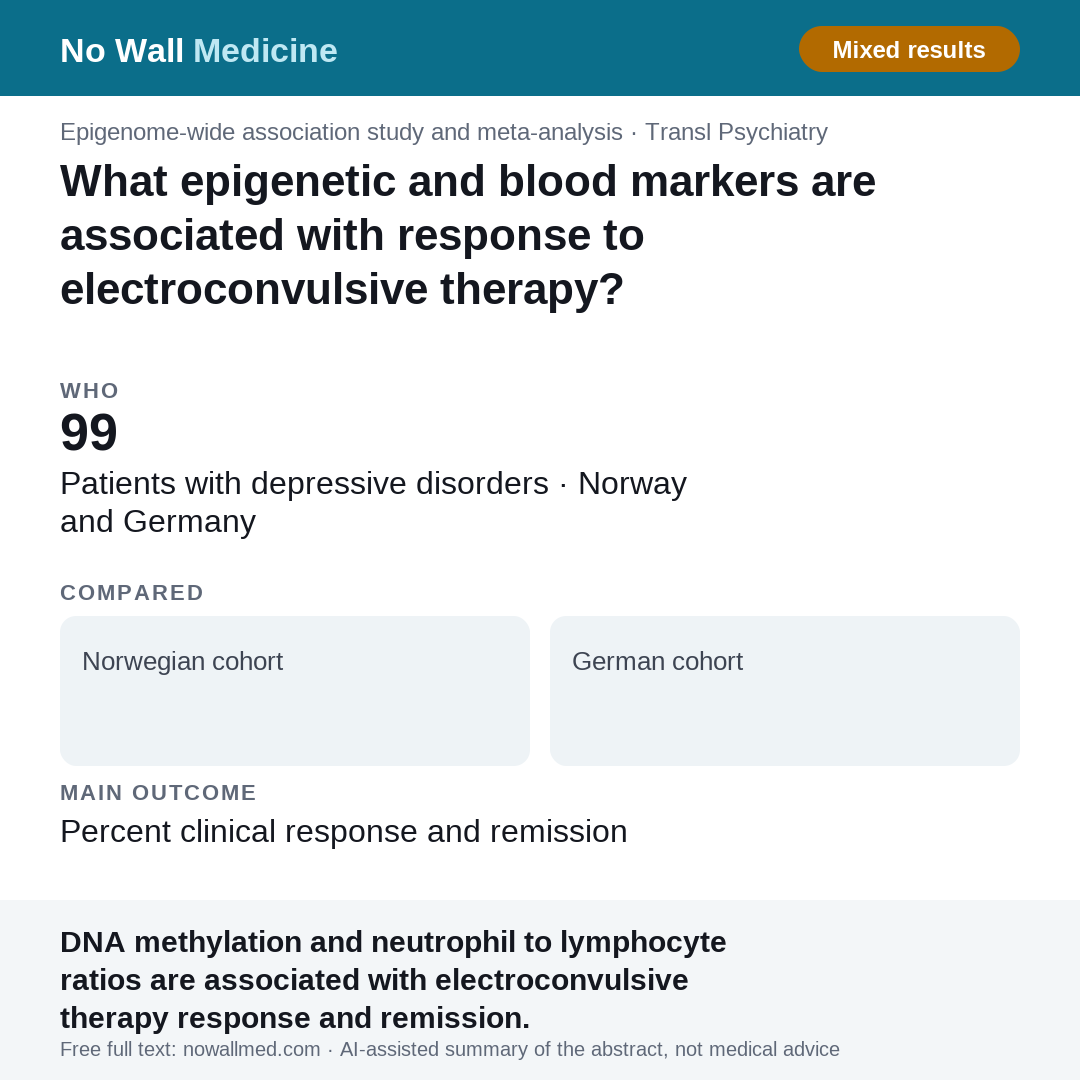
What epigenetic and blood markers are associated with response to electroconvulsive therapy?
Who
99
Patients with depressive disorders · Norway and Germany
Compared
Norwegian cohort
German cohort
Main outcome
Percent clinical response and remission
Bottom line: DNA methylation and neutrophil to lymphocyte ratios are associated with electroconvulsive therapy response and remission.
Transl Psychiatry · 2025-12-03Download image
Clinical question: What epigenetic and blood markers are associated with response to electroconvulsive therapy?
Why it matters: The biological mechanisms of electroconvulsive therapy are not fully understood and reliable biomarkers are needed to predict how patients will respond to the treatment.
Key points
- Researchers studied a Norwegian cohort of 65 patients and a combined meta-analysis of 99 patients to examine DNA methylation, which are chemical changes to DNA that affect gene activity.
- In the Norwegian cohort, 12 differentially methylated positions and 18 differentially methylated regions were associated with clinical response, while 29 positions and 23 regions were associated with remission.
- An increased ratio of neutrophils to lymphocytes, which are types of white blood cells, was associated with remission in the Norwegian group (p < 0.003).
Headline and key points written with AI from the paper’s abstract, with every number checked against it. Read the paper before relying on them.
Was this summary helpful?
Subject terms
Cite this article
Stavrum AK, Sirignano L, Frid LM, et al. Epigenetic and blood markers associated with response to electroconvulsive therapy in patients with depressive disorders. Transl Psychiatry. 2025. doi:10.1038/s41398-025-03772-y
Spotted a mistake? Suggest a correction