Epigenetic and blood markers associated with response to electroconvulsive therapy in patients with depressive disorders
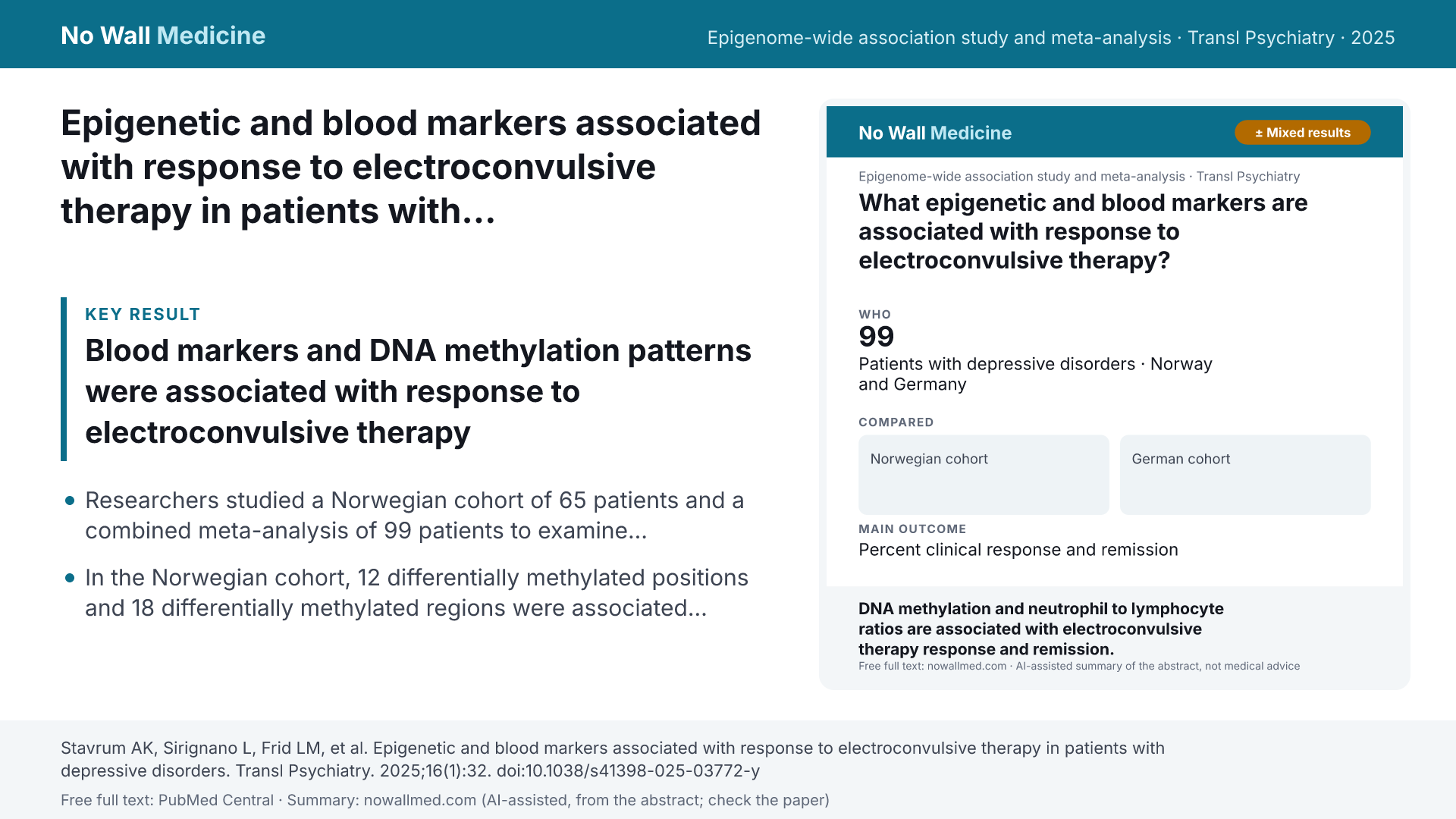
Key result: Blood markers and DNA methylation patterns were associated with response to electroconvulsive therapy
Epigenome-wide association study and meta-analysisMixed results
What epigenetic and blood markers are associated with response to electroconvulsive therapy?
Who
99
Patients with depressive disorders · Norway and Germany
Compared
Norwegian cohort
German cohort
Main outcome
Percent clinical response and remission
Bottom line: DNA methylation and neutrophil to lymphocyte ratios are associated with electroconvulsive therapy response and remission.
Transl Psychiatry · 2025-12-03
Key points
- Researchers studied a Norwegian cohort of 65 patients and a combined meta-analysis of 99 patients to examine DNA methylation, which are chemical changes to DNA that affect gene activity.
- In the Norwegian cohort, 12 differentially methylated positions and 18 differentially methylated regions were associated with clinical response, while 29 positions and 23 regions were associated with remission.
- An increased ratio of neutrophils to lymphocytes, which are types of white blood cells, was associated with remission in the Norwegian group (p < 0.003).
Why it matters: The biological mechanisms of electroconvulsive therapy are not fully understood and reliable biomarkers are needed to predict how patients will respond to the treatment.
Discussion prompts
- Would these patients look like yours? Who was left out?
- Is the main outcome one that matters to patients?
- Is the difference large enough to change what you do?
Cite: Stavrum AK, Sirignano L, Frid LM, et al. Epigenetic and blood markers associated with response to electroconvulsive therapy in patients with depressive disorders. Transl Psychiatry. 2025;16(1):32. doi:10.1038/s41398-025-03772-y
Free full text: PubMed Central · Summary and visual abstract: nowallmed.com/a/epigenetic-and-blood-markers-associated-with-response-to-1h10un7/ (AI-assisted from the abstract; check the paper before relying on it).