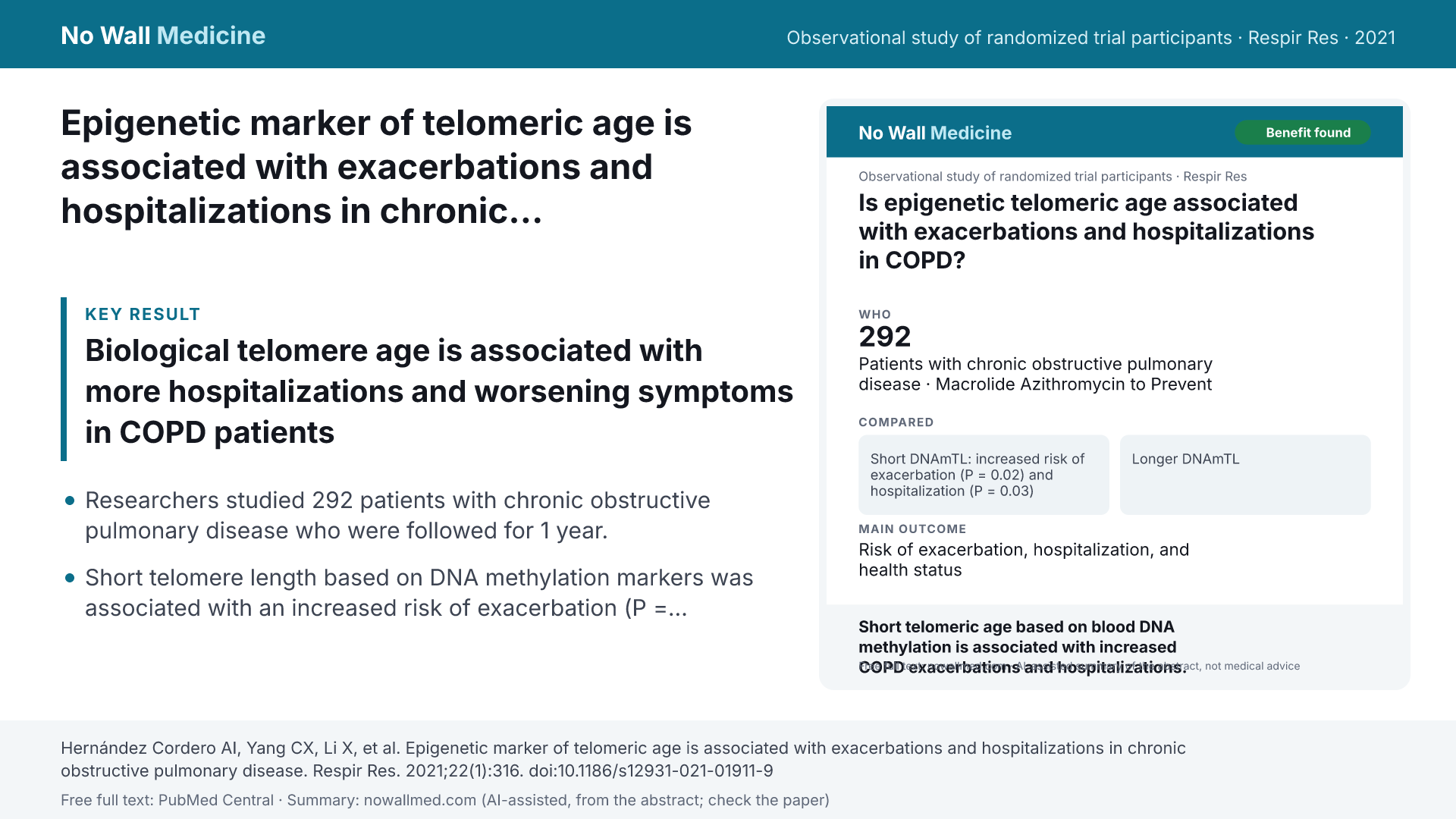
Epigenetic marker of telomeric age is associated with exacerbations and hospitalizations in chronic obstructive pulmonary disease
Key result: Biological telomere age is associated with more hospitalizations and worsening symptoms in COPD patients
Key points
- Researchers studied 292 patients with chronic obstructive pulmonary disease who were followed for 1 year.
- Short telomere length based on DNA methylation markers was associated with an increased risk of exacerbation (P = 0.02) and hospitalization (P = 0.03).
- Accelerated telomere age was associated with higher rates of exacerbation (P = 1.35 × 10-04), higher hospitalization rates (P = 5.21 × 10-03), and lower health status scores (P = 0.03).
Why it matters: The clinical implications of telomere shortening, which refers to the wearing down of the protective caps on chromosomes, are not well known in chronic obstructive pulmonary disease.
Discussion prompts
- Would these patients look like yours? Who was left out?
- Is the main outcome one that matters to patients?
- Is the difference large enough to change what you do?
Cite: Hernández Cordero AI, Yang CX, Li X, et al. Epigenetic marker of telomeric age is associated with exacerbations and hospitalizations in chronic obstructive pulmonary disease. Respir Res. 2021;22(1):316. doi:10.1186/s12931-021-01911-9
Free full text: PubMed Central · Summary and visual abstract: nowallmed.com/a/epigenetic-marker-of-telomeric-age-is-associated-with-exacerbations-1orprux/ (AI-assisted from the abstract; check the paper before relying on it).