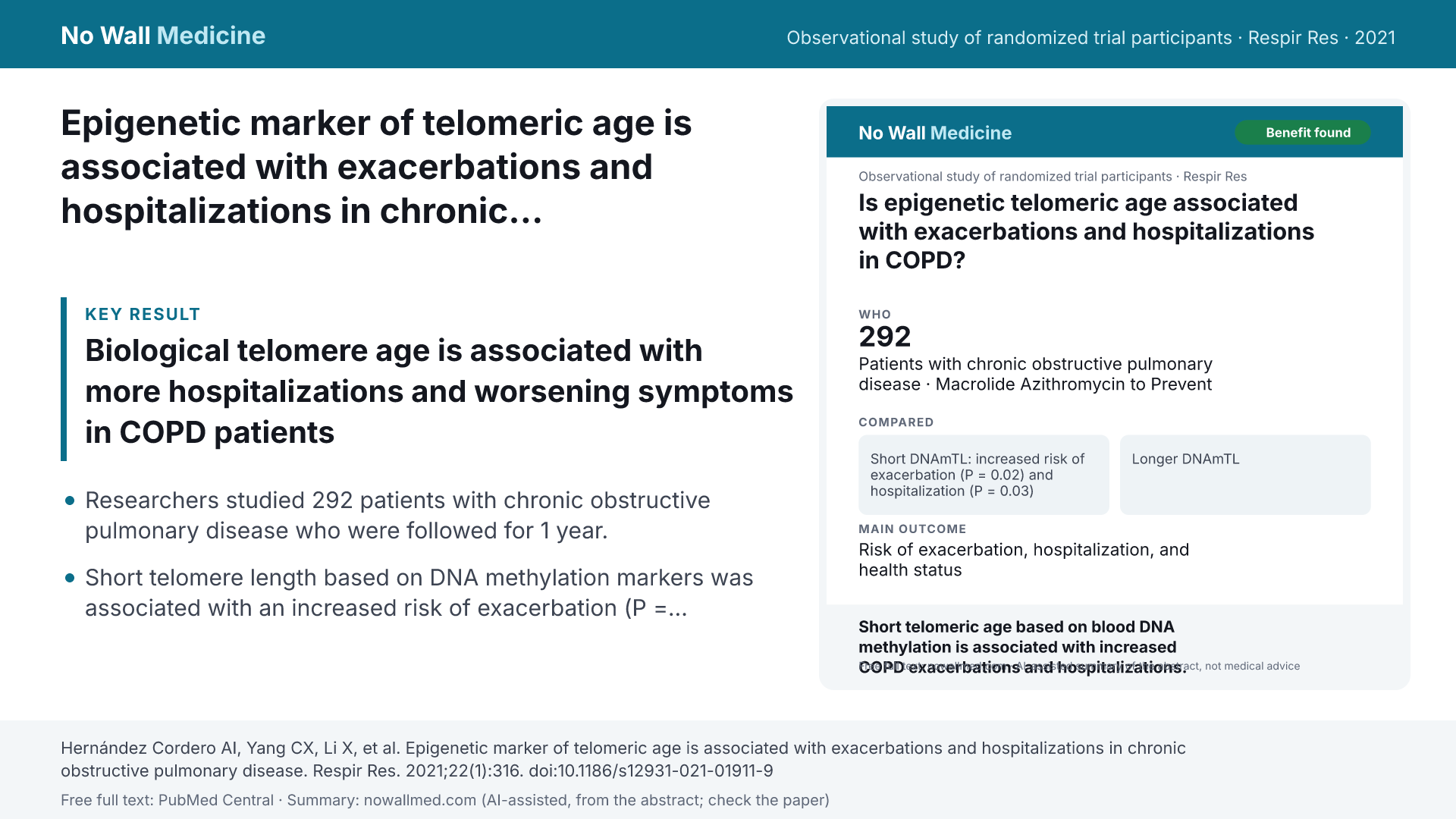
Biological telomere age is associated with more hospitalizations and worsening symptoms in COPD patients
Epigenetic marker of telomeric age is associated with exacerbations and hospitalizations in chronic obstructive pulmonary disease
Observational study of randomized trial participantsBenefit found
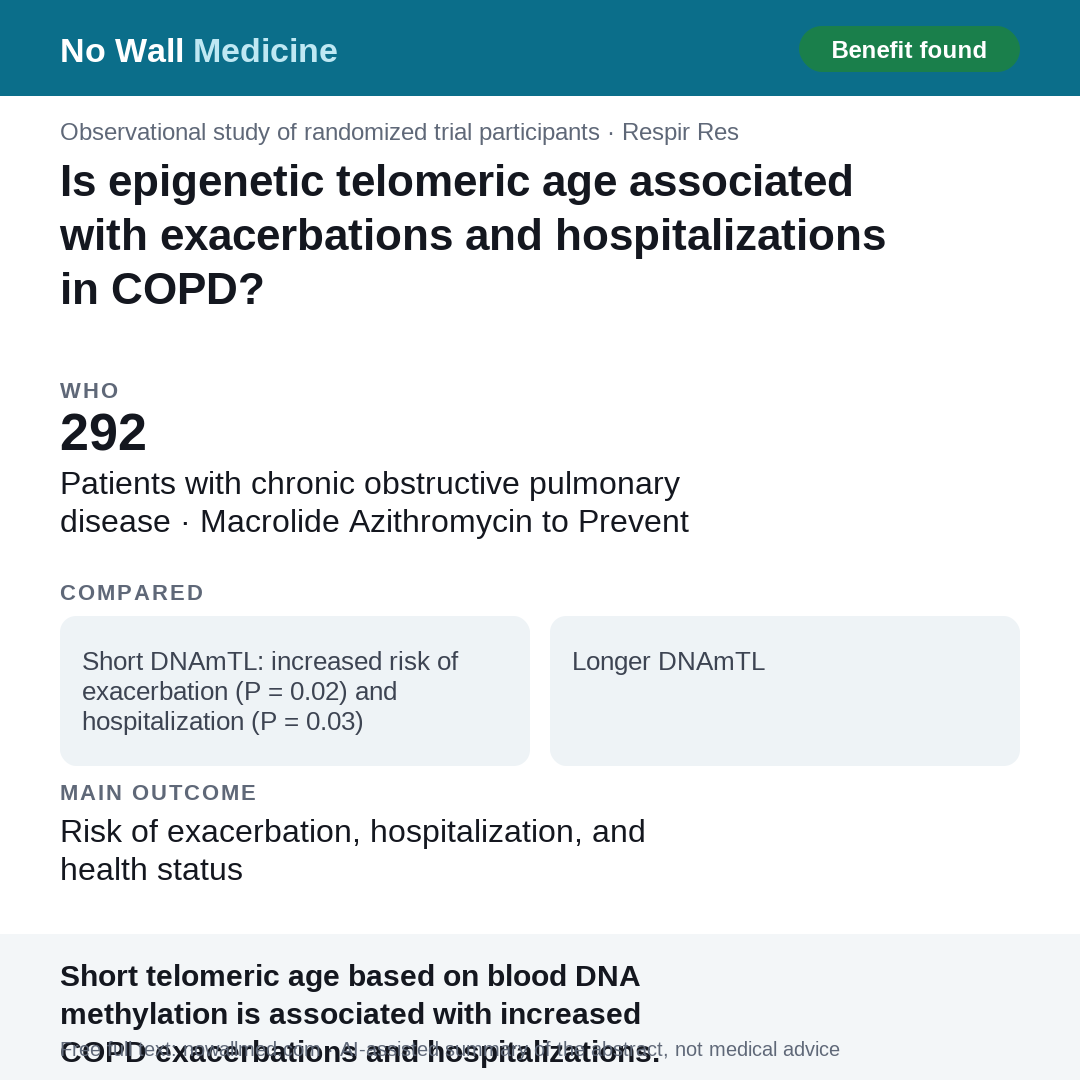
Is epigenetic telomeric age associated with exacerbations and hospitalizations in COPD?
Who
292
Patients with chronic obstructive pulmonary disease · Macrolide Azithromycin to Prevent Rapid Worsening of Symptoms Associated with Chronic Obstructive Pulmonary Disease Study
Compared
Short DNAmTL: increased risk of exacerbation (P = 0.02) and hospitalization (P = 0.03)
Longer DNAmTL
Main outcome
Risk of exacerbation, hospitalization, and health status
Bottom line: Short telomeric age based on blood DNA methylation is associated with increased COPD exacerbations and hospitalizations.
Respir Res · 2021-12-22Download image
Clinical question: Is epigenetic telomeric age associated with exacerbations and hospitalizations in COPD?
Why it matters: The clinical implications of telomere shortening, which refers to the wearing down of the protective caps on chromosomes, are not well known in chronic obstructive pulmonary disease.
Key points
- Researchers studied 292 patients with chronic obstructive pulmonary disease who were followed for 1 year.
- Short telomere length based on DNA methylation markers was associated with an increased risk of exacerbation (P = 0.02) and hospitalization (P = 0.03).
- Accelerated telomere age was associated with higher rates of exacerbation (P = 1.35 × 10-04), higher hospitalization rates (P = 5.21 × 10-03), and lower health status scores (P = 0.03).
Headline and key points written with AI from the paper’s abstract, with every number checked against it. Read the paper before relying on them.
Was this summary helpful?
Subject terms
Cite this article
Hernández Cordero AI, Yang CX, Li X, et al. Epigenetic marker of telomeric age is associated with exacerbations and hospitalizations in chronic obstructive pulmonary disease. Respir Res. 2021. doi:10.1186/s12931-021-01911-9
Spotted a mistake? Suggest a correction