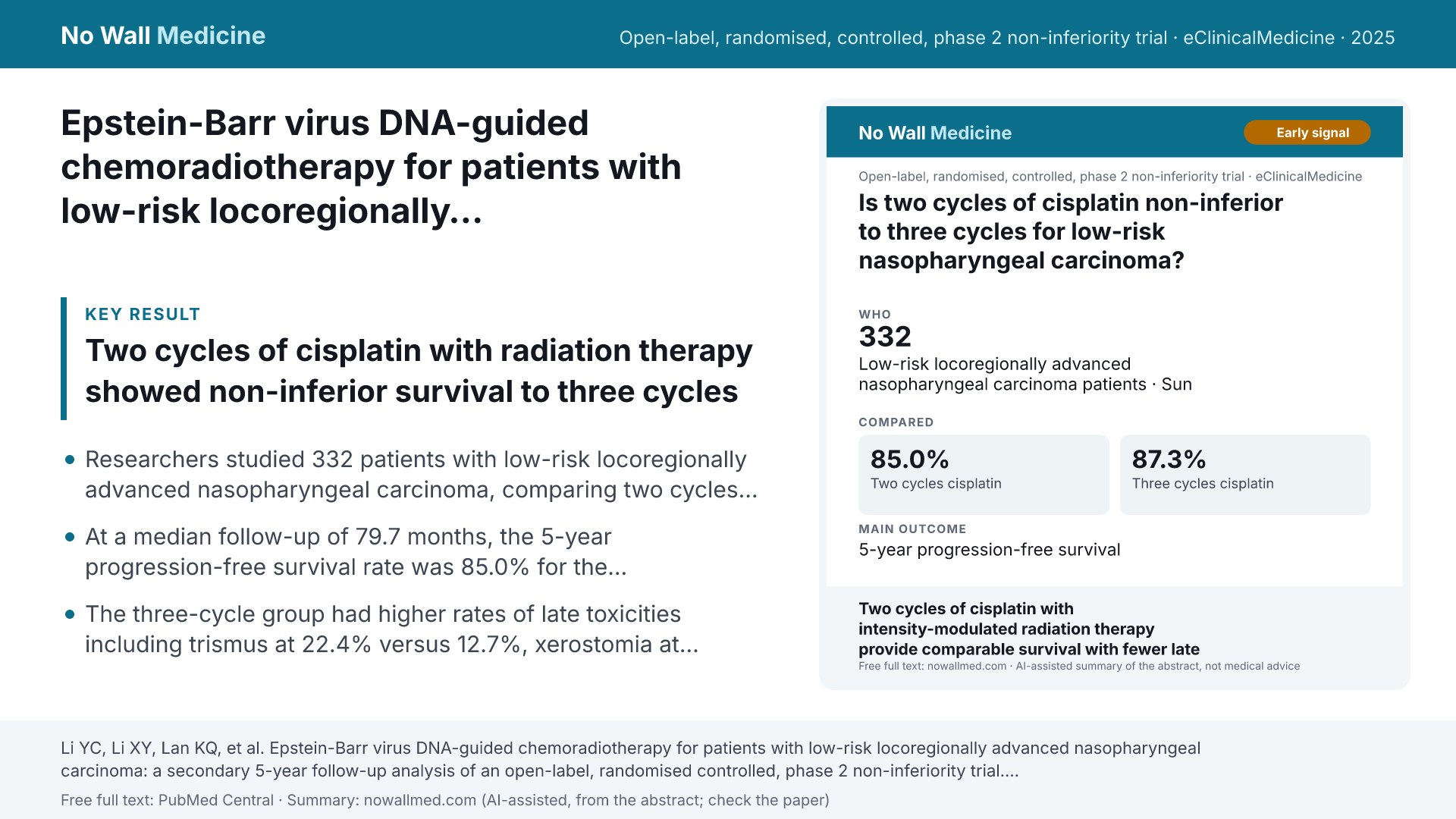
Epstein-Barr virus DNA-guided chemoradiotherapy for patients with low-risk locoregionally advanced nasopharyngeal carcinoma: a secondary 5-year follow-up analysis of an open-label, randomised controlled, phase 2 non-inferiority trial
Key result: Two cycles of cisplatin with radiation therapy showed non-inferior survival to three cycles
Key points
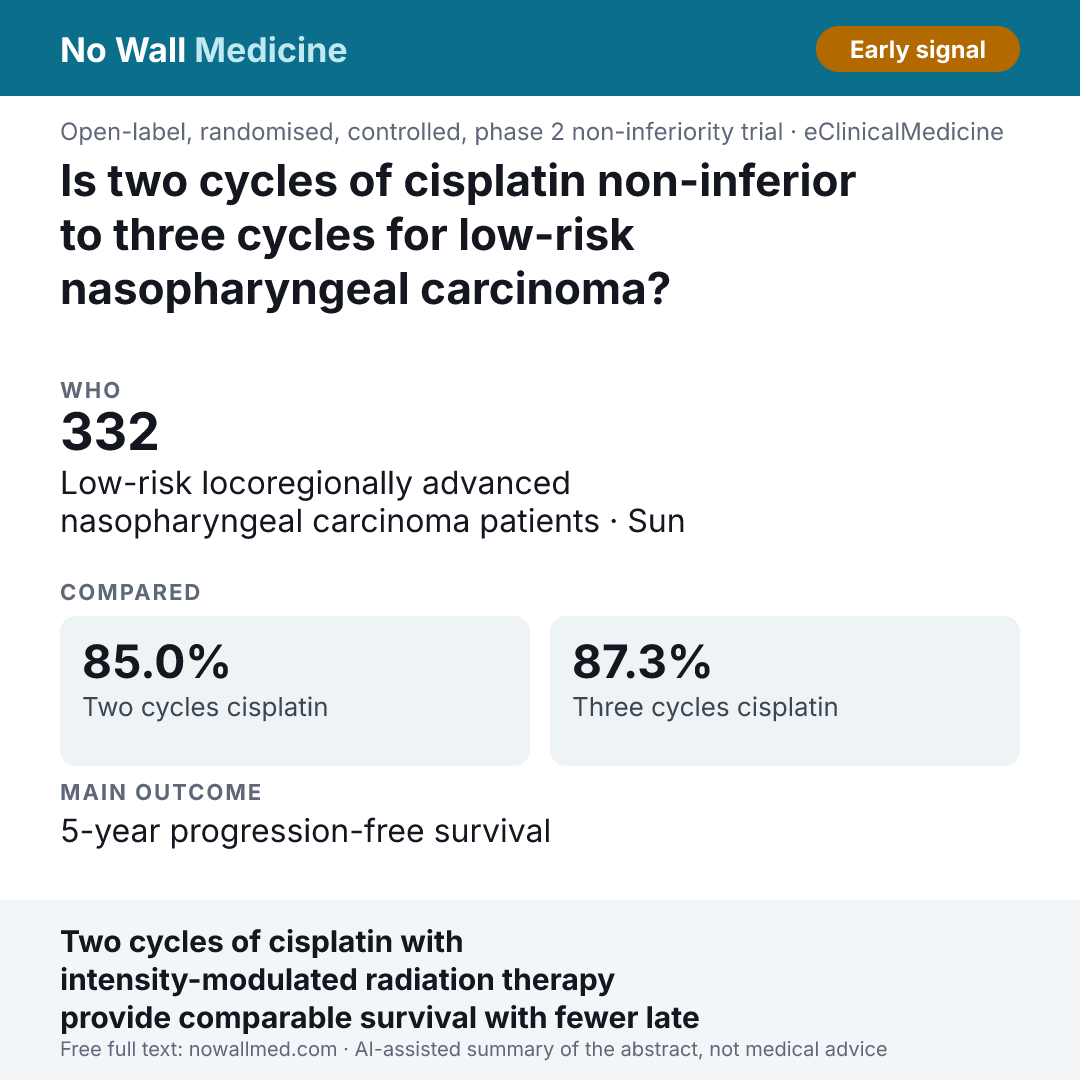
- Researchers studied 332 patients with low-risk locoregionally advanced nasopharyngeal carcinoma, comparing two cycles of cisplatin and radiation to three cycles.
- At a median follow-up of 79.7 months, the 5-year progression-free survival rate was 85.0% for the two-cycle group versus 87.3% for the three-cycle group.
- The three-cycle group had higher rates of late toxicities including trismus at 22.4% versus 12.7%, xerostomia at 83.0% versus 72.9%, and hearing impairment at 55.8% versus 44.0%.
Limitation the authors note: The study was conducted at a single center, which may affect how well the findings apply to other regions.
Discussion prompts
- Would these patients look like yours? Who was left out?
- Is the main outcome one that matters to patients?
- Is the difference large enough to change what you do?
Cite: Li YC, Li XY, Lan KQ, et al. Epstein-Barr virus DNA-guided chemoradiotherapy for patients with low-risk locoregionally advanced nasopharyngeal carcinoma: a secondary 5-year follow-up analysis of an open-label, randomised controlled, phase 2 non-inferiority trial. EClinicalMedicine. 2025;90:103615. doi:10.1016/j.eclinm.2025.103615
Free full text: PubMed Central · Summary and visual abstract: nowallmed.com/a/epstein-barr-virus-dna-guided-chemoradiotherapy-for-patients-with-low-13p7zhw/ (AI-assisted from the abstract; check the paper before relying on it).