Equity in protection: bridging global data gaps for an EBV vaccine-a systematic review and meta-analysis
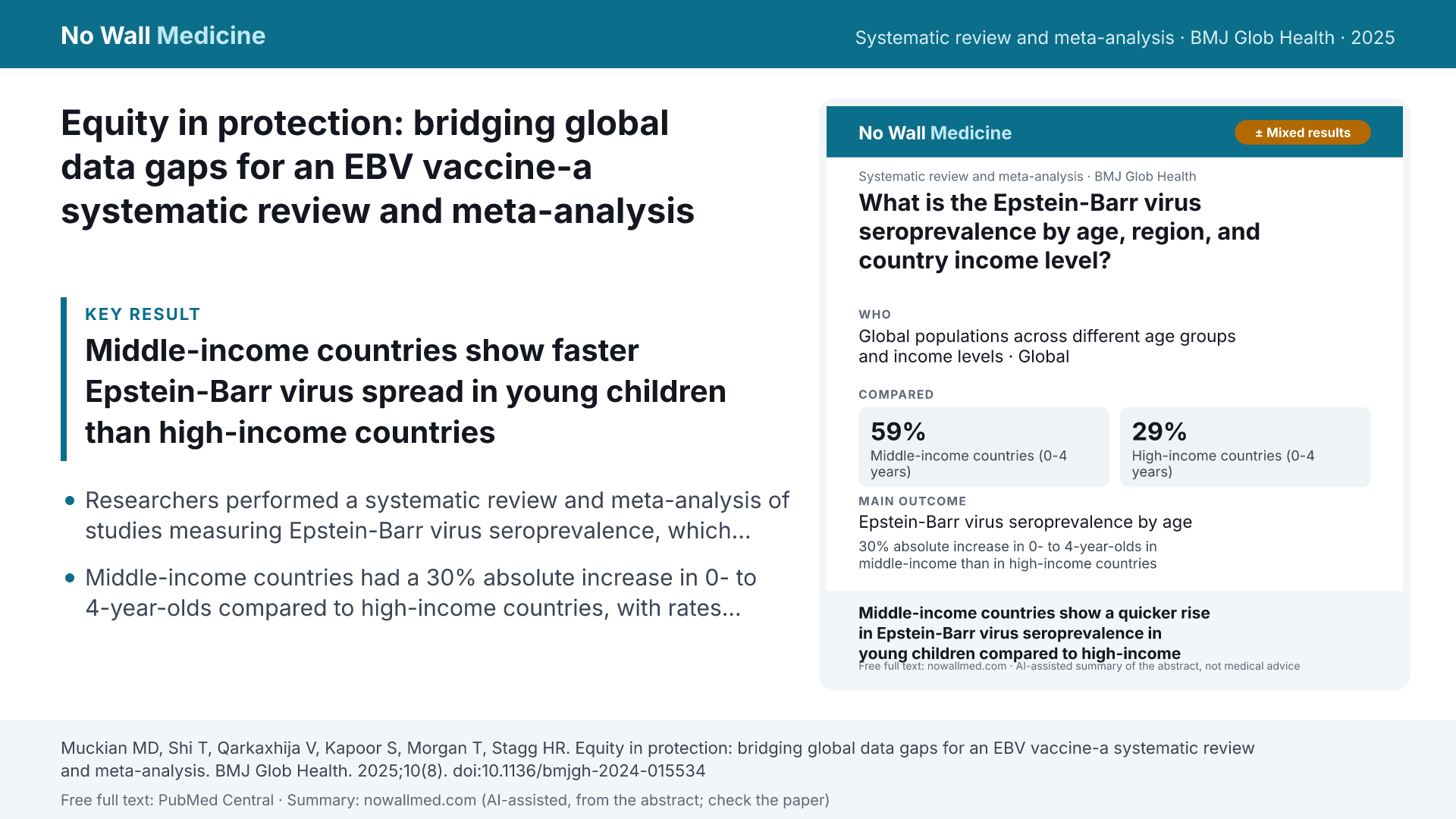
Key result: Middle-income countries show faster Epstein-Barr virus spread in young children than high-income countries
Key points
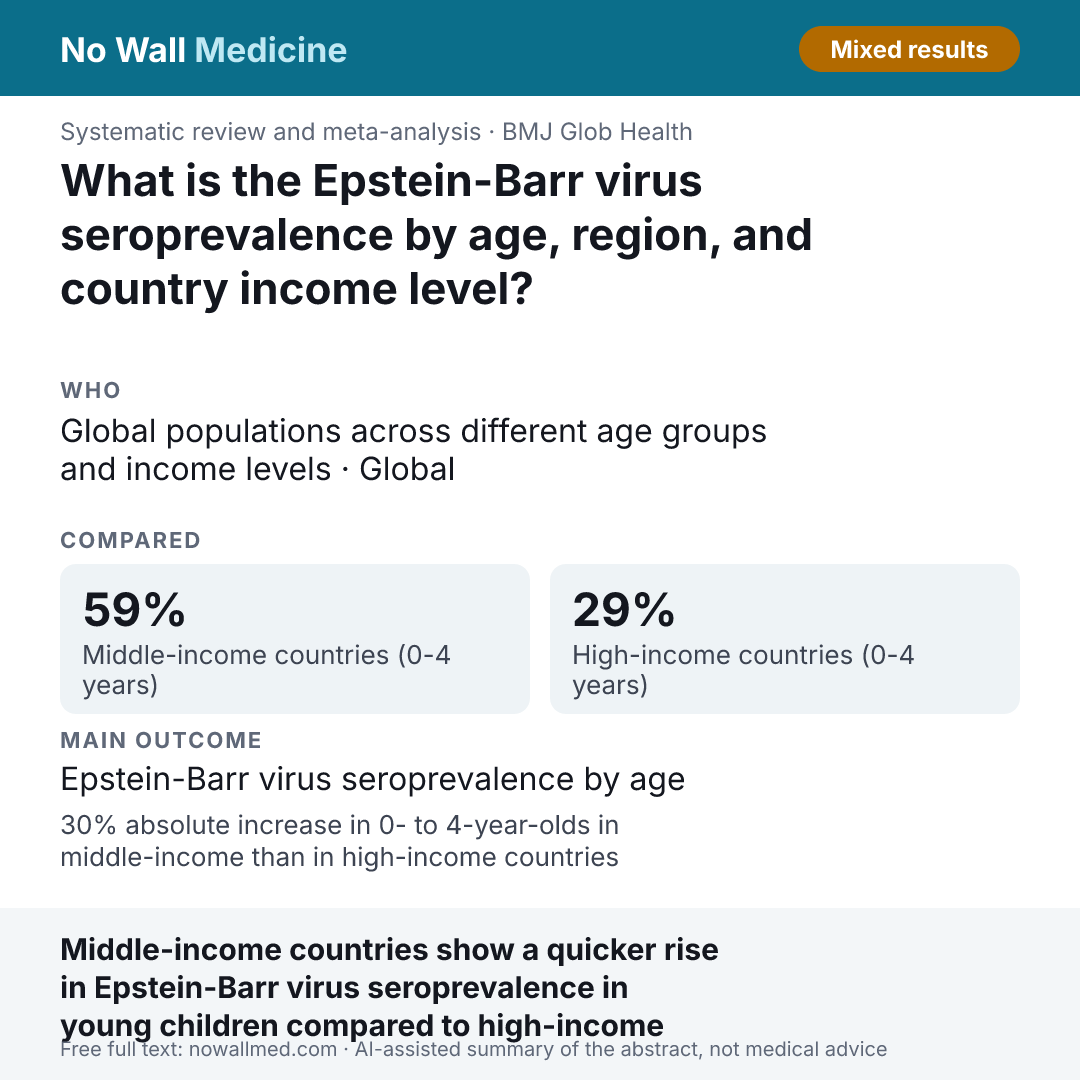
- Researchers performed a systematic review and meta-analysis of studies measuring Epstein-Barr virus seroprevalence, which is the presence of antibodies in the blood, by age and location.
- Middle-income countries had a 30% absolute increase in 0- to 4-year-olds compared to high-income countries, with rates of 59% versus 29%.
- The Western Pacific region was associated with higher seroprevalence in younger age groups than other World Health Organization regions.
Why it matters: Data on the age at which people acquire Epstein-Barr virus is needed to guide vaccine roll-out, especially in resource-limited settings.
Limitation the authors note: Data variability and limited consistency of methodologies and Epstein-Barr virus seroprevalence measurements hindered comprehensive meta-analyses across all regions and countries.
Discussion prompts
- Would these patients look like yours? Who was left out?
- Is the main outcome one that matters to patients?
- Is the difference large enough to change what you do?
Cite: Muckian MD, Shi T, Qarkaxhija V, Kapoor S, Morgan T, Stagg HR. Equity in protection: bridging global data gaps for an EBV vaccine-a systematic review and meta-analysis. BMJ Glob Health. 2025;10(8). doi:10.1136/bmjgh-2024-015534
Free full text: PubMed Central · Summary and visual abstract: nowallmed.com/a/equity-in-protection-bridging-global-data-gaps-for-an-ebv-vaccine-a-g84cmw/ (AI-assisted from the abstract; check the paper before relying on it).