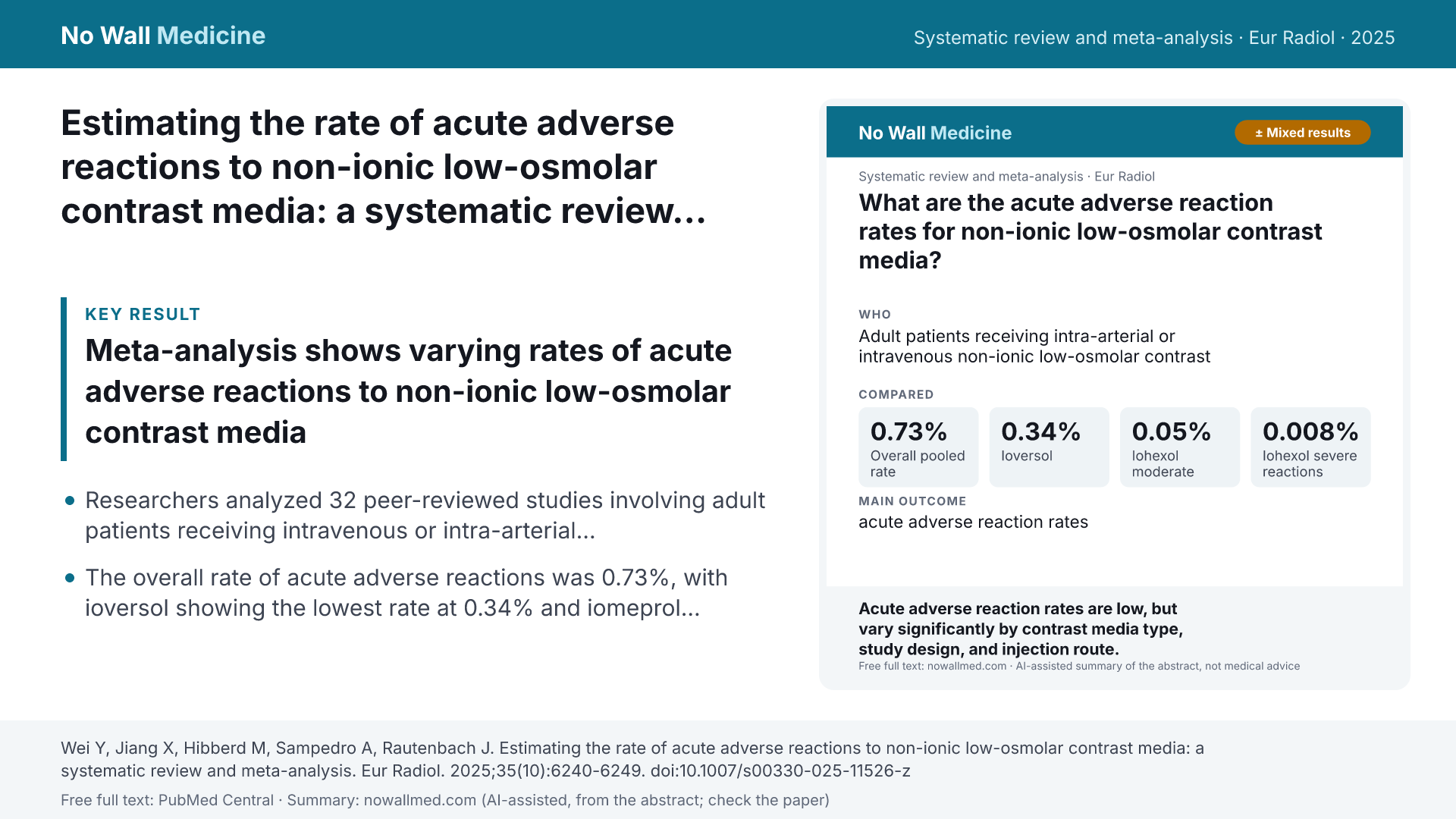
Meta-analysis shows varying rates of acute adverse reactions to non-ionic low-osmolar contrast media
Estimating the rate of acute adverse reactions to non-ionic low-osmolar contrast media: a systematic review and meta-analysis
Systematic review and meta-analysisMixed results
What are the acute adverse reaction rates for non-ionic low-osmolar contrast media?
Who
Adult patients receiving intra-arterial or intravenous non-ionic low-osmolar contrast media
Compared
0.73%Overall pooled rate
0.34%Ioversol
0.05%Iohexol moderate reactions
0.008%Iohexol severe reactions
Main outcome
acute adverse reaction rates
Bottom line: Acute adverse reaction rates are low, but vary significantly by contrast media type, study design, and injection route.
Eur Radiol · 2025-04-11 · Save PNG
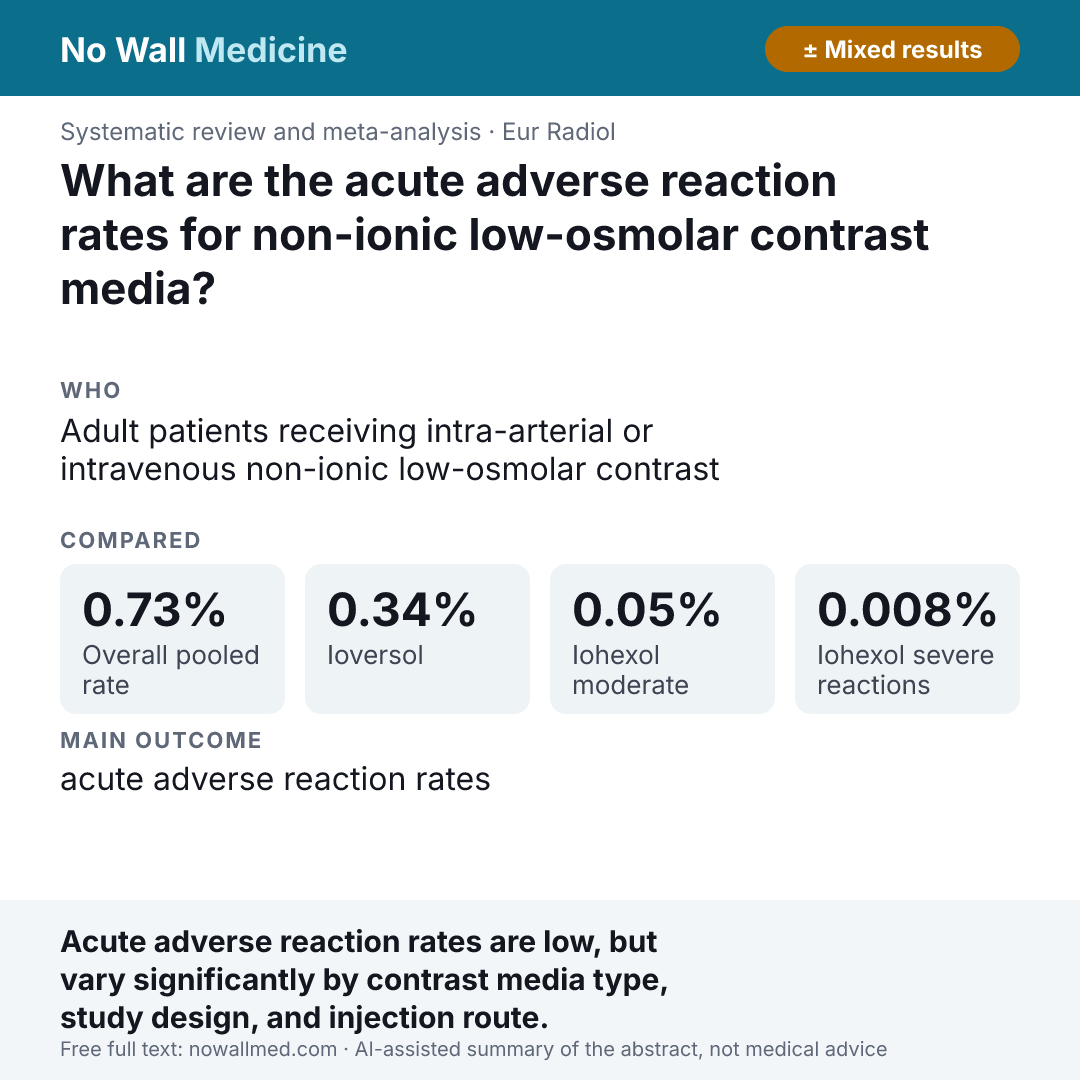
Clinical question: What are the acute adverse reaction rates for non-ionic low-osmolar contrast media?
Why it matters: Comprehensive data regarding the safety profiles of different non-ionic low-osmolar contrast media is lacking.
Key points
- Researchers analyzed 32 peer-reviewed studies involving adult patients receiving intravenous or intra-arterial non-ionic low-osmolar contrast media, which are dyes used in medical imaging.
- The overall rate of acute adverse reactions was 0.73%, with ioversol showing the lowest rate at 0.34% and iomeprol showing the highest at 1.38%.
- Moderate and severe reaction rates were 0.10% and 0.014% overall, with iohexol showing the lowest rates for these specific categories at 0.05% and 0.008%.
Headline and key points written with AI from the paper’s abstract, with every number checked against it. Read the paper before relying on them.
Was this summary helpful?
Subject terms
Headline, design, result, key points, caveat and citation as plain text.
Cite this article
Wei Y, Jiang X, Hibberd M, Sampedro A, Rautenbach J. Estimating the rate of acute adverse reactions to non-ionic low-osmolar contrast media: a systematic review and meta-analysis. Eur Radiol. 2025;35(10):6240-6249. doi:10.1007/s00330-025-11526-z
Spotted a mistake? Suggest a correction