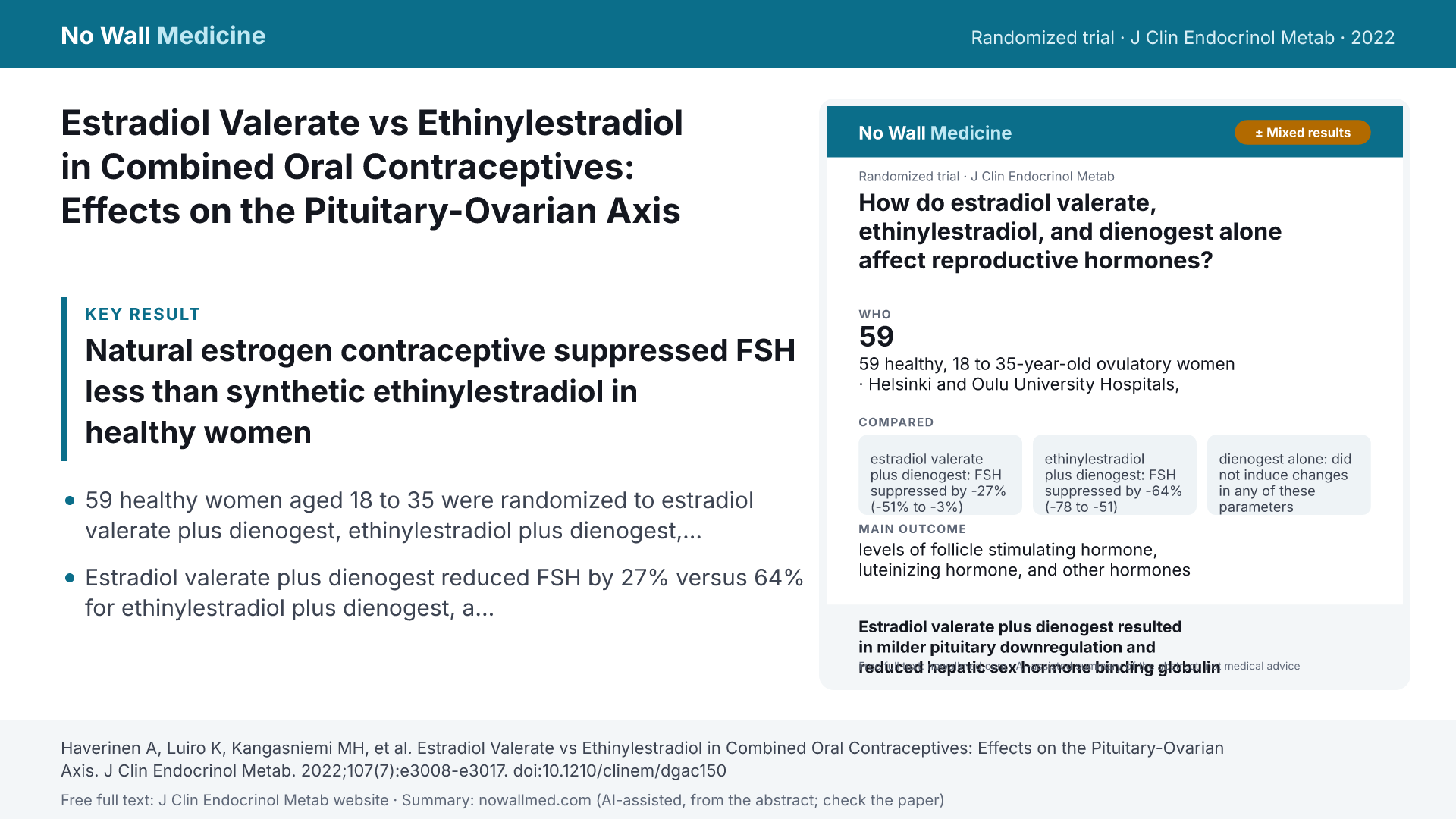
Natural estrogen contraceptive suppressed FSH less than synthetic ethinylestradiol in healthy women
Estradiol Valerate vs Ethinylestradiol in Combined Oral Contraceptives: Effects on the Pituitary-Ovarian Axis
Randomized trialMixed results
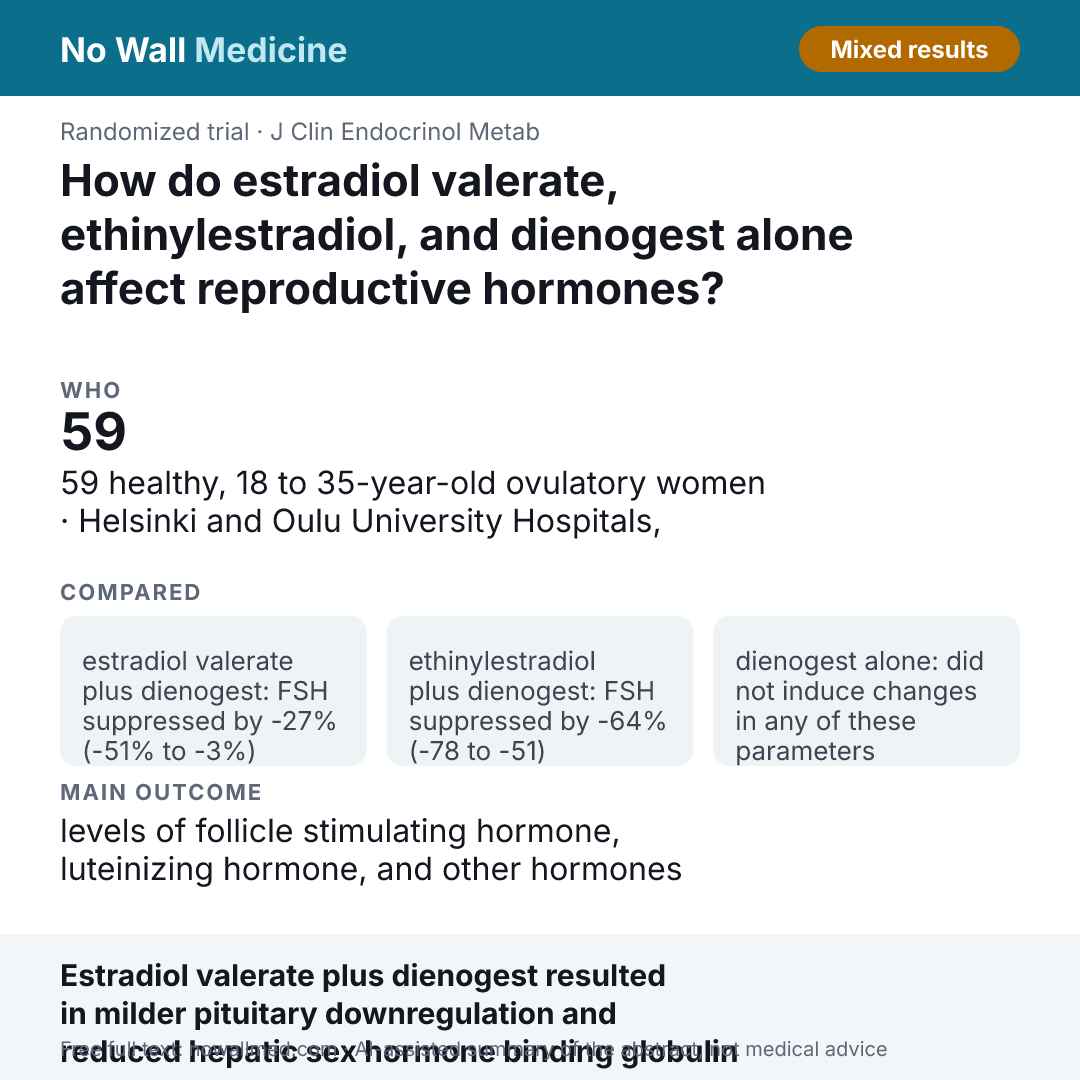
How do estradiol valerate, ethinylestradiol, and dienogest alone affect reproductive hormones?
Who
59
59 healthy, 18 to 35-year-old ovulatory women · Helsinki and Oulu University Hospitals, Finland
Compared
estradiol valerate plus dienogest: FSH suppressed by -27% (-51% to -3%)
ethinylestradiol plus dienogest: FSH suppressed by -64% (-78 to -51)
dienogest alone: did not induce changes in any of these parameters
Main outcome
levels of follicle stimulating hormone, luteinizing hormone, and other hormones
Bottom line: Estradiol valerate plus dienogest resulted in milder pituitary downregulation and reduced hepatic sex hormone binding globulin synthesis than ethinylestradiol.
J Clin Endocrinol Metab · 2022-03-14 · Save PNG
Clinical question: How do estradiol valerate, ethinylestradiol, and dienogest alone affect reproductive hormones?
Why it matters: Applies to healthy ovulatory women aged 18 to 35; suggests estradiol valerate may have milder hormonal effects than ethinylestradiol.
Key points
- 59 healthy women aged 18 to 35 were randomized to estradiol valerate plus dienogest, ethinylestradiol plus dienogest, or dienogest alone for 9 weeks.
- Estradiol valerate plus dienogest reduced FSH by 27% versus 64% for ethinylestradiol plus dienogest, a statistically significant difference (P = 0.04).
- Ethinylestradiol plus dienogest increased SHBG by 385% compared to 56% for estradiol valerate plus dienogest, with a P value less than 0.001.
Limitation the authors note: The study was a spin-off from a randomized trial with a small sample size of 59 participants.
Headline and key points written with AI from the paper’s abstract, with every number checked against it. Read the paper before relying on them.
Was this summary helpful?
Subject terms
Headline, design, result, key points, caveat and citation as plain text.
Cite this article
Haverinen A, Luiro K, Kangasniemi MH, et al. Estradiol Valerate vs Ethinylestradiol in Combined Oral Contraceptives: Effects on the Pituitary-Ovarian Axis. J Clin Endocrinol Metab. 2022;107(7):e3008-e3017. doi:10.1210/clinem/dgac150
Spotted a mistake? Suggest a correction