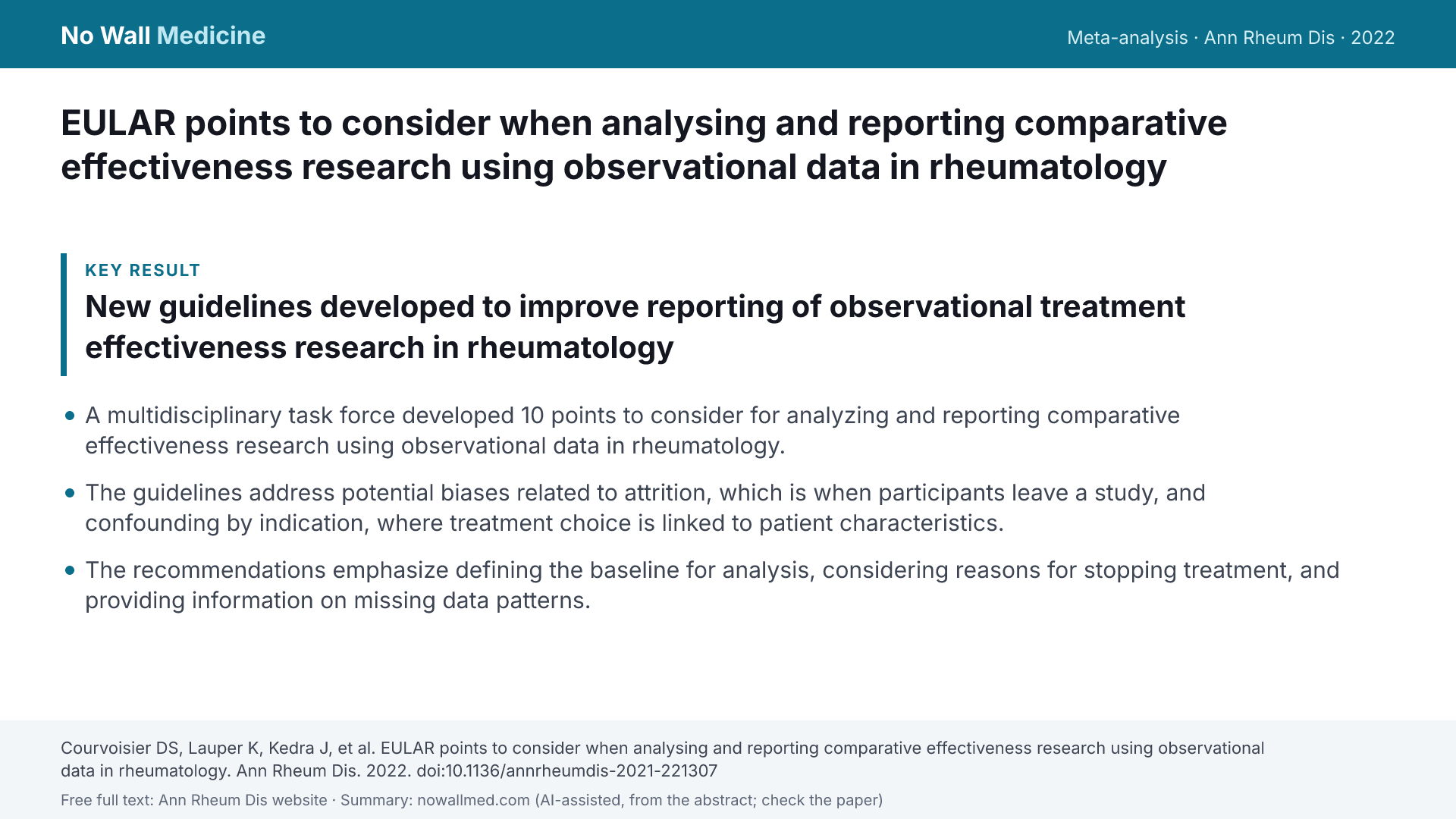
New guidelines developed to improve reporting of observational treatment effectiveness research in rheumatology
EULAR points to consider when analysing and reporting comparative effectiveness research using observational data in rheumatology
Why it matters: Comparing how treatments work over time in observational settings is difficult due to threats like confounding and attrition bias.
Key points
- A multidisciplinary task force developed 10 points to consider for analyzing and reporting comparative effectiveness research using observational data in rheumatology.
- The guidelines address potential biases related to attrition, which is when participants leave a study, and confounding by indication, where treatment choice is linked to patient characteristics.
- The recommendations emphasize defining the baseline for analysis, considering reasons for stopping treatment, and providing information on missing data patterns.
Headline and key points written with AI from the paper’s abstract, with every number checked against it. Read the paper before relying on them.
Was this summary helpful?
Subject terms
Headline, design, result, key points, caveat and citation as plain text.
Cite this article
Courvoisier DS, Lauper K, Kedra J, et al. EULAR points to consider when analysing and reporting comparative effectiveness research using observational data in rheumatology. Ann Rheum Dis. 2022. doi:10.1136/annrheumdis-2021-221307
Spotted a mistake? Suggest a correction