Evaluating Human and AI-Based Triage Performance in the Emergency Department: Real-World Cohort Study
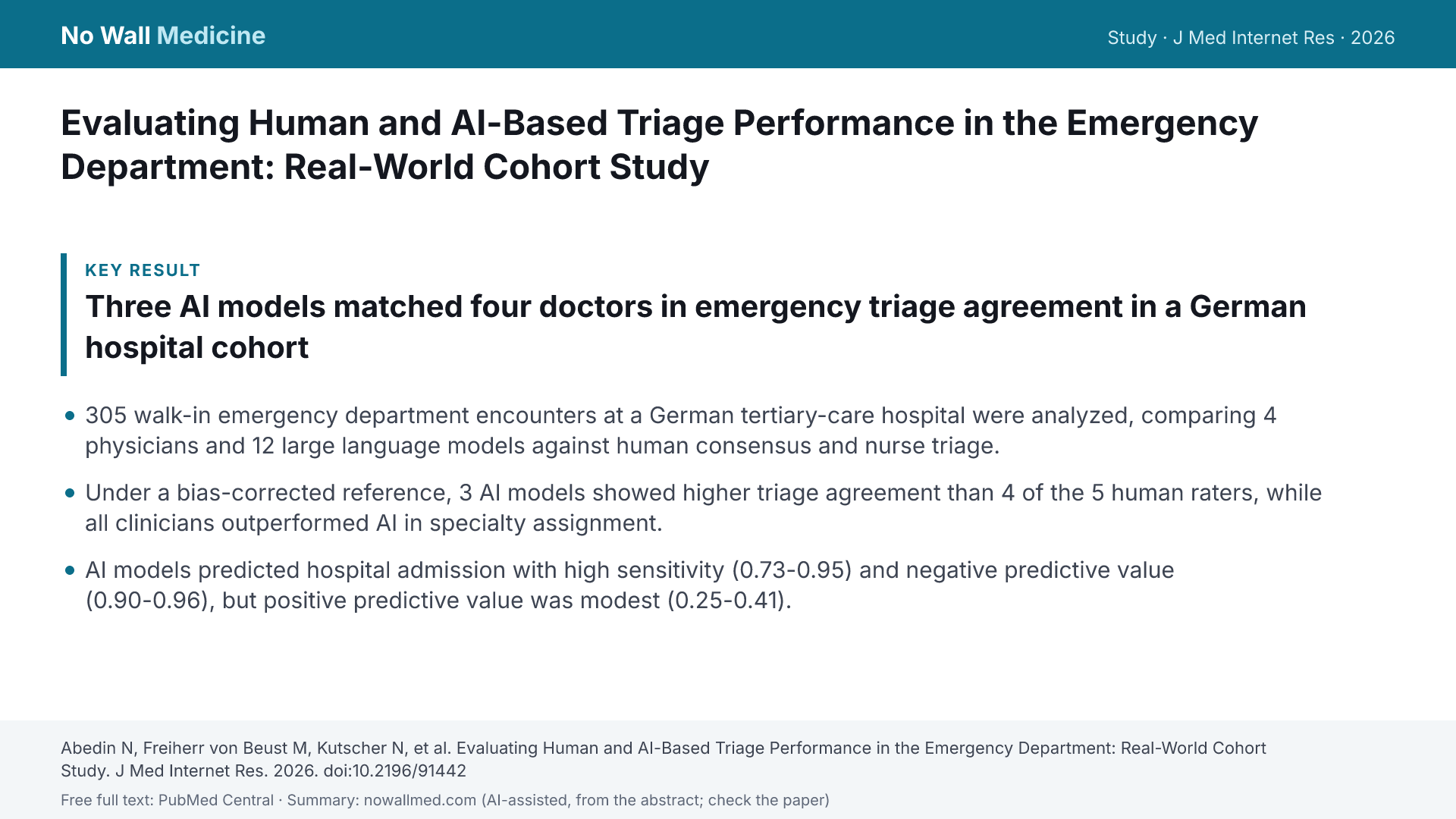
Key result: Three AI models matched four doctors in emergency triage agreement in a German hospital cohort
Key points
- 305 walk-in emergency department encounters at a German tertiary-care hospital were analyzed, comparing 4 physicians and 12 large language models against human consensus and nurse triage.
- Under a bias-corrected reference, 3 AI models showed higher triage agreement than 4 of the 5 human raters, while all clinicians outperformed AI in specialty assignment.
- AI models predicted hospital admission with high sensitivity (0.73-0.95) and negative predictive value (0.90-0.96), but positive predictive value was modest (0.25-0.41).
Why it matters: Real-world comparative evaluations of large language models versus clinicians for emergency department triage accuracy and specialty assignment remain scarce.
Limitation the authors note: The study used empirical reference standards rather than outcome-anchored gold standards, so findings represent agreement against expert consensus rather than absolute correctness.
Discussion prompts
- Would these patients look like yours? Who was left out?
- Is the main outcome one that matters to patients?
- Is the difference large enough to change what you do?
Cite: Abedin N, Freiherr von Beust M, Kutscher N, et al. Evaluating Human and AI-Based Triage Performance in the Emergency Department: Real-World Cohort Study. J Med Internet Res. 2026. doi:10.2196/91442
Free full text: PubMed Central · Summary and visual abstract: nowallmed.com/a/evaluating-human-and-ai-based-triage-performance-in-the-emergency-1hgg5wj/ (AI-assisted from the abstract; check the paper before relying on it).