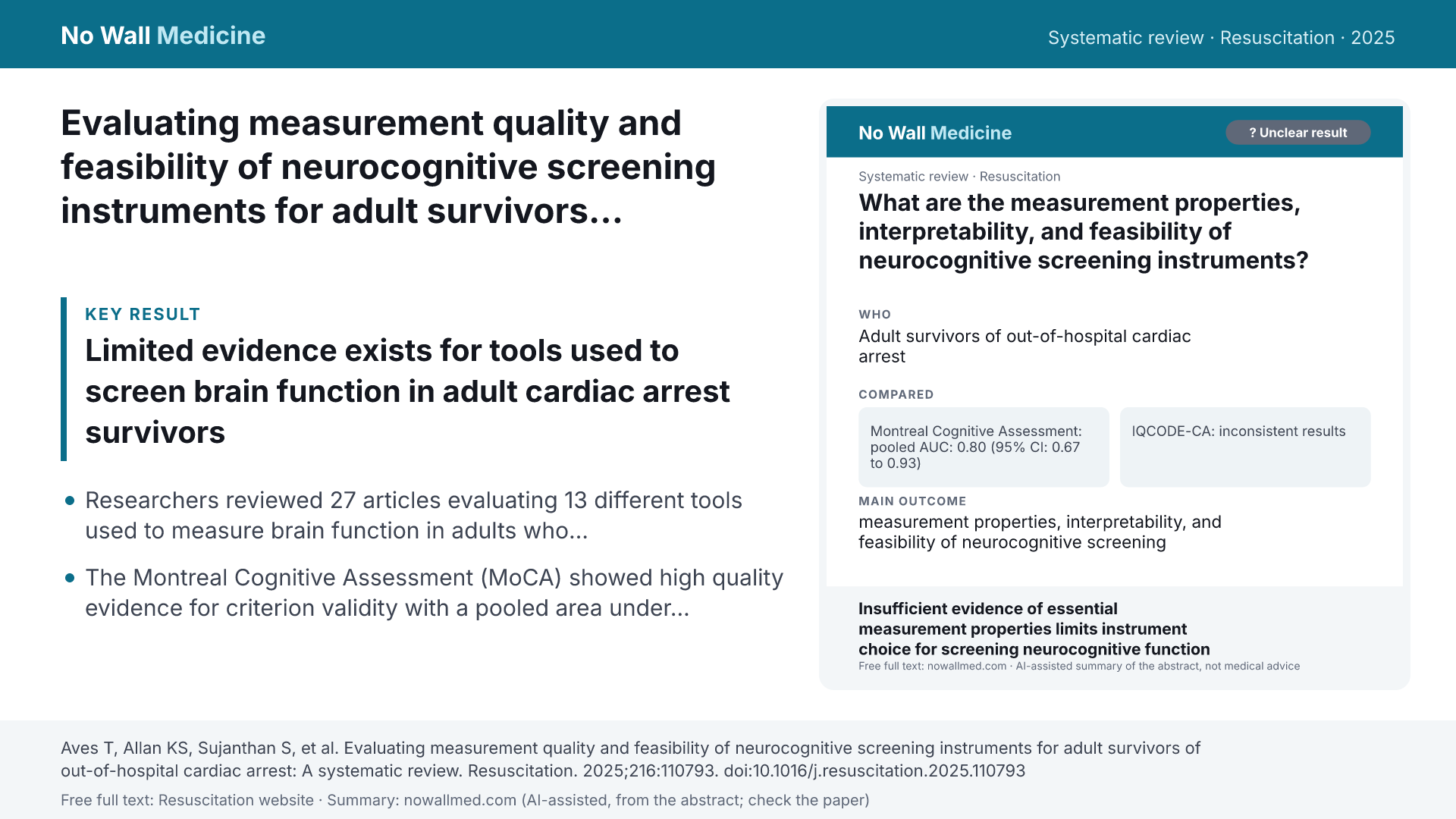
Evaluating measurement quality and feasibility of neurocognitive screening instruments for adult survivors of out-of-hospital cardiac arrest: A systematic review
Key result: Limited evidence exists for tools used to screen brain function in adult cardiac arrest survivors
Key points
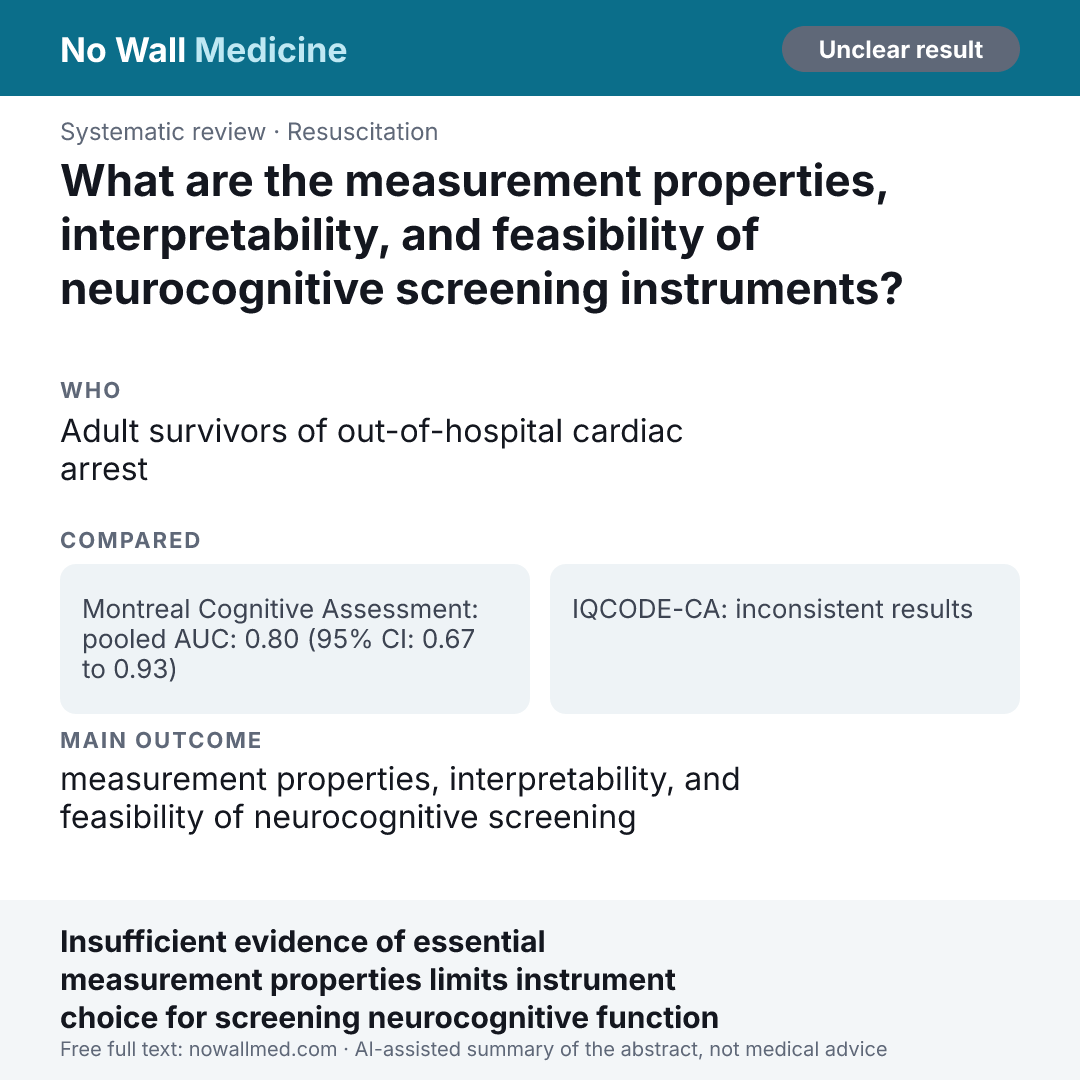
- Researchers reviewed 27 articles evaluating 13 different tools used to measure brain function in adults who survived out-of-hospital cardiac arrest.
- The Montreal Cognitive Assessment (MoCA) showed high quality evidence for criterion validity with a pooled area under the curve of 0.80 (95% CI: 0.67 to 0.93).
- There was limited evidence regarding how easy these tools are to use or how to interpret their scores across all 13 instruments.
Why it matters: Clinicians lack sufficient evidence regarding the measurement quality and feasibility of tools used to screen neurocognitive function in survivors of out-of-hospital cardiac arrest.
Limitation the authors note: Insufficient evidence of essential measurement properties limits instrument choice.
Discussion prompts
- Would these patients look like yours? Who was left out?
- Is the main outcome one that matters to patients?
- Is the difference large enough to change what you do?
Cite: Aves T, Allan KS, Sujanthan S, et al. Evaluating measurement quality and feasibility of neurocognitive screening instruments for adult survivors of out-of-hospital cardiac arrest: A systematic review. Resuscitation. 2025;216:110793. doi:10.1016/j.resuscitation.2025.110793
Free full text: Resuscitation website · Summary and visual abstract: nowallmed.com/a/evaluating-measurement-quality-and-feasibility-of-neurocognitive-bp3kye/ (AI-assisted from the abstract; check the paper before relying on it).