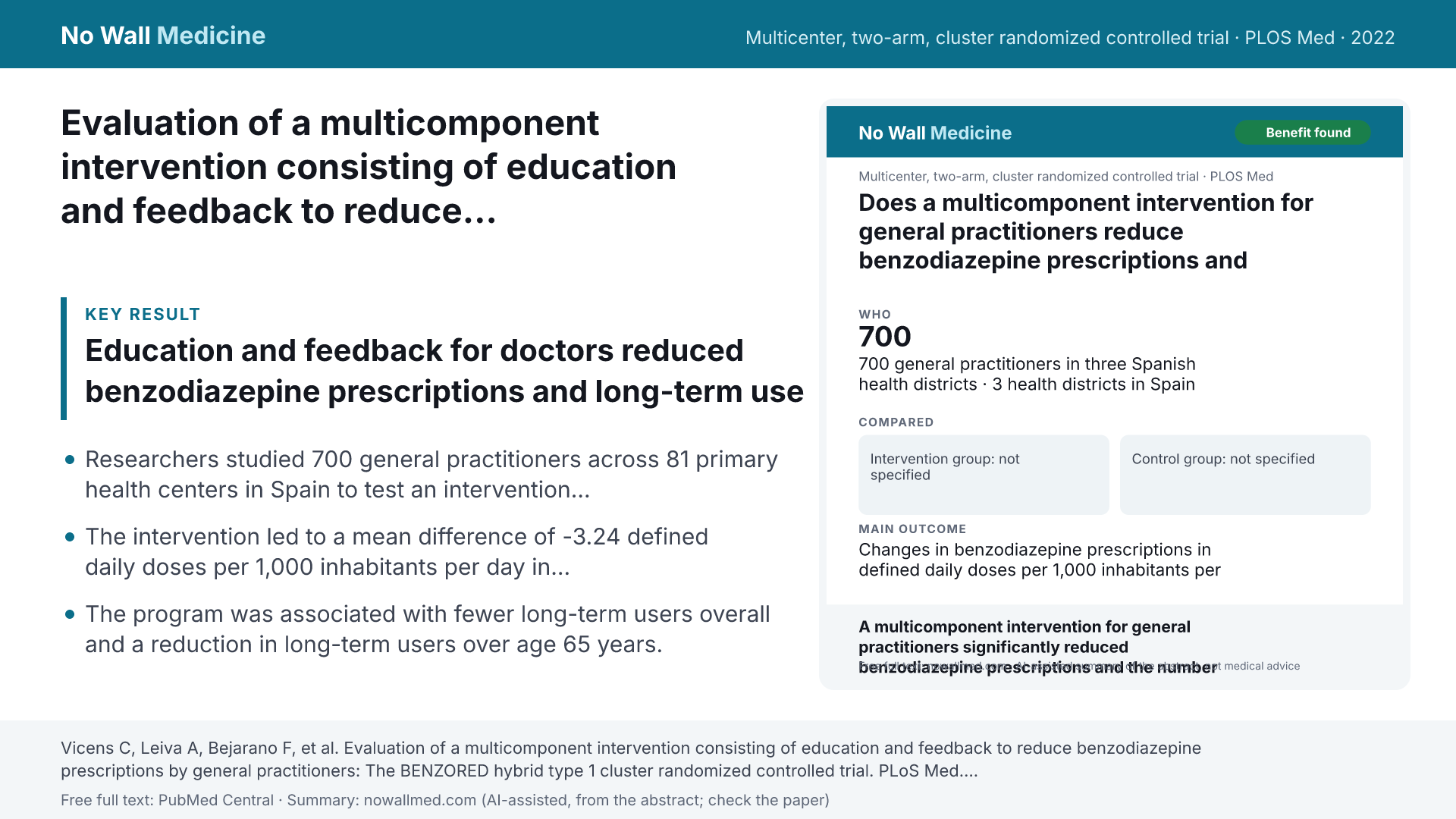
Evaluation of a multicomponent intervention consisting of education and feedback to reduce benzodiazepine prescriptions by general practitioners: The BENZORED hybrid type 1 cluster randomized controlled trial
Key result: Education and feedback for doctors reduced benzodiazepine prescriptions and long-term use
Key points
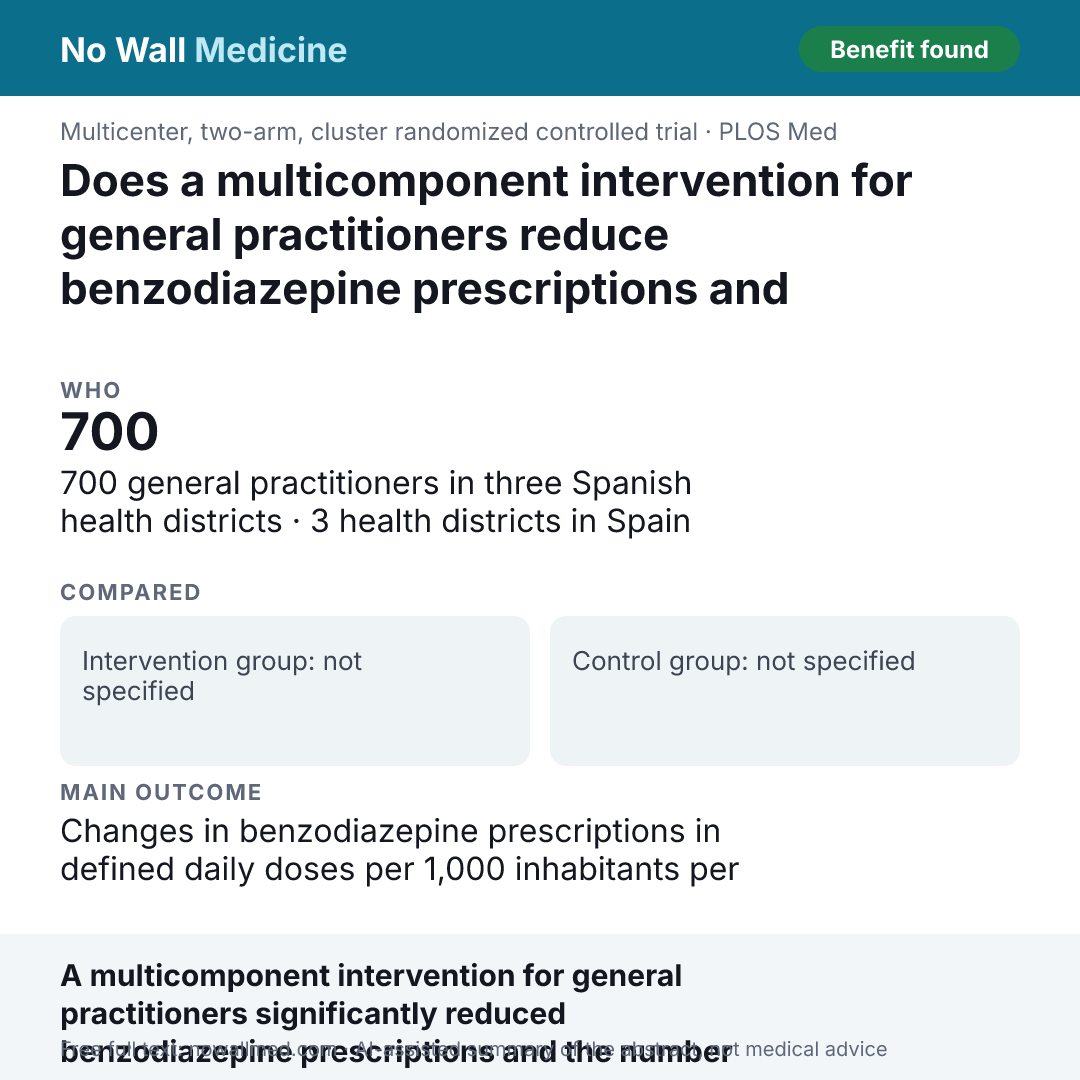
- Researchers studied 700 general practitioners across 81 primary health centers in Spain to test an intervention involving workshops, monthly prescription feedback, and a support website.
- The intervention led to a mean difference of -3.24 defined daily doses per 1,000 inhabitants per day in benzodiazepine prescriptions compared to the control group.
- The program was associated with fewer long-term users overall and a reduction in long-term users over age 65 years.
Limitation the authors note: The authors state that the cluster randomized design had an imbalance of some baseline characteristics, including higher baseline prescription rates in the control group.
Discussion prompts
- Would these patients look like yours? Who was left out?
- Is the main outcome one that matters to patients?
- Is the difference large enough to change what you do?
Cite: Vicens C, Leiva A, Bejarano F, et al. Evaluation of a multicomponent intervention consisting of education and feedback to reduce benzodiazepine prescriptions by general practitioners: The BENZORED hybrid type 1 cluster randomized controlled trial. PLoS Med. 2022;19(5):e1003983. doi:10.1371/journal.pmed.1003983
Free full text: PubMed Central · Summary and visual abstract: nowallmed.com/a/evaluation-of-a-multicomponent-intervention-consisting-of-education-1gj62se/ (AI-assisted from the abstract; check the paper before relying on it).