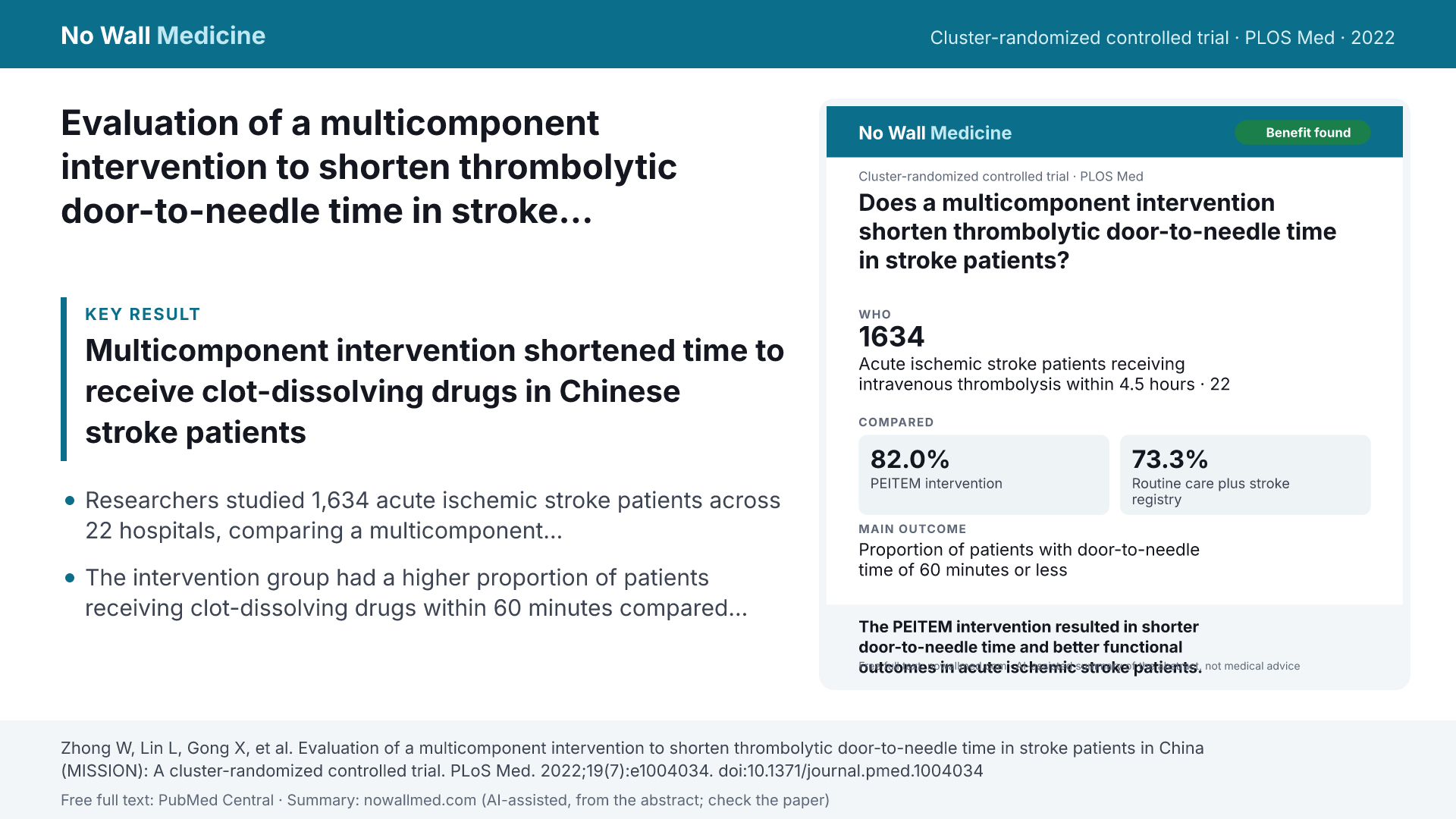
Evaluation of a multicomponent intervention to shorten thrombolytic door-to-needle time in stroke patients in China (MISSION): A cluster-randomized controlled trial
Key result: Multicomponent intervention shortened time to receive clot-dissolving drugs in Chinese stroke patients
Key points
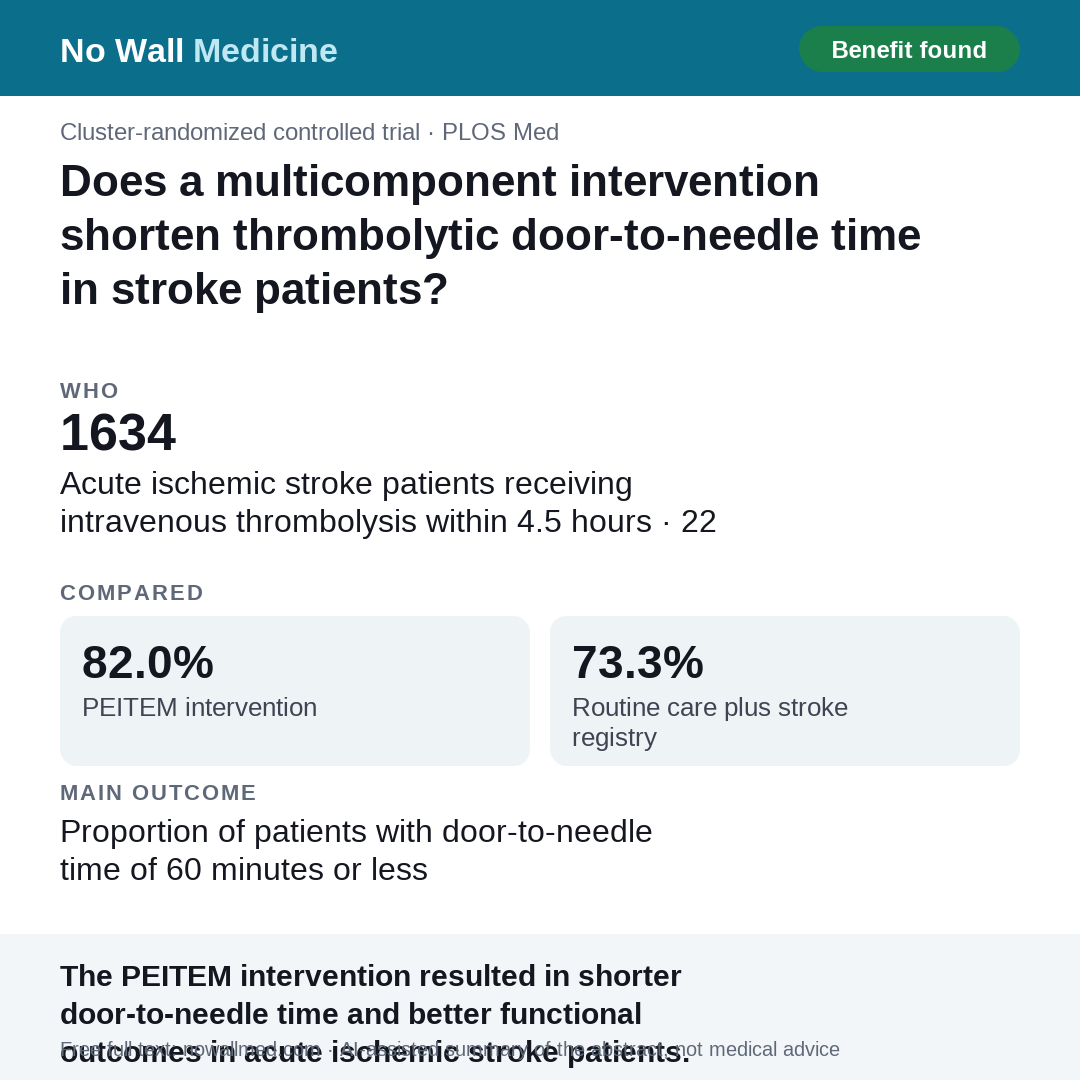
- Researchers studied 1,634 acute ischemic stroke patients across 22 hospitals, comparing a multicomponent behavioral intervention to routine care.
- The intervention group had a higher proportion of patients receiving clot-dissolving drugs within 60 minutes compared to the control group (82.0% versus 73.3%).
- The average time from hospital arrival to drug administration was 43 minutes in the intervention group and 50 minutes in the control group.
Why it matters: It was unknown if a multicomponent intervention based on behavioral theory could reduce in-hospital delays for patients receiving intravenous thrombolysis for acute ischemic stroke in China.
Discussion prompts
- Would these patients look like yours? Who was left out?
- Is the main outcome one that matters to patients?
- Is the difference large enough to change what you do?
Cite: Zhong W, Lin L, Gong X, et al. Evaluation of a multicomponent intervention to shorten thrombolytic door-to-needle time in stroke patients in China (MISSION): A cluster-randomized controlled trial. PLOS Med. 2022. doi:10.1371/journal.pmed.1004034
Free full text: PubMed Central · Summary and visual abstract: nowallmed.com/a/evaluation-of-a-multicomponent-intervention-to-shorten-thrombolytic-1v34veo/ (AI-assisted from the abstract; check the paper before relying on it).