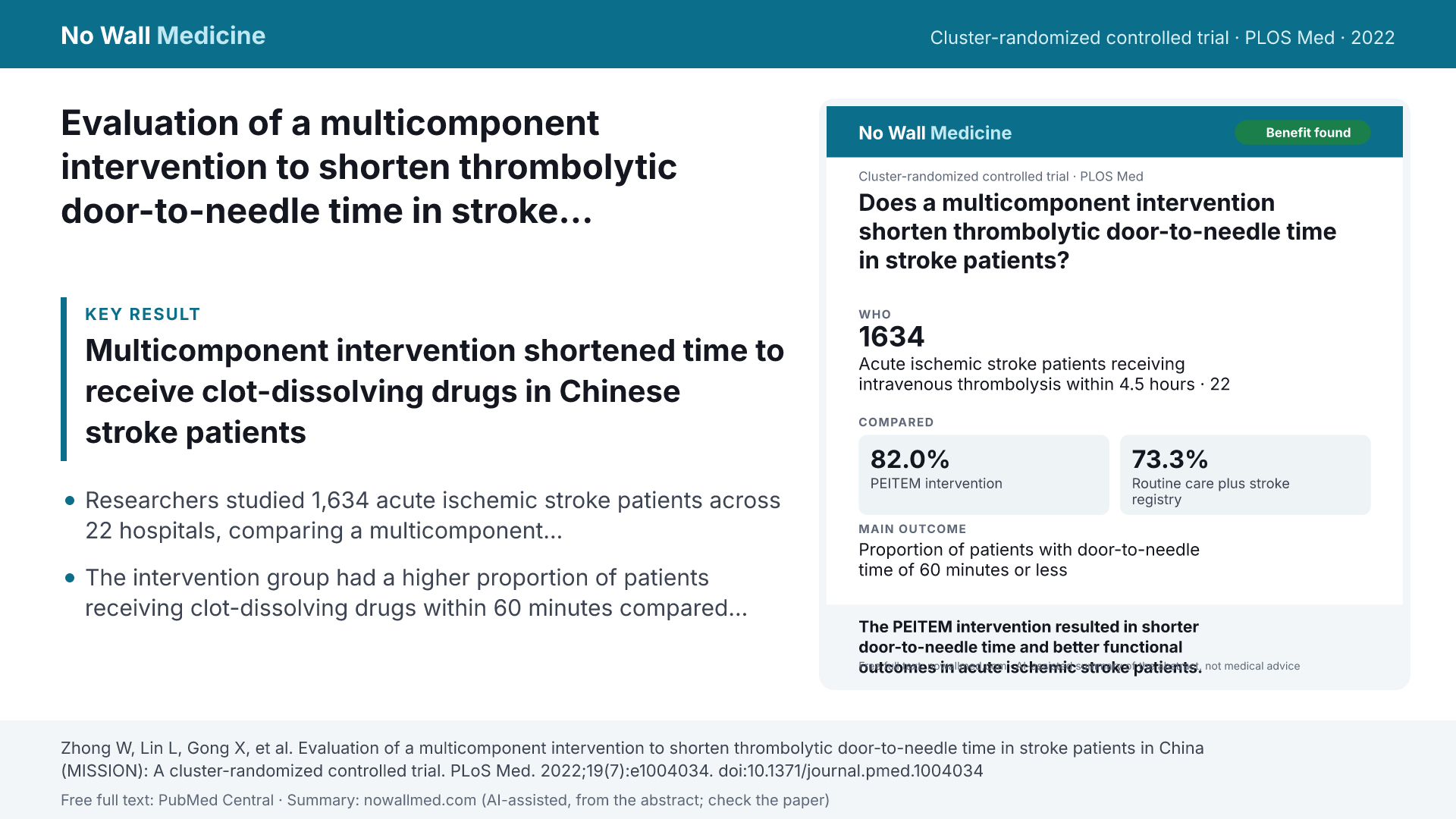
Multicomponent intervention shortened time to receive clot-dissolving drugs in Chinese stroke patients
Evaluation of a multicomponent intervention to shorten thrombolytic door-to-needle time in stroke patients in China (MISSION): A cluster-randomized controlled trial
Cluster-randomized controlled trialBenefit found
Does a multicomponent intervention shorten thrombolytic door-to-needle time in stroke patients?
Who
1634
Acute ischemic stroke patients receiving intravenous thrombolysis within 4.5 hours · 22 hospitals in China
Compared
82.0%PEITEM intervention
73.3%Routine care plus stroke registry
Main outcome
Proportion of patients with door-to-needle time of 60 minutes or less
Result: adjusted odds ratio 1.77 (95% CI 1.17 to 2.70)
Bottom line: The PEITEM intervention resulted in shorter door-to-needle time and better functional outcomes in acute ischemic stroke patients.
Limitation: Non-blinding of clinicians and inability to determine which specific intervention component caused changes.
PLOS Med · 2022-07-05Download image
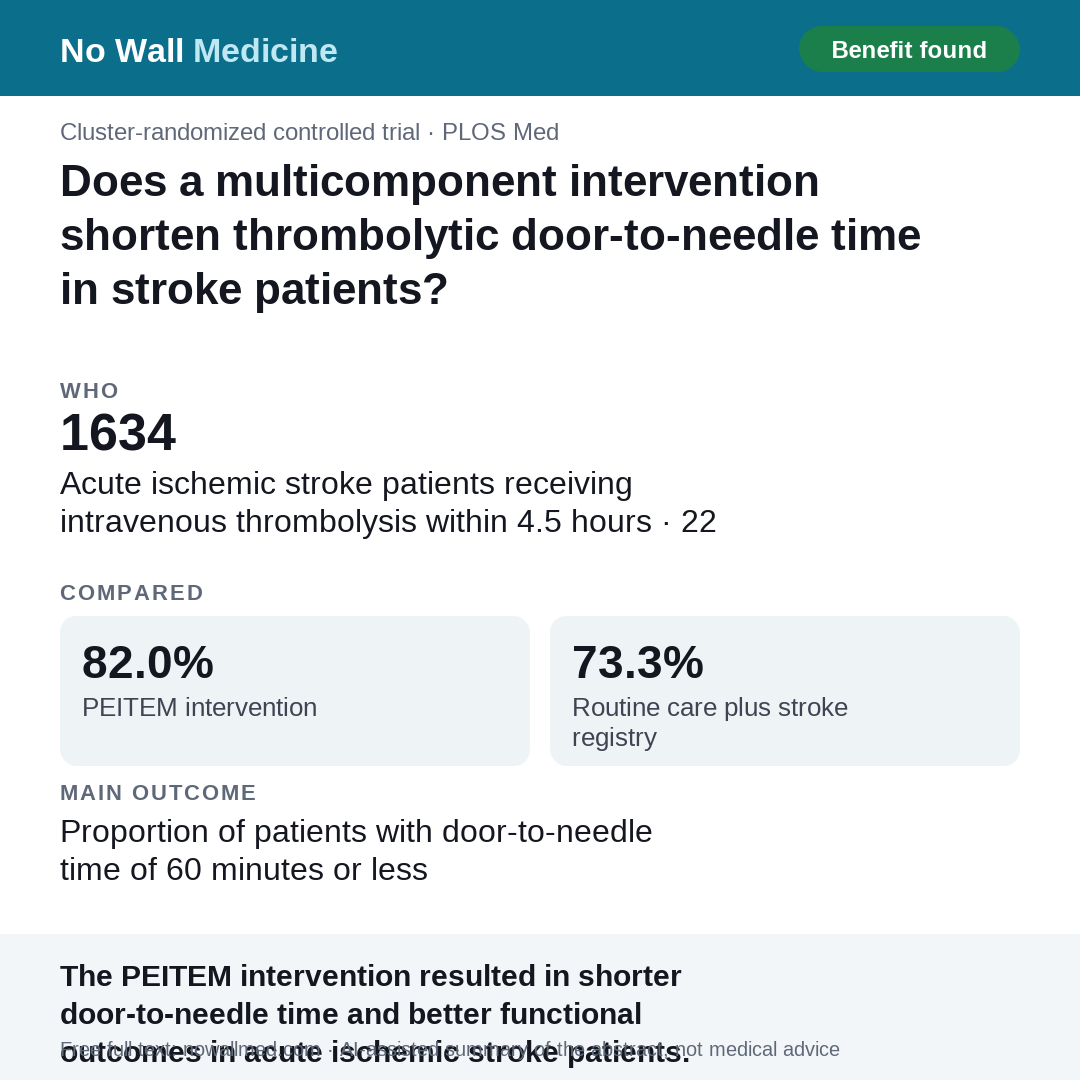
Clinical question: Does a multicomponent intervention shorten thrombolytic door-to-needle time in stroke patients?
Why it matters: It was unknown if a multicomponent intervention based on behavioral theory could reduce in-hospital delays for patients receiving intravenous thrombolysis for acute ischemic stroke in China.
Key points
- Researchers studied 1,634 acute ischemic stroke patients across 22 hospitals, comparing a multicomponent behavioral intervention to routine care.
- The intervention group had a higher proportion of patients receiving clot-dissolving drugs within 60 minutes compared to the control group (82.0% versus 73.3%).
- The average time from hospital arrival to drug administration was 43 minutes in the intervention group and 50 minutes in the control group.
Headline and key points written with AI from the paper’s abstract, with every number checked against it. Read the paper before relying on them.
Was this summary helpful?
Subject terms
Cite this article
Zhong W, Lin L, Gong X, et al. Evaluation of a multicomponent intervention to shorten thrombolytic door-to-needle time in stroke patients in China (MISSION): A cluster-randomized controlled trial. PLOS Med. 2022. doi:10.1371/journal.pmed.1004034
Spotted a mistake? Suggest a correction