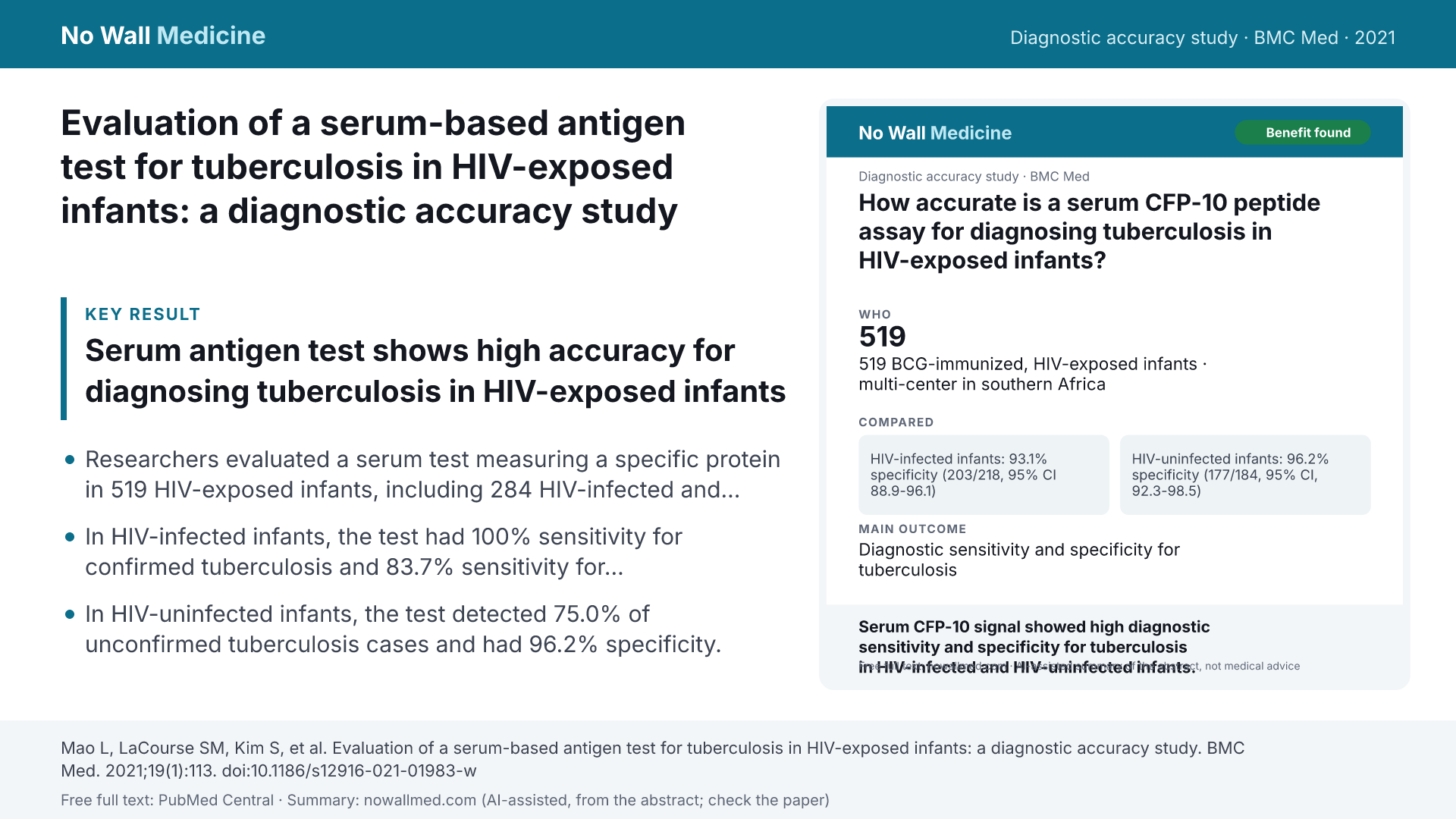
Serum antigen test shows high accuracy for diagnosing tuberculosis in HIV-exposed infants
Evaluation of a serum-based antigen test for tuberculosis in HIV-exposed infants: a diagnostic accuracy study
Diagnostic accuracy studyBenefit found
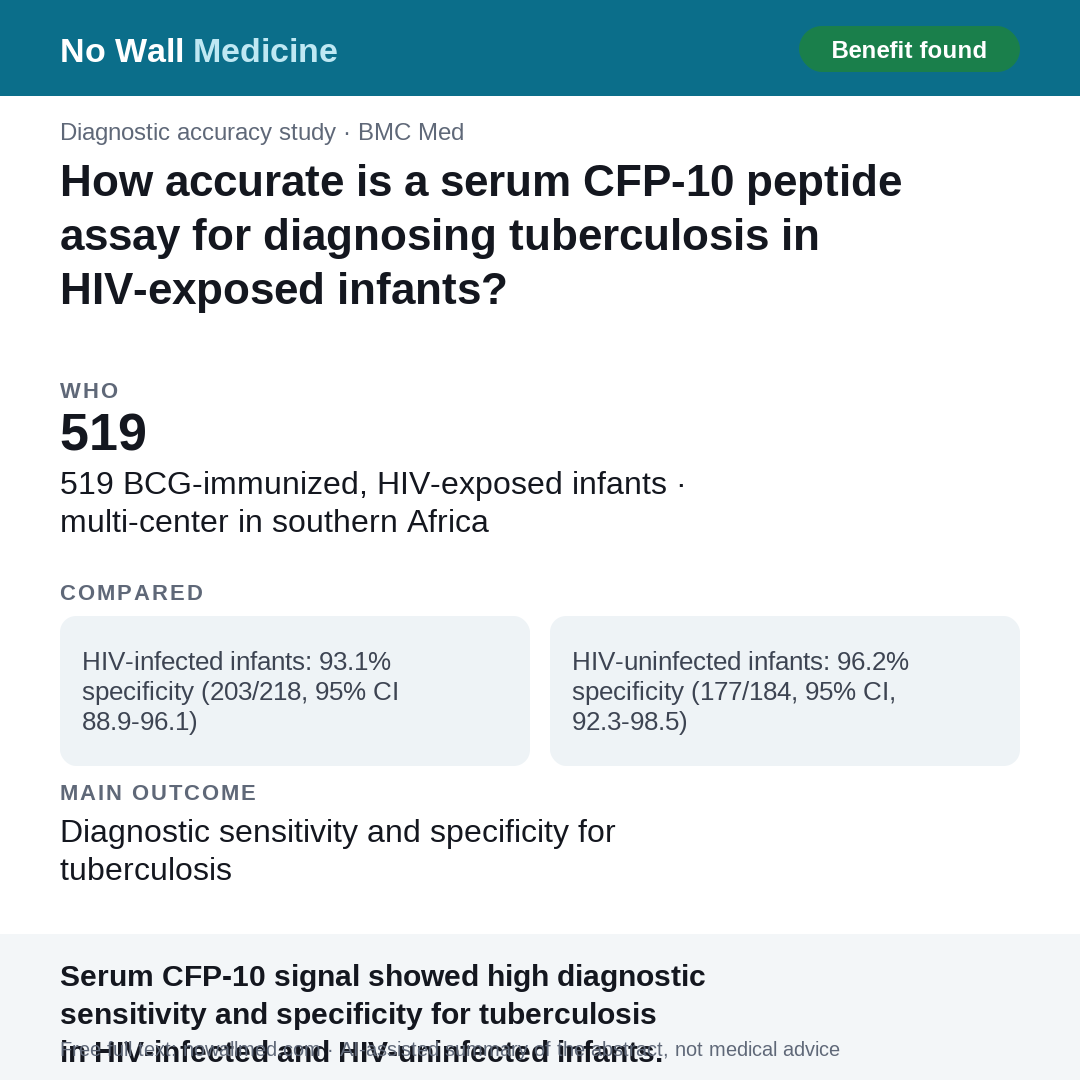
How accurate is a serum CFP-10 peptide assay for diagnosing tuberculosis in HIV-exposed infants?
Who
519
519 BCG-immunized, HIV-exposed infants · multi-center in southern Africa
Compared
HIV-infected infants: 93.1% specificity (203/218, 95% CI 88.9-96.1)
HIV-uninfected infants: 96.2% specificity (177/184, 95% CI, 92.3-98.5)
Main outcome
Diagnostic sensitivity and specificity for tuberculosis
Bottom line: Serum CFP-10 signal showed high diagnostic sensitivity and specificity for tuberculosis in HIV-infected and HIV-uninfected infants.
BMC Med · 2021-05-18Download image
Clinical question: How accurate is a serum CFP-10 peptide assay for diagnosing tuberculosis in HIV-exposed infants?
Why it matters: Non-sputum methods are needed to improve tuberculosis diagnosis and treatment monitoring in children.
Key points
- Researchers evaluated a serum test measuring a specific protein in 519 HIV-exposed infants, including 284 HIV-infected and 235 HIV-uninfected children.
- In HIV-infected infants, the test had 100% sensitivity for confirmed tuberculosis and 83.7% sensitivity for unconfirmed tuberculosis with 93.1% specificity.
- In HIV-uninfected infants, the test detected 75.0% of unconfirmed tuberculosis cases and had 96.2% specificity.
Headline and key points written with AI from the paper’s abstract, with every number checked against it. Read the paper before relying on them.
Was this summary helpful?
Subject terms
Cite this article
Mao L, LaCourse SM, Kim S, et al. Evaluation of a serum-based antigen test for tuberculosis in HIV-exposed infants: a diagnostic accuracy study. BMC Med. 2021. doi:10.1186/s12916-021-01983-w
Spotted a mistake? Suggest a correction