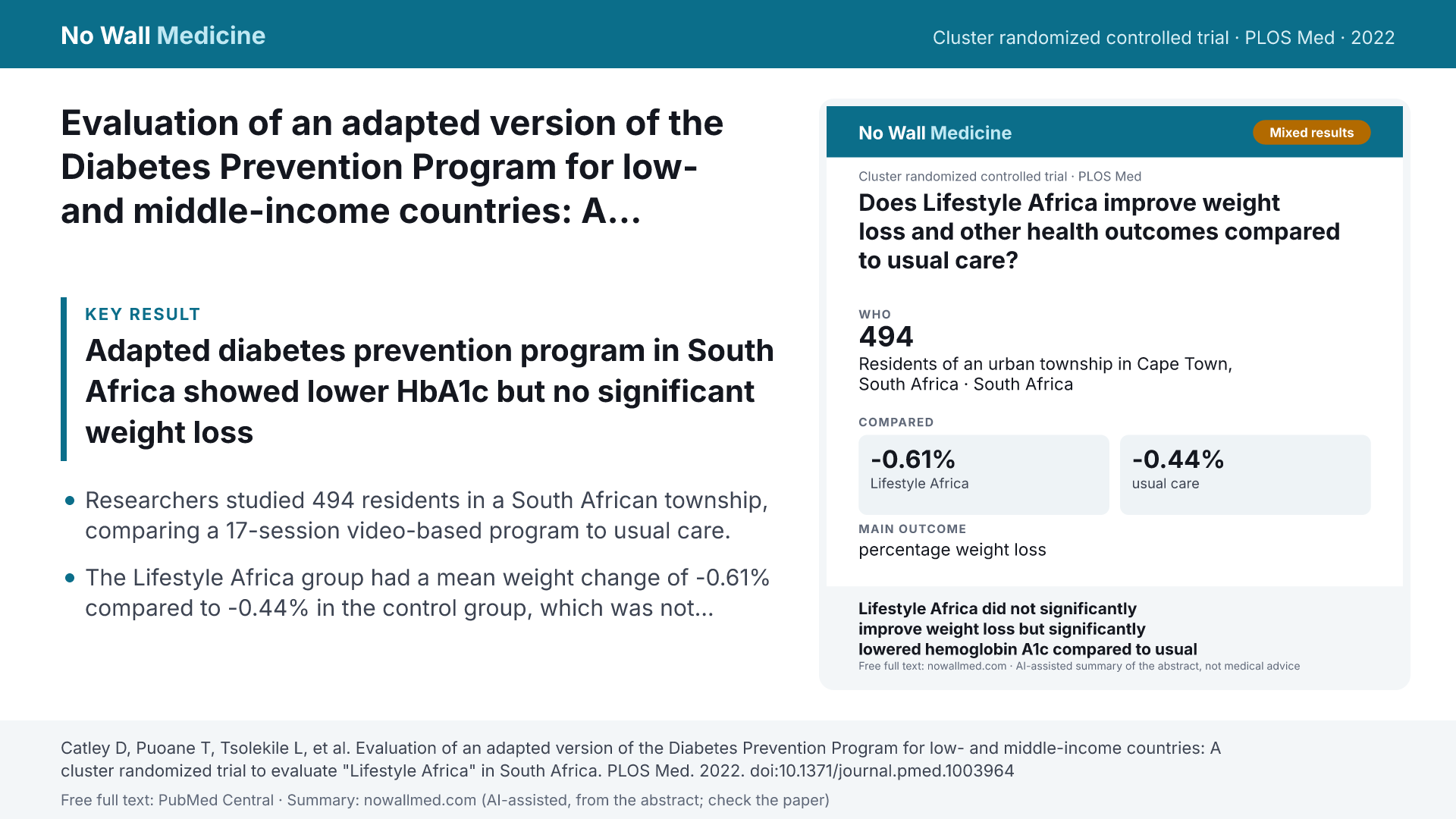
Evaluation of an adapted version of the Diabetes Prevention Program for low- and middle-income countries: A cluster randomized trial to evaluate "Lifestyle Africa" in South Africa
Key result: Adapted diabetes prevention program in South Africa showed lower HbA1c but no significant weight loss
Key points
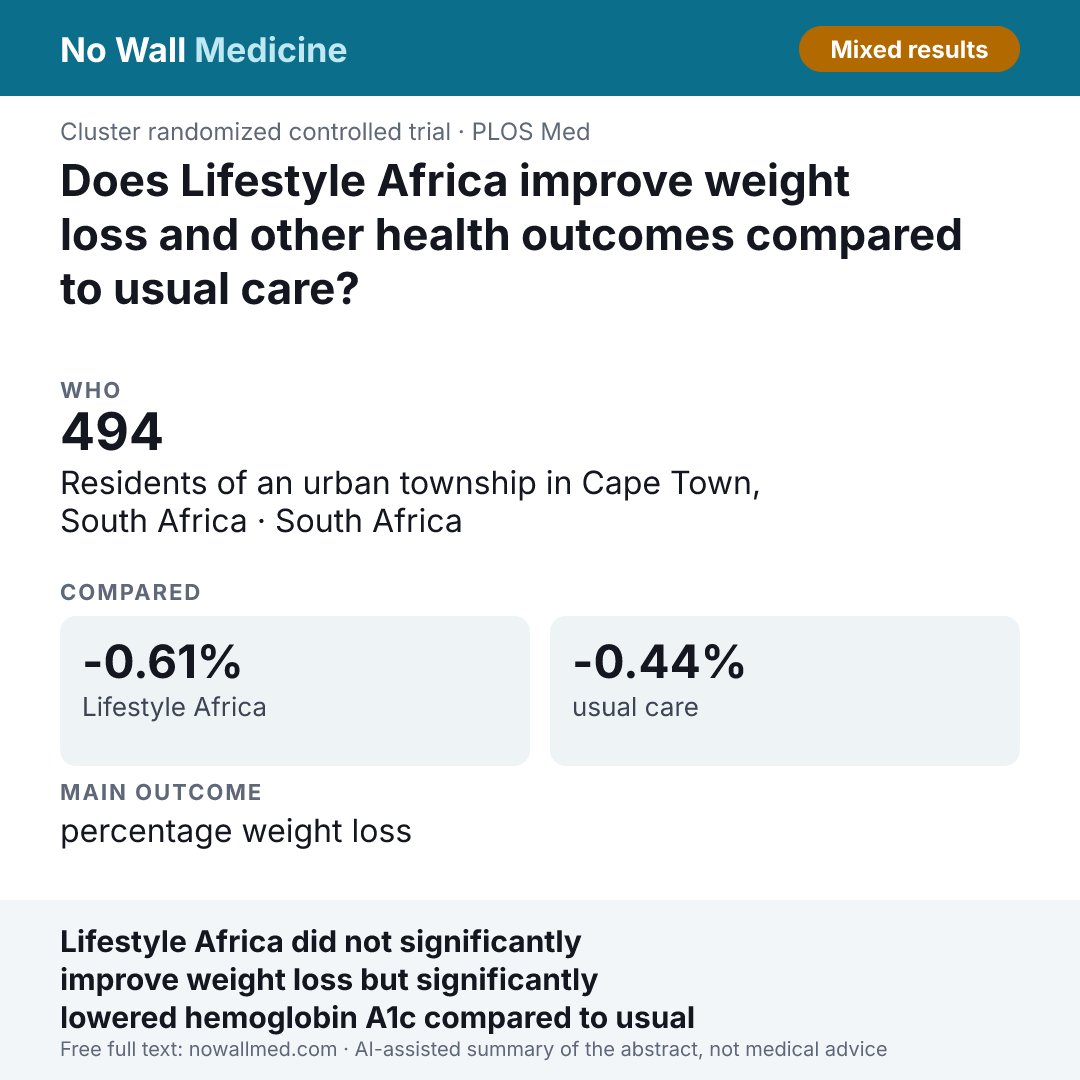
- Researchers studied 494 residents in a South African township, comparing a 17-session video-based program to usual care.
- The Lifestyle Africa group had a mean weight change of -0.61% compared to -0.44% in the control group, which was not a significant difference.
- Hemoglobin A1c, a measure of long-term blood sugar, was significantly lower in the Lifestyle Africa group compared to usual care.
Why it matters: Lifestyle interventions developed in high-income countries may require cultural tailoring and adaptation for use in low- and middle-income countries.
Limitation the authors note: The study lacked a rigorous dietary intake measure and had a high representation of older women.
Discussion prompts
- Would these patients look like yours? Who was left out?
- Is the main outcome one that matters to patients?
- Is the difference large enough to change what you do?
Cite: Catley D, Puoane T, Tsolekile L, et al. Evaluation of an adapted version of the Diabetes Prevention Program for low- and middle-income countries: A cluster randomized trial to evaluate "Lifestyle Africa" in South Africa. PLOS Med. 2022. doi:10.1371/journal.pmed.1003964
Free full text: PubMed Central · Summary and visual abstract: nowallmed.com/a/evaluation-of-an-adapted-version-of-the-diabetes-prevention-program-ejogyh/ (AI-assisted from the abstract; check the paper before relying on it).