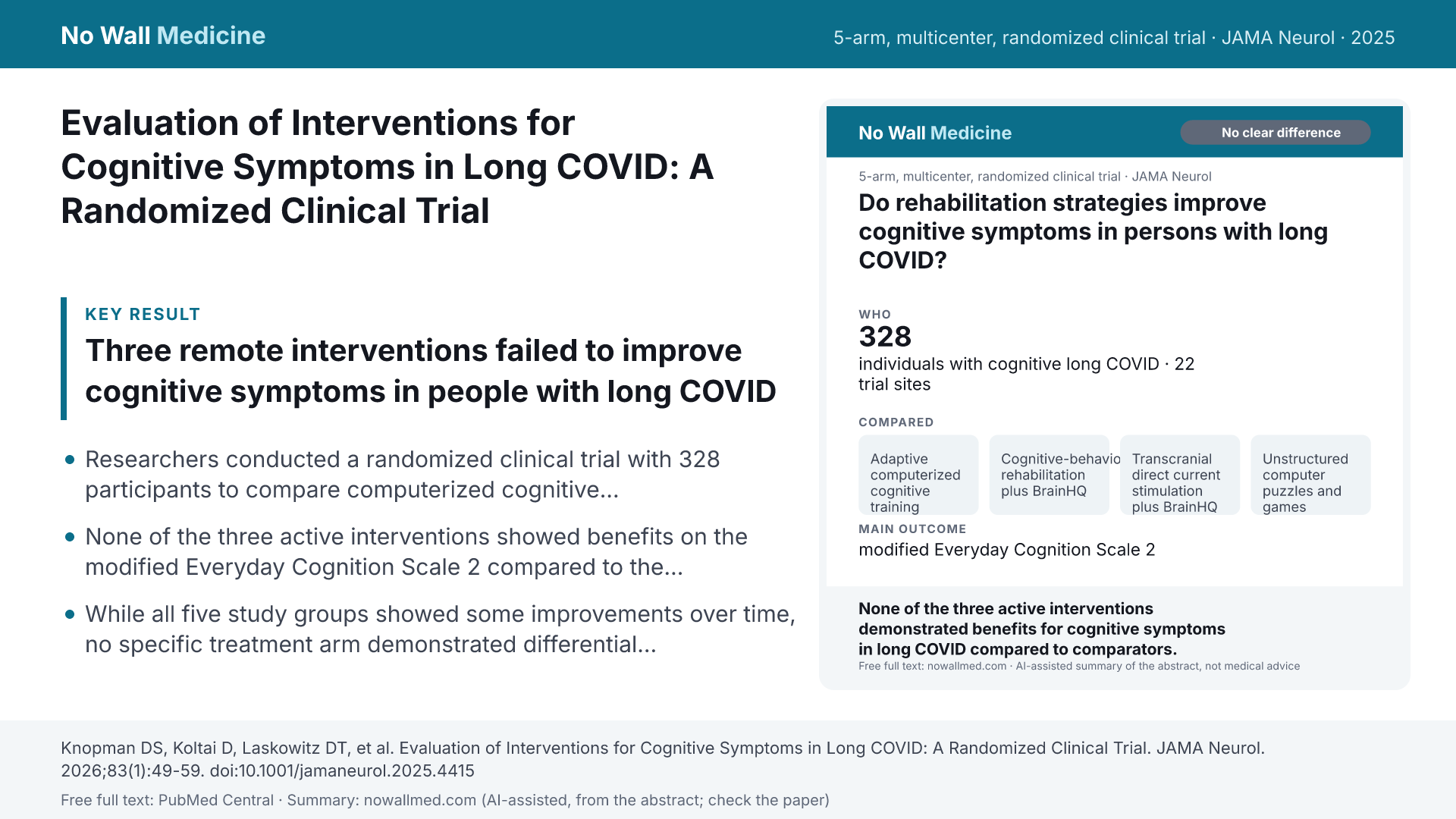
Three remote interventions failed to improve cognitive symptoms in people with long COVID
Evaluation of Interventions for Cognitive Symptoms in Long COVID: A Randomized Clinical Trial
5-arm, multicenter, randomized clinical trialNo clear difference
Do rehabilitation strategies improve cognitive symptoms in persons with long COVID?
Who
328
individuals with cognitive long COVID · 22 trial sites
Compared
Adaptive computerized cognitive training
Cognitive-behavioral rehabilitation plus BrainHQ
Transcranial direct current stimulation plus BrainHQ
Unstructured computer puzzles and games
Main outcome
modified Everyday Cognition Scale 2
Bottom line: None of the three active interventions demonstrated benefits for cognitive symptoms in long COVID compared to comparators.
JAMA Neurol · 2025-11-10Download image
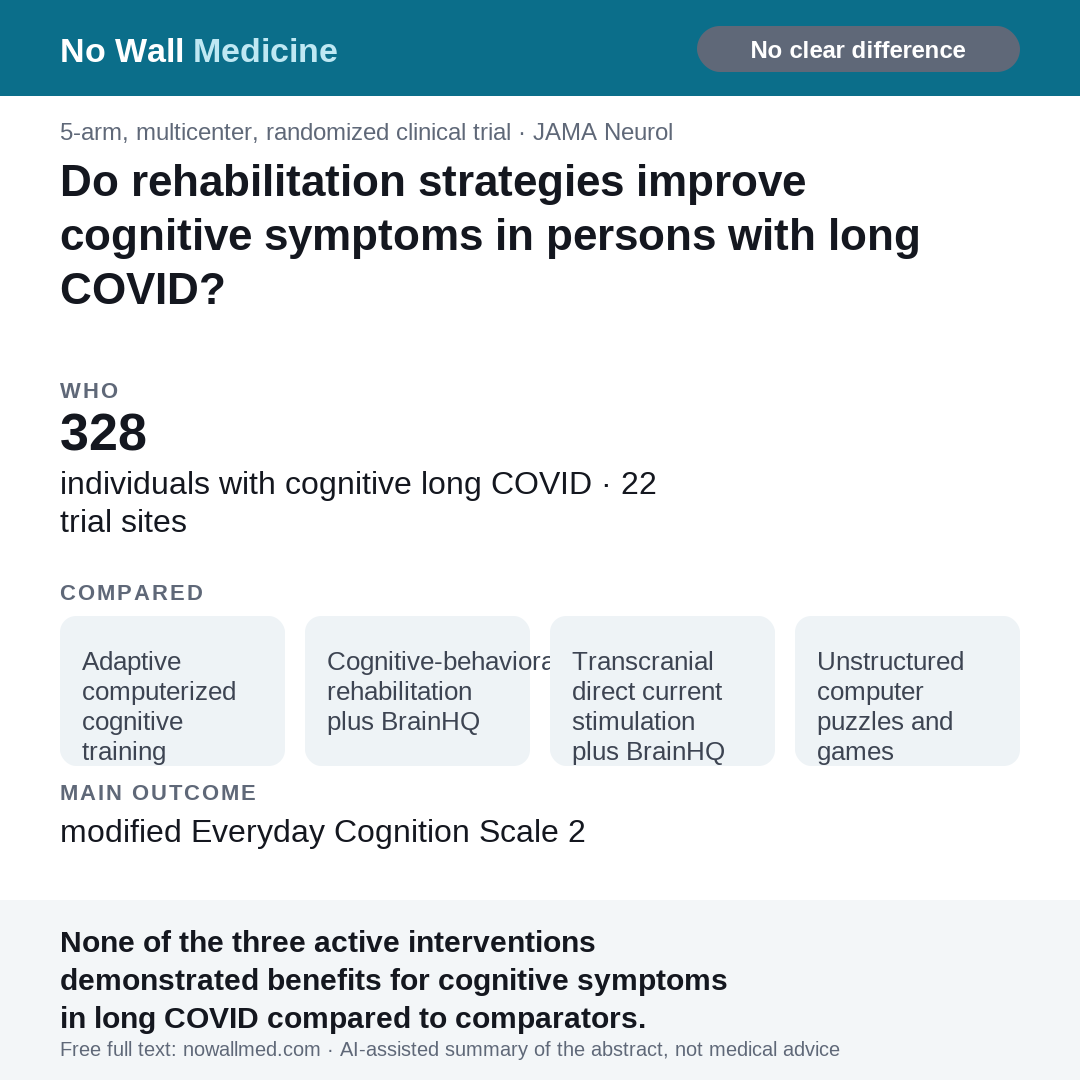
Clinical question: Do rehabilitation strategies improve cognitive symptoms in persons with long COVID?
Why it matters: Treatment for cognitive dysfunction, such as confusion and fatigue persisting beyond 12 weeks after a COVID infection, remains a significant unmet need.
Key points
- Researchers conducted a randomized clinical trial with 328 participants to compare computerized cognitive training, cognitive-behavioral rehabilitation, and transcranial direct current stimulation (brain stimulation using low electrical currents).
- None of the three active interventions showed benefits on the modified Everyday Cognition Scale 2 compared to the control groups by the end of the intervention period.
- While all five study groups showed some improvements over time, no specific treatment arm demonstrated differential benefits for cognitive or neuropsychological outcomes.
Headline and key points written with AI from the paper’s abstract, with every number checked against it. Read the paper before relying on them.
Was this summary helpful?
Subject terms
Cite this article
Knopman DS, Koltai D, Laskowitz DT, et al. Evaluation of Interventions for Cognitive Symptoms in Long COVID: A Randomized Clinical Trial. JAMA Neurol. 2025. doi:10.1001/jamaneurol.2025.4415
Spotted a mistake? Suggest a correction