Physical activity calorie equivalent labels did not change energy purchased in worksite cafeterias
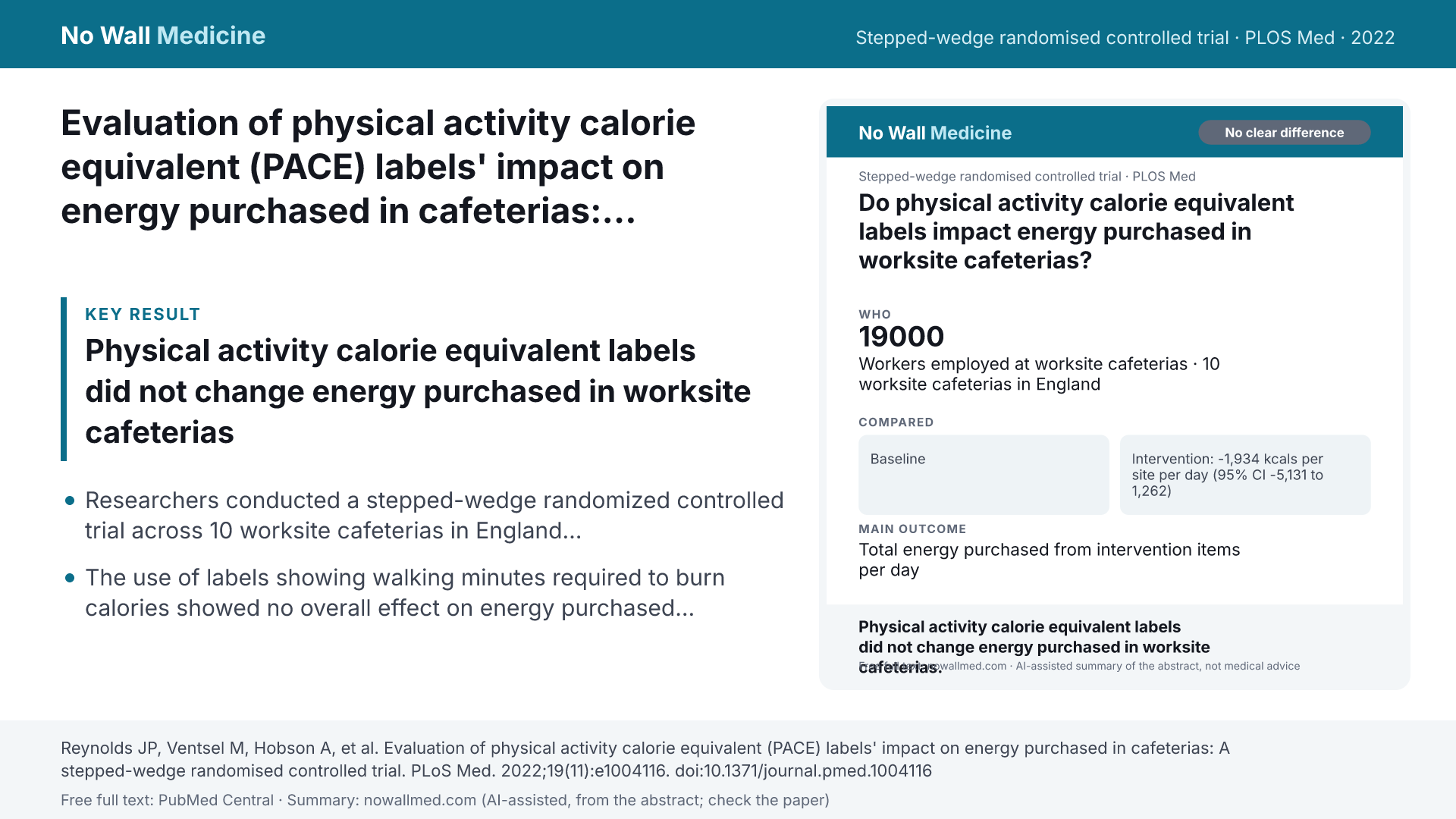
Evaluation of physical activity calorie equivalent (PACE) labels' impact on energy purchased in cafeterias: A stepped-wedge randomised controlled trial
Stepped-wedge randomised controlled trialNo clear difference
Do physical activity calorie equivalent labels impact energy purchased in worksite cafeterias?
Who
19000
Workers employed at worksite cafeterias · 10 worksite cafeterias in England
Compared
Baseline
Intervention: -1,934 kcals per site per day (95% CI -5,131 to 1,262)
Main outcome
Total energy purchased from intervention items per day
Result: -5 kcals per transaction (95% CI -14 to 4)
Bottom line: Physical activity calorie equivalent labels did not change energy purchased in worksite cafeterias.
Limitation: Used energy purchased instead of energy consumed and lacked individual-level data.
PLOS Med · 2022-11-08Download image
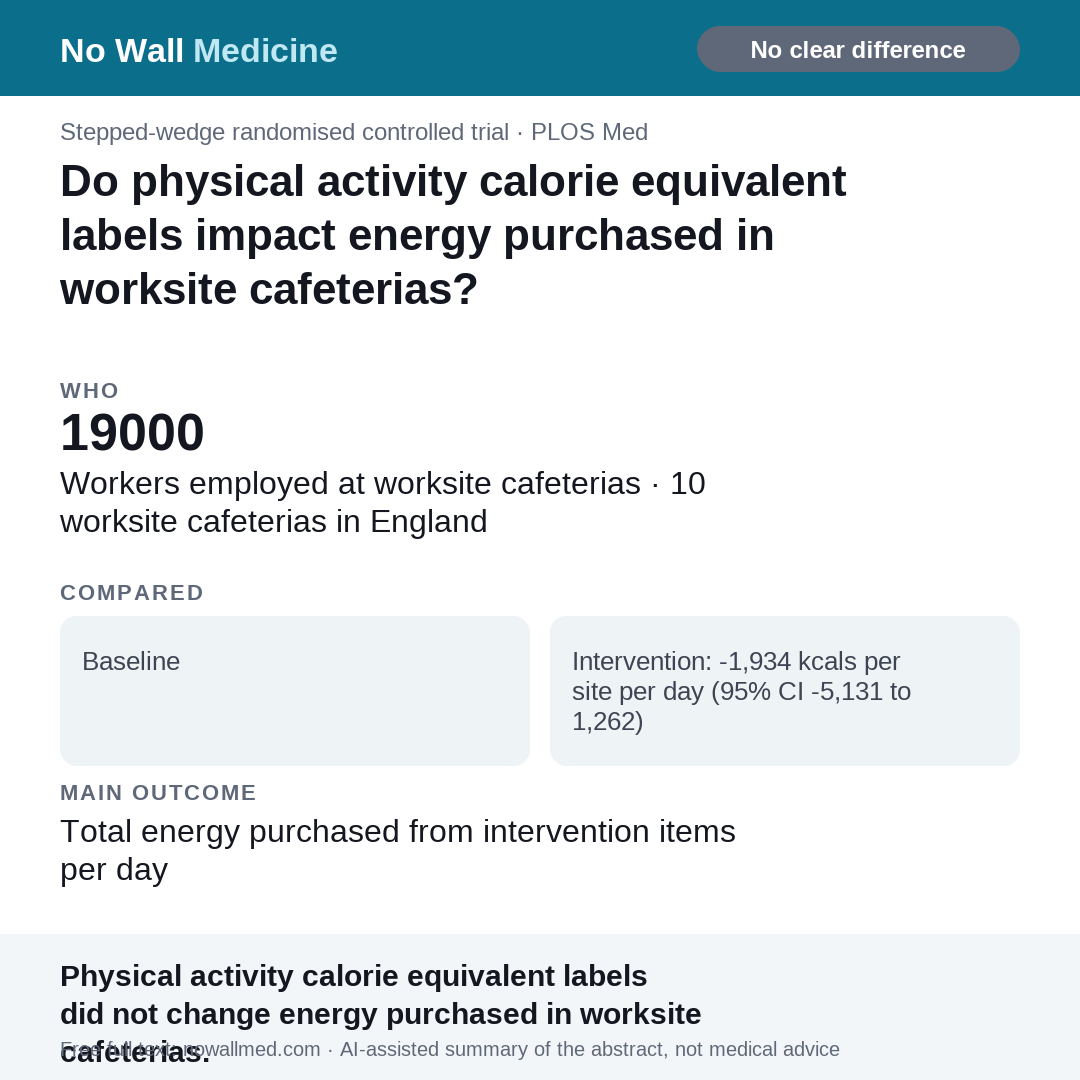
Clinical question: Do physical activity calorie equivalent labels impact energy purchased in worksite cafeterias?
Why it matters: It was unknown if physical activity calorie equivalent labels, which show both calories and walking minutes required for expenditure, affect energy purchased in worksite cafeteria settings.
Key points
- Researchers conducted a stepped-wedge randomized controlled trial across 10 worksite cafeterias in England involving approximately 19,000 workers.
- The use of labels showing walking minutes required to burn calories showed no overall effect on energy purchased from intervention items, which was -1,934 kcals per site per day (95% CI -5,131 to 1,262).
- No evidence was found for an effect on energy purchased from non-intervention items, which was -5 kcals per site per day (95% CI -513 to 504), or on total energy purchased.
Headline and key points written with AI from the paper’s abstract, with every number checked against it. Read the paper before relying on them.
Was this summary helpful?
Subject terms
Cite this article
Reynolds JP, Ventsel M, Hobson A, Pilling MA, Pechey R, Jebb SA. Evaluation of physical activity calorie equivalent (PACE) labels' impact on energy purchased in cafeterias: A stepped-wedge randomised controlled trial. PLOS Med. 2022. doi:10.1371/journal.pmed.1004116
Spotted a mistake? Suggest a correction
Top studies every Monday
The week’s key trials and guidelines in your specialties, plus any topics you follow. By email, free.
Get the weekly digest