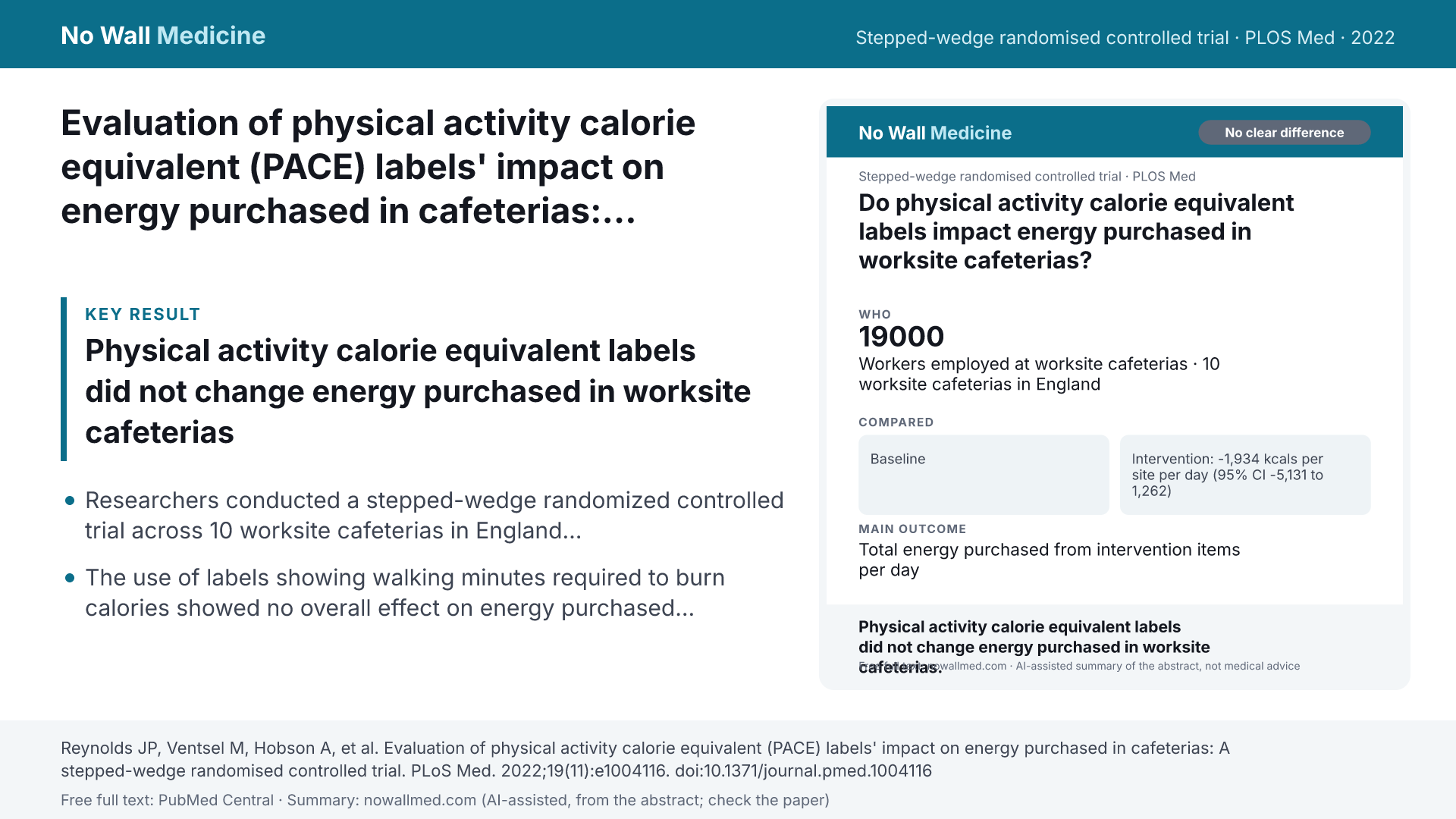
Evaluation of physical activity calorie equivalent (PACE) labels' impact on energy purchased in cafeterias: A stepped-wedge randomised controlled trial
Key result: Physical activity calorie equivalent labels did not change energy purchased in worksite cafeterias
Key points
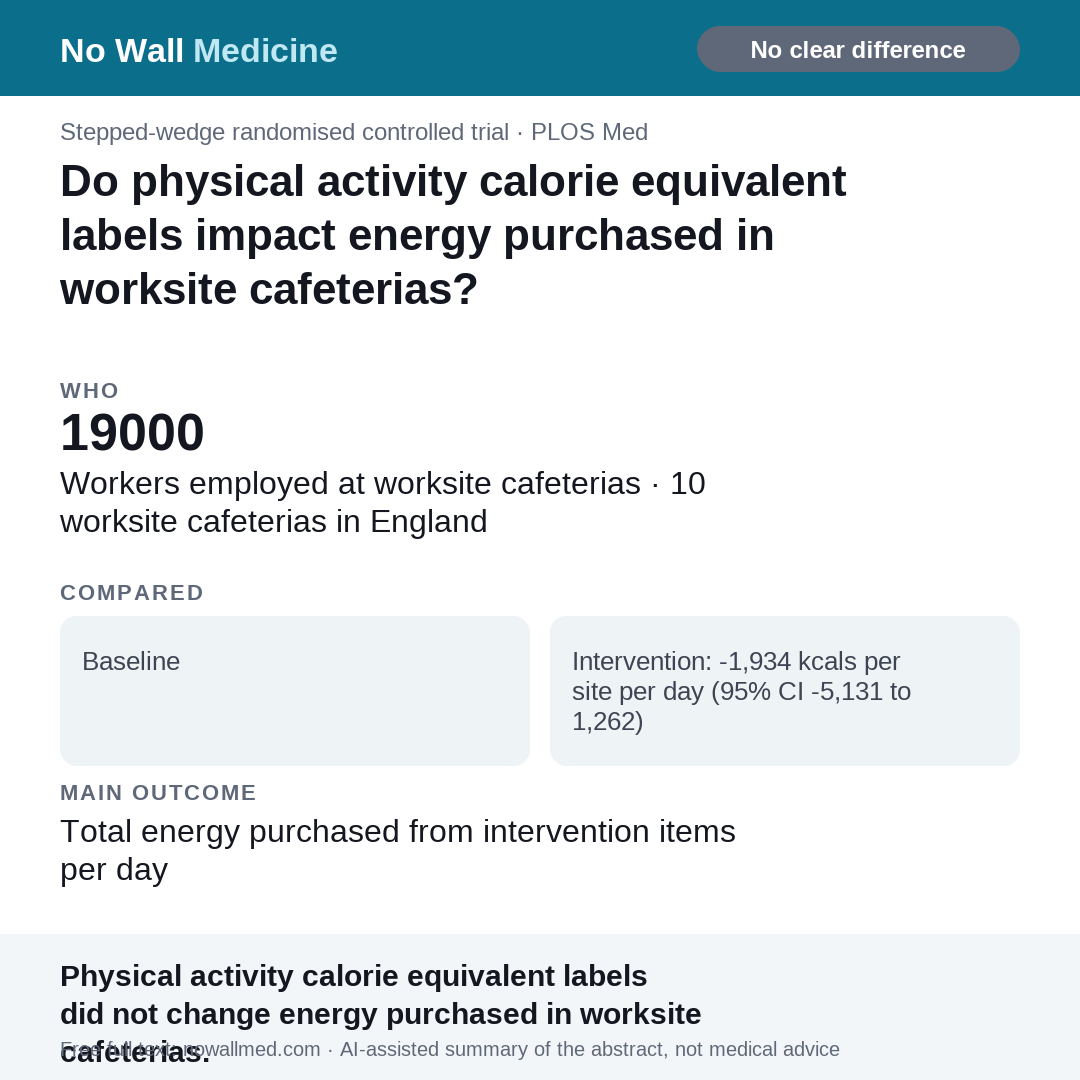
- Researchers conducted a stepped-wedge randomized controlled trial across 10 worksite cafeterias in England involving approximately 19,000 workers.
- The use of labels showing walking minutes required to burn calories showed no overall effect on energy purchased from intervention items, which was -1,934 kcals per site per day (95% CI -5,131 to 1,262).
- No evidence was found for an effect on energy purchased from non-intervention items, which was -5 kcals per site per day (95% CI -513 to 504), or on total energy purchased.
Why it matters: It was unknown if physical activity calorie equivalent labels, which show both calories and walking minutes required for expenditure, affect energy purchased in worksite cafeteria settings.
Discussion prompts
- Would these patients look like yours? Who was left out?
- Is the main outcome one that matters to patients?
- Is the difference large enough to change what you do?
Cite: Reynolds JP, Ventsel M, Hobson A, Pilling MA, Pechey R, Jebb SA. Evaluation of physical activity calorie equivalent (PACE) labels' impact on energy purchased in cafeterias: A stepped-wedge randomised controlled trial. PLOS Med. 2022. doi:10.1371/journal.pmed.1004116
Free full text: PubMed Central · Summary and visual abstract: nowallmed.com/a/evaluation-of-physical-activity-calorie-equivalent-pace-labels-impact-27uqxf/ (AI-assisted from the abstract; check the paper before relying on it).