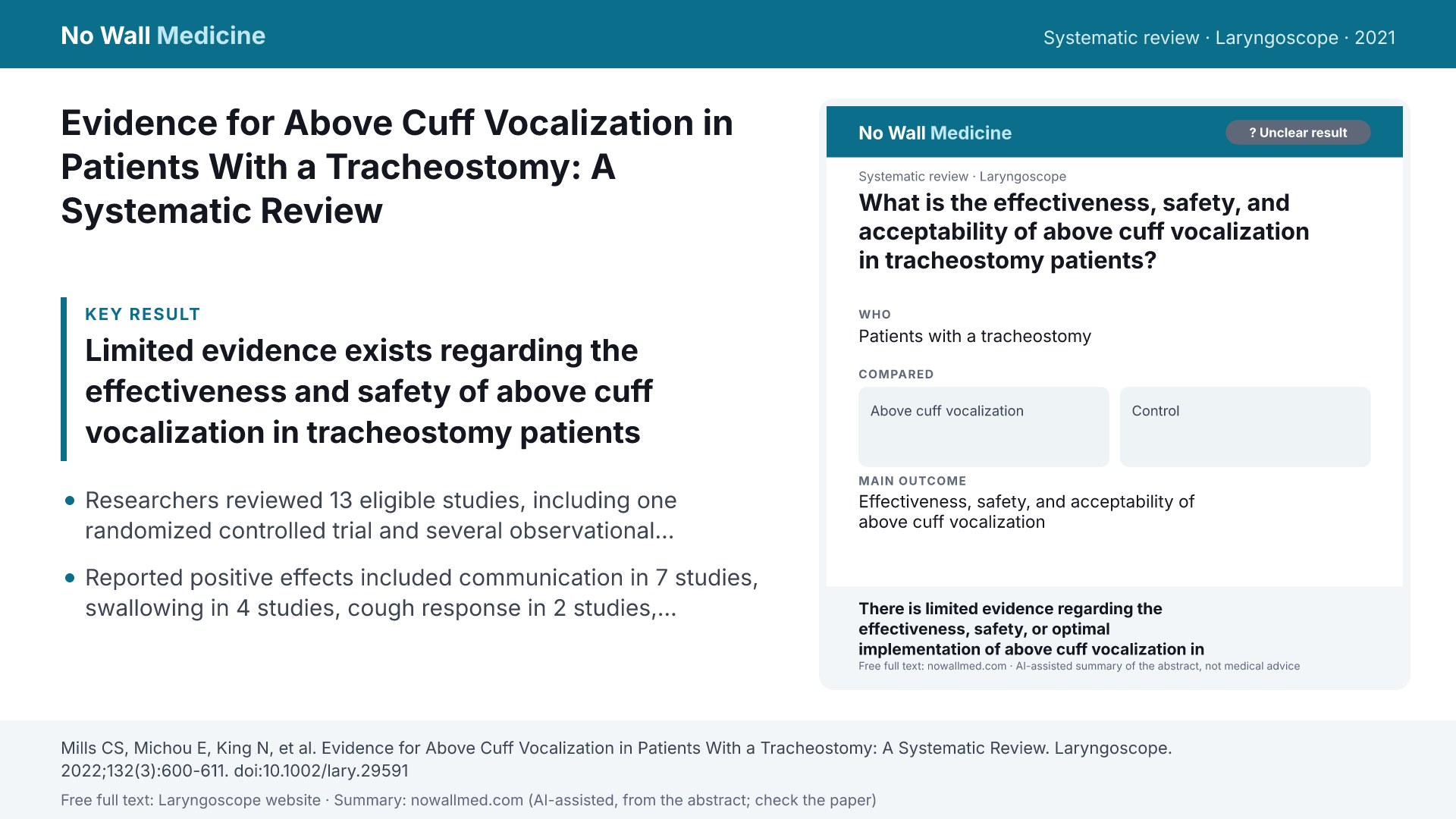
Evidence for Above Cuff Vocalization in Patients With a Tracheostomy: A Systematic Review
Key result: Limited evidence exists regarding the effectiveness and safety of above cuff vocalization in tracheostomy patients
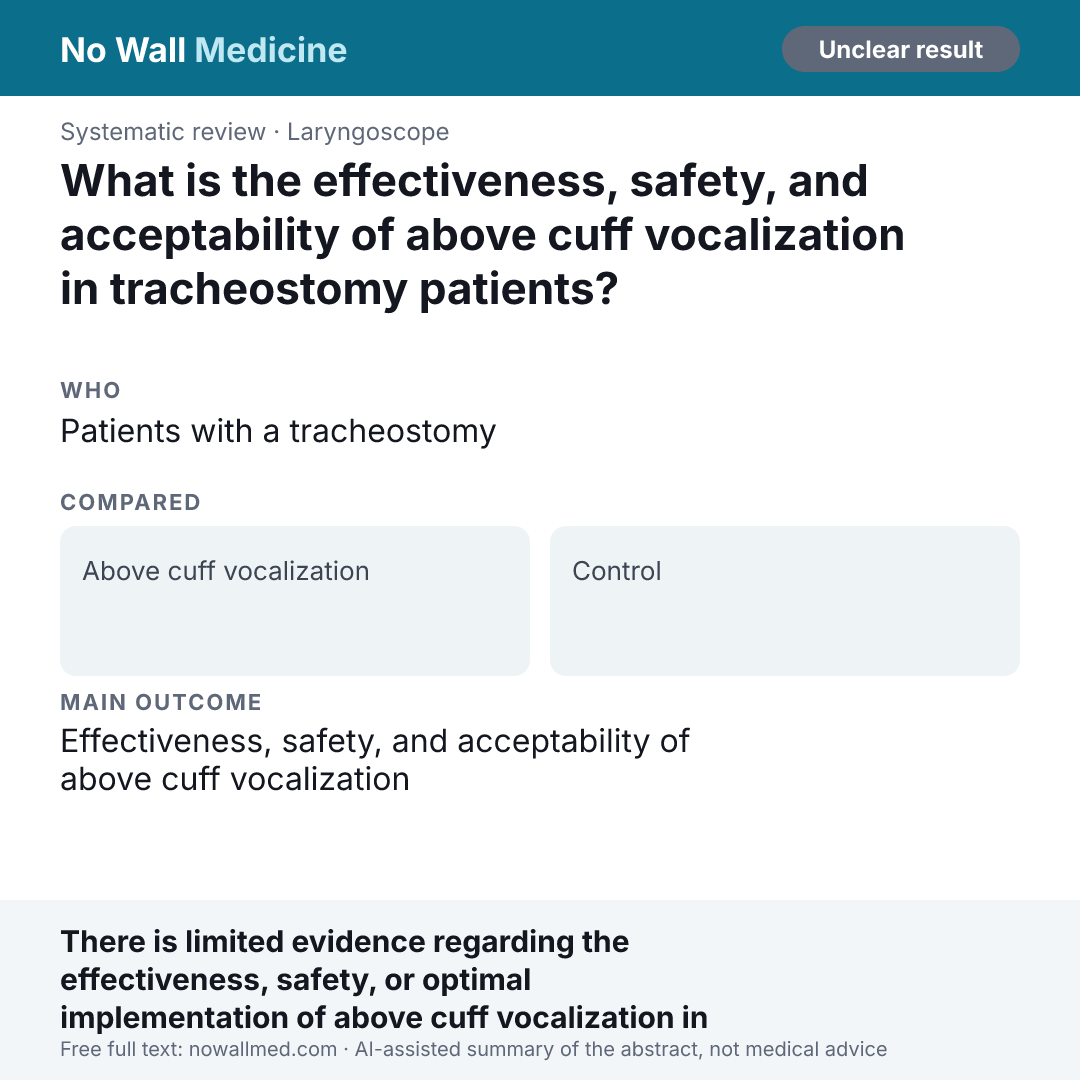
Key points
- Researchers reviewed 13 eligible studies, including one randomized controlled trial and several observational studies, to evaluate above cuff vocalization, which is speaking while a breathing tube cuff is deflated.
- Reported positive effects included communication in 7 studies, swallowing in 4 studies, cough response in 2 studies, and quality-of-life in 2 studies, though objective measures were used inconsistently.
- Nine studies reported adverse events or complications, and four studies noted the importance of involving an experienced speech and language therapist.
Why it matters: The effectiveness, safety, acceptability, and optimal implementation of above cuff vocalization in patients with a tracheostomy are currently unknown.
Limitation the authors note: The study quality was low, most studies had a high risk of bias, and there was a high level of heterogeneity in study design and outcome measures.
Discussion prompts
- Would these patients look like yours? Who was left out?
- Is the main outcome one that matters to patients?
- Is the difference large enough to change what you do?
Cite: Mills CS, Michou E, King N, et al. Evidence for Above Cuff Vocalization in Patients With a Tracheostomy: A Systematic Review. Laryngoscope. 2022;132(3):600-611. doi:10.1002/lary.29591
Free full text: Laryngoscope website · Summary and visual abstract: nowallmed.com/a/evidence-for-above-cuff-vocalization-in-patients-with-a-tracheostomy-8yop44/ (AI-assisted from the abstract; check the paper before relying on it).