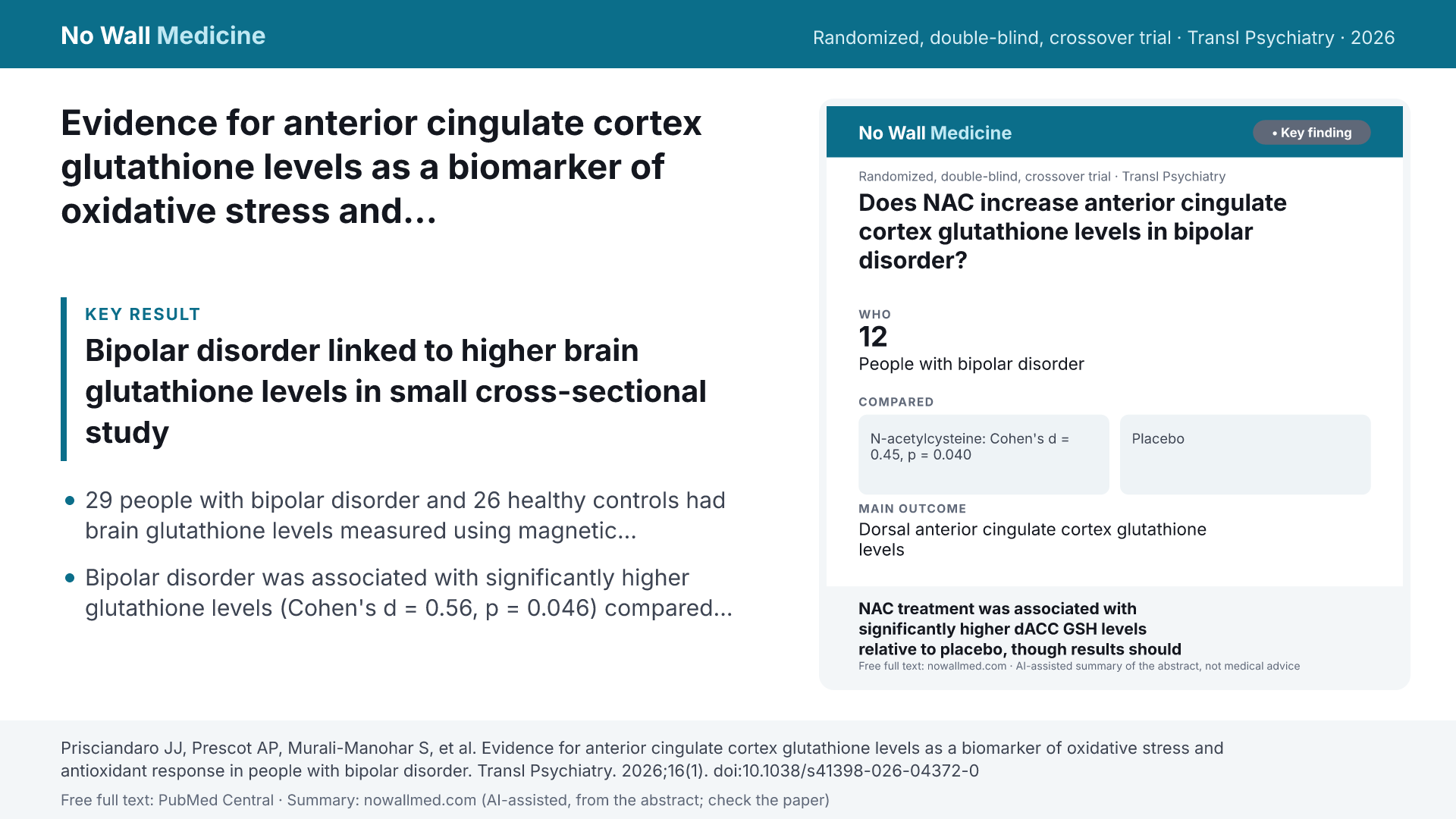
Evidence for anterior cingulate cortex glutathione levels as a biomarker of oxidative stress and antioxidant response in people with bipolar disorder
Key result: Bipolar disorder linked to higher brain glutathione levels in small cross-sectional study
Key points
- 29 people with bipolar disorder and 26 healthy controls had brain glutathione levels measured using magnetic resonance spectroscopy.
- Bipolar disorder was associated with significantly higher glutathione levels (Cohen's d = 0.56, p = 0.046) compared to healthy controls.
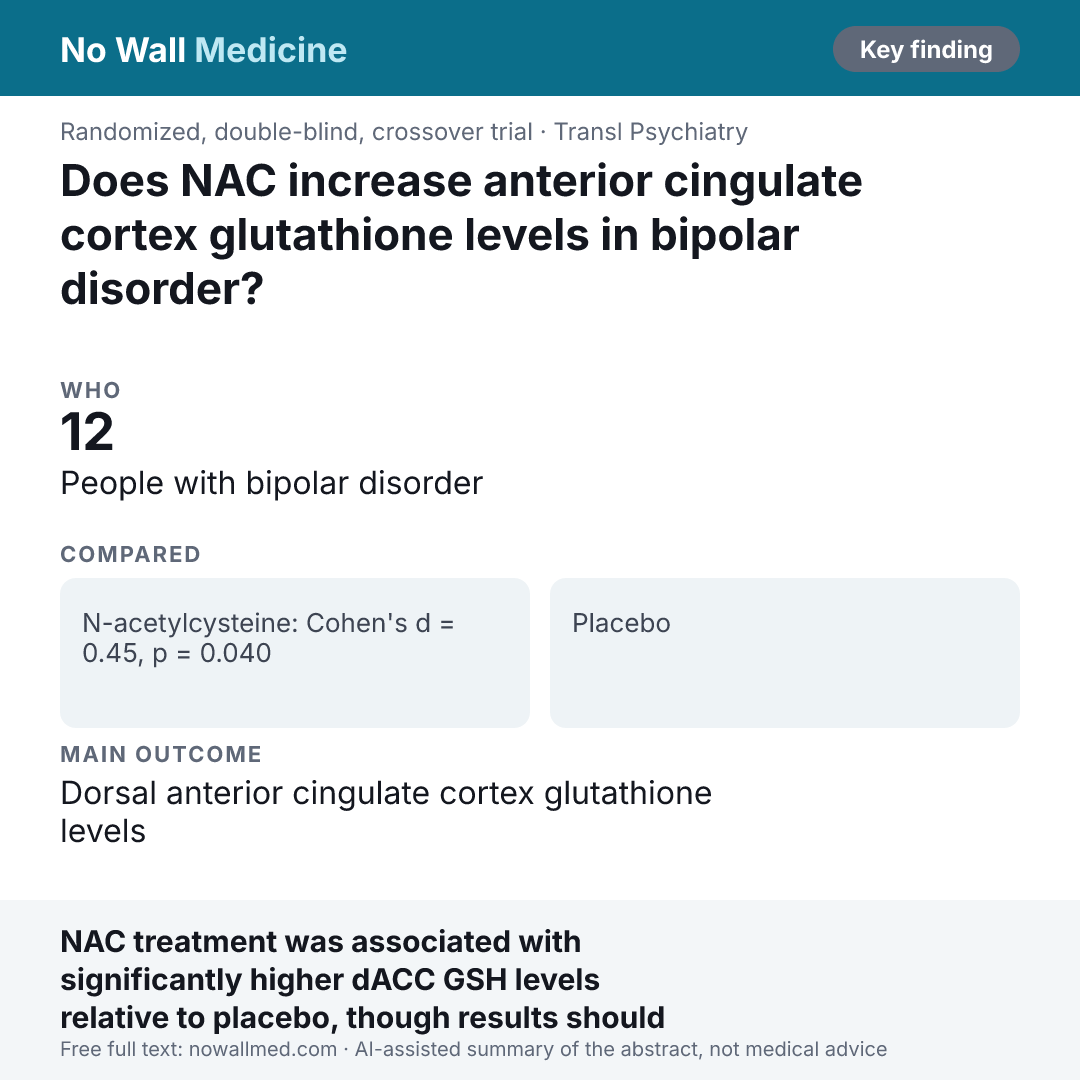
- In a pilot trial of 12 people, NAC treatment was associated with higher glutathione levels than placebo (Cohen's d = 0.45, p = 0.040).
Why it matters: Applies to people with bipolar disorder; suggests anterior cingulate cortex glutathione may be a biomarker for oxidative stress and antioxidant response.
Limitation the authors note: The authors state the results should be interpreted with caution given the small sample sizes.
Discussion prompts
- Would these patients look like yours? Who was left out?
- Is the main outcome one that matters to patients?
- Is the difference large enough to change what you do?
Cite: Prisciandaro JJ, Prescot AP, Murali-Manohar S, et al. Evidence for anterior cingulate cortex glutathione levels as a biomarker of oxidative stress and antioxidant response in people with bipolar disorder. Transl Psychiatry. 2026;16(1). doi:10.1038/s41398-026-04372-0
Free full text: PubMed Central · Summary and visual abstract: nowallmed.com/a/evidence-for-anterior-cingulate-cortex-glutathione-levels-as-a-179aniy/ (AI-assisted from the abstract; check the paper before relying on it).