Examining the Effectiveness of Electronic Patient-Reported Outcomes in People With Cancer: Systematic Review and Meta-Analysis
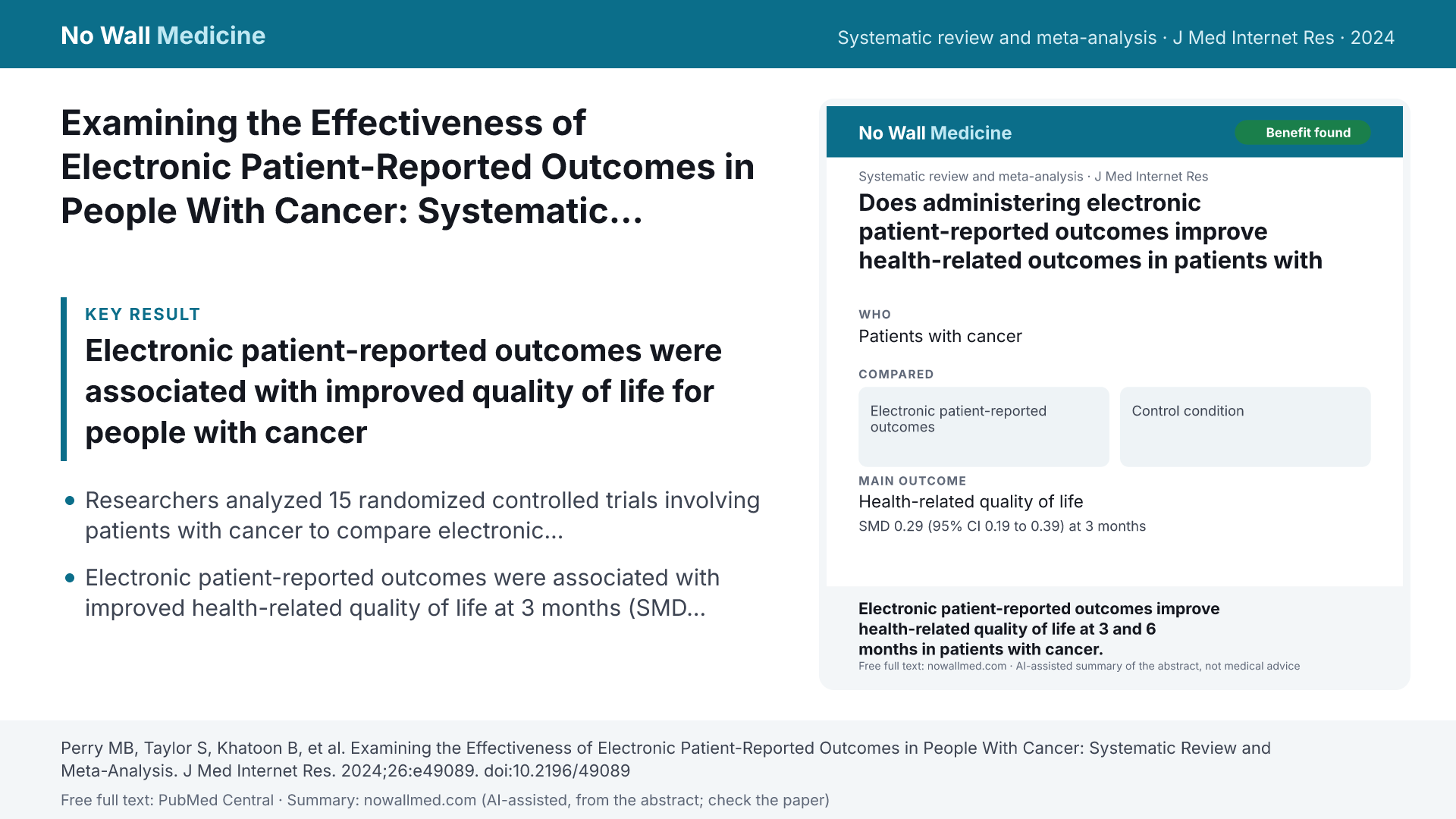
Key result: Electronic patient-reported outcomes were associated with improved quality of life for people with cancer
Systematic review and meta-analysisBenefit found
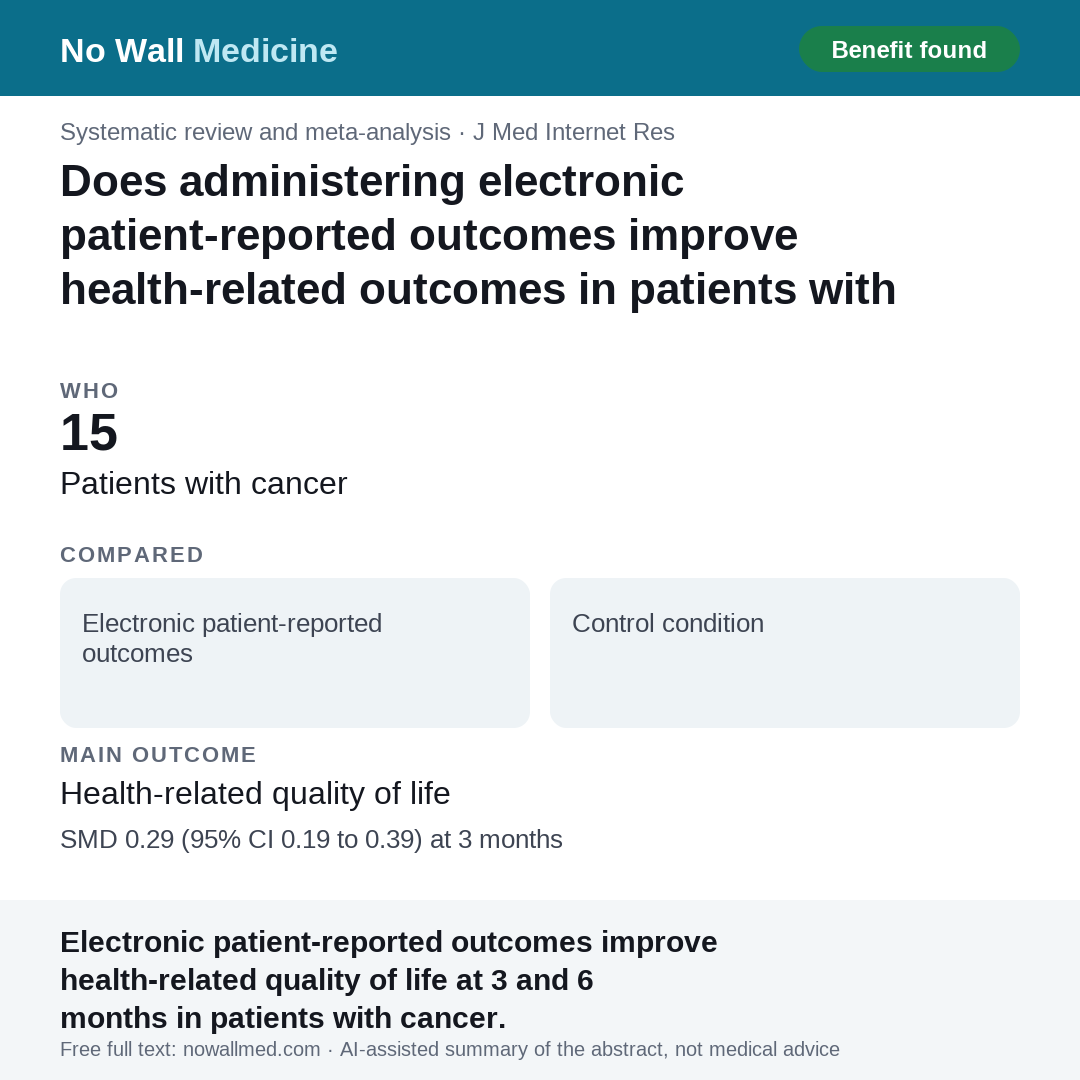
Does administering electronic patient-reported outcomes improve health-related outcomes in patients with cancer?
Who
Patients with cancer
Compared
Electronic patient-reported outcomes
Control condition
Main outcome
Health-related quality of life
Result: SMD 0.29 (95% CI 0.19 to 0.39) at 3 months
Bottom line: Electronic patient-reported outcomes improve health-related quality of life at 3 and 6 months in patients with cancer.
J Med Internet Res · 2024-07-31Download image
Key points
- Researchers analyzed 15 randomized controlled trials involving patients with cancer to compare electronic patient-reported outcomes against control conditions.
- Electronic patient-reported outcomes were associated with improved health-related quality of life at 3 months (SMD 0.29, 95% CI 0.19 to 0.39) and 6 months (SMD 0.21, 95% CI 0.11 to 0.30).
- Of the 15 studies, 60% reported a positive signal on health-related quality of life, with 67% including tailored advice and 67% using clinician alert systems.
Discussion prompts
- Would these patients look like yours? Who was left out?
- Is the main outcome one that matters to patients?
- Is the difference large enough to change what you do?
Cite: Perry MB, Taylor S, Khatoon B, et al. Examining the Effectiveness of Electronic Patient-Reported Outcomes in People With Cancer: Systematic Review and Meta-Analysis. J Med Internet Res. 2024. doi:10.2196/49089
Free full text: PubMed Central · Summary and visual abstract: nowallmed.com/a/examining-the-effectiveness-of-electronic-patient-reported-outcomes-1osh0wh/ (AI-assisted from the abstract; check the paper before relying on it).