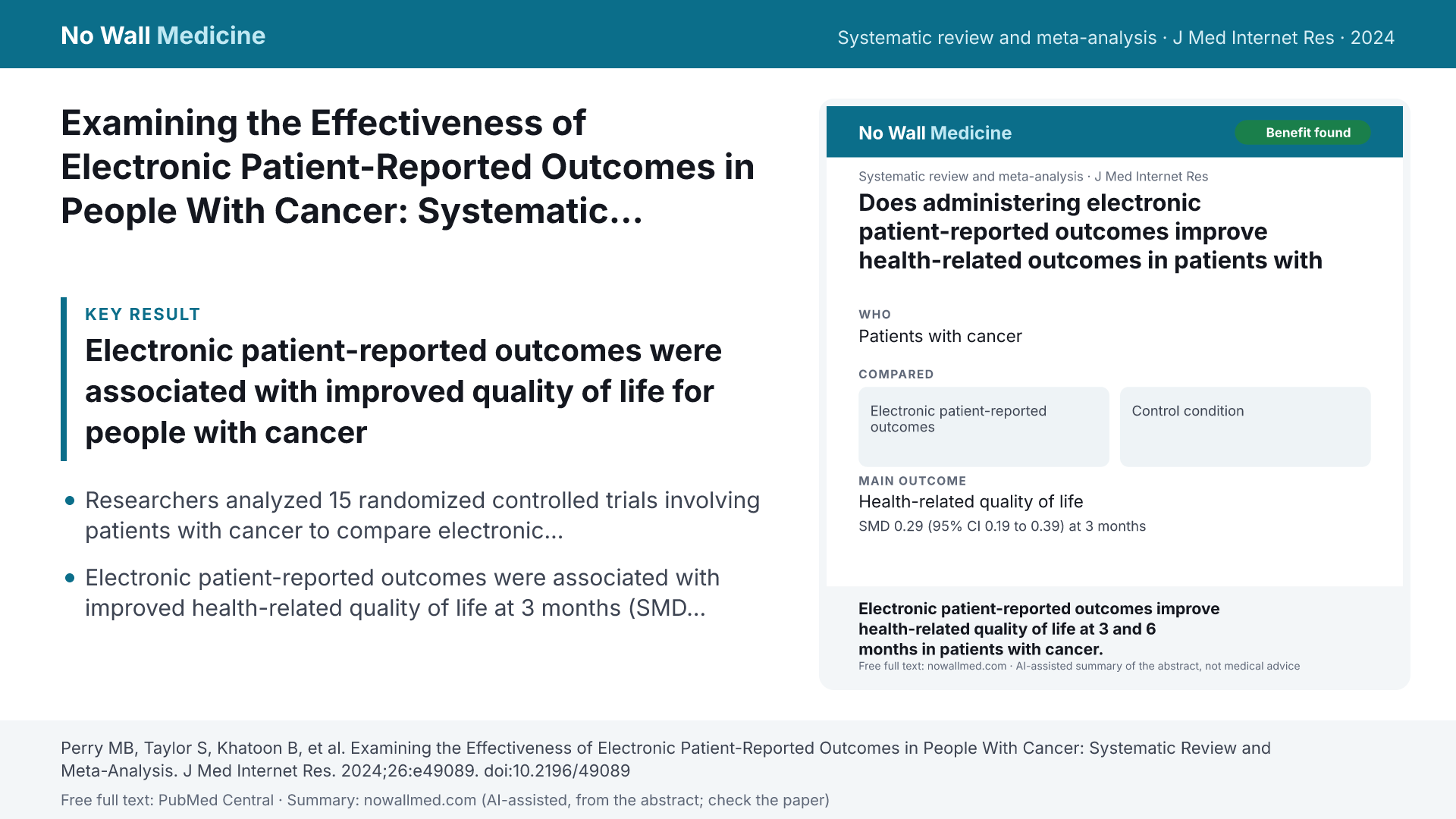
Electronic patient-reported outcomes were associated with improved quality of life for people with cancer
Examining the Effectiveness of Electronic Patient-Reported Outcomes in People With Cancer: Systematic Review and Meta-Analysis
Systematic review and meta-analysisBenefit found
Does administering electronic patient-reported outcomes improve health-related outcomes in patients with cancer?
Who
15
Patients with cancer
Compared
Electronic patient-reported outcomes
Control condition
Main outcome
Health-related quality of life
Result: SMD 0.29 (95% CI 0.19 to 0.39) at 3 months
Bottom line: Electronic patient-reported outcomes improve health-related quality of life at 3 and 6 months in patients with cancer.
J Med Internet Res · 2024-07-31Download image
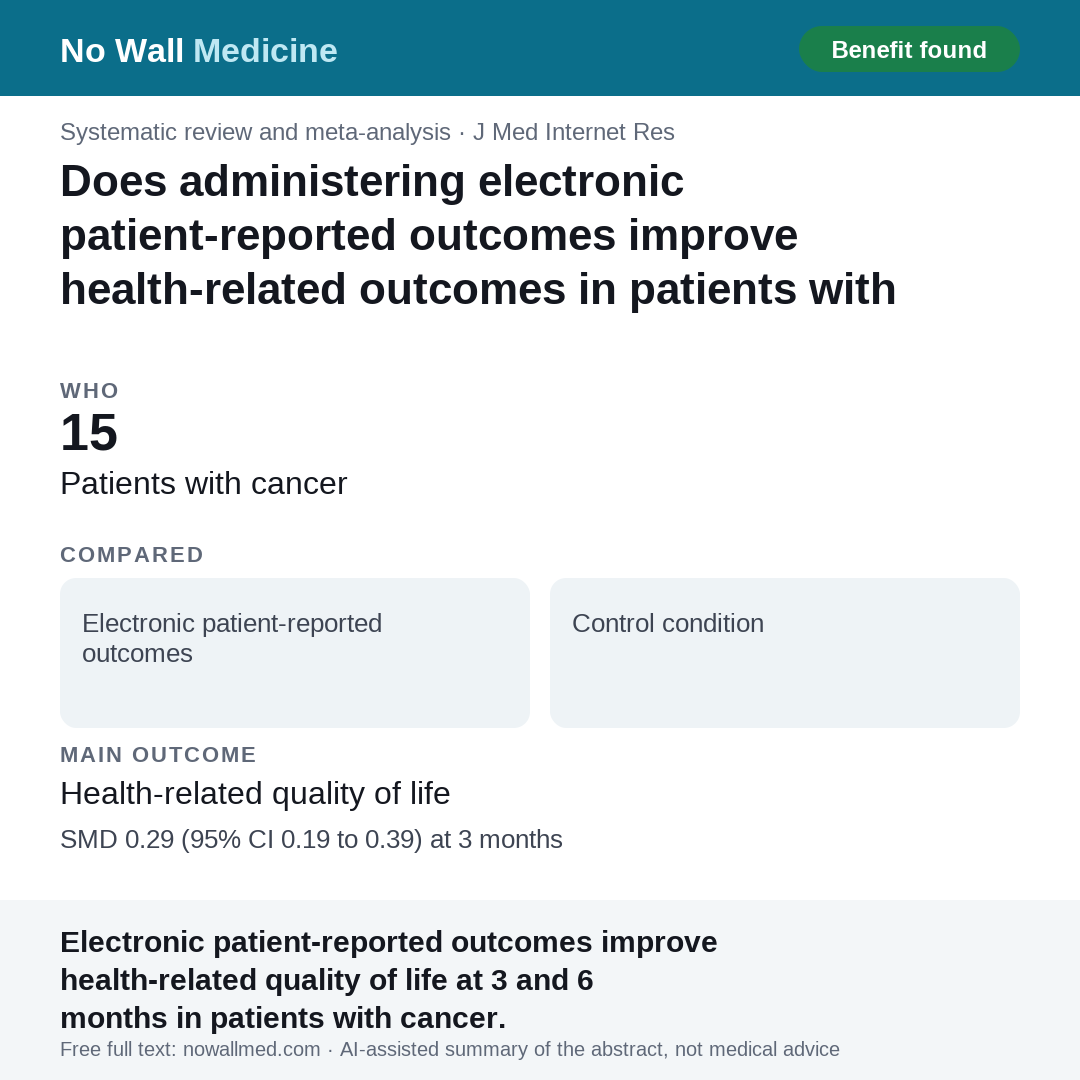
Clinical question: Does administering electronic patient-reported outcomes improve health-related outcomes in patients with cancer?
Why it matters: It was unknown how much administering electronic patient-reported outcomes alone affects health-related quality of life in oncology patients compared to standard care.
Key points
- Researchers analyzed 15 randomized controlled trials involving patients with cancer to compare electronic patient-reported outcomes against control conditions.
- Electronic patient-reported outcomes were associated with improved health-related quality of life at 3 months (SMD 0.29, 95% CI 0.19 to 0.39) and 6 months (SMD 0.21, 95% CI 0.11 to 0.30).
- Of the 15 studies, 60% reported a positive signal on health-related quality of life, with 67% including tailored advice and 67% using clinician alert systems.
Headline and key points written with AI from the paper’s abstract, with every number checked against it. Read the paper before relying on them.
Was this summary helpful?
Subject terms
Cite this article
Perry MB, Taylor S, Khatoon B, Vercell A, Faivre-Finn C, Velikova G. Examining the Effectiveness of Electronic Patient-Reported Outcomes in People With Cancer: Systematic Review and Meta-Analysis. J Med Internet Res. 2024. doi:10.2196/49089
Spotted a mistake? Suggest a correction
Top studies every Monday
The week’s key trials and guidelines in your specialties, plus any topics you follow. By email, free.
Get the weekly digest