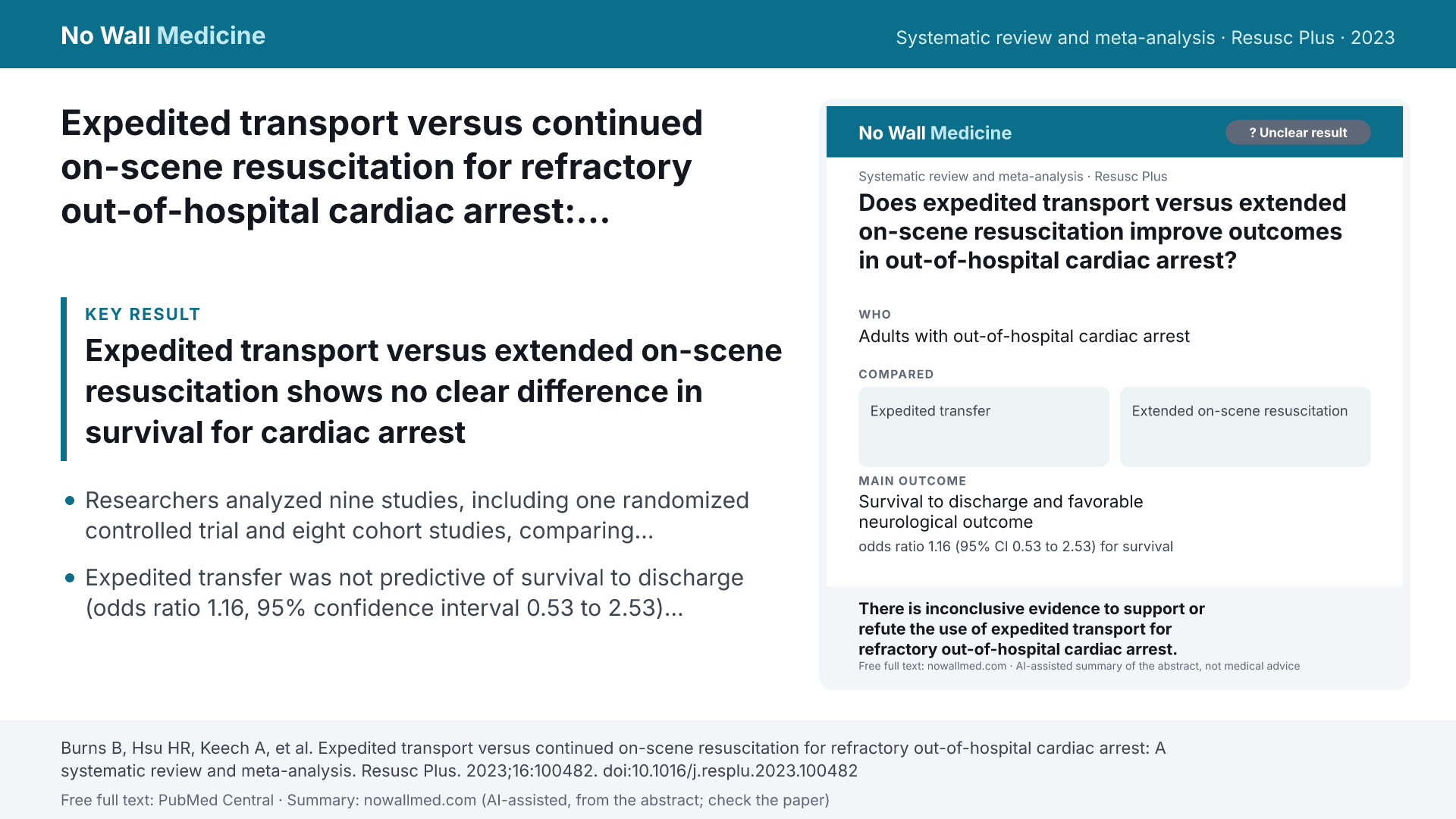
Expedited transport versus continued on-scene resuscitation for refractory out-of-hospital cardiac arrest: A systematic review and meta-analysis
Key result: Expedited transport versus extended on-scene resuscitation shows no clear difference in survival for cardiac arrest
Key points
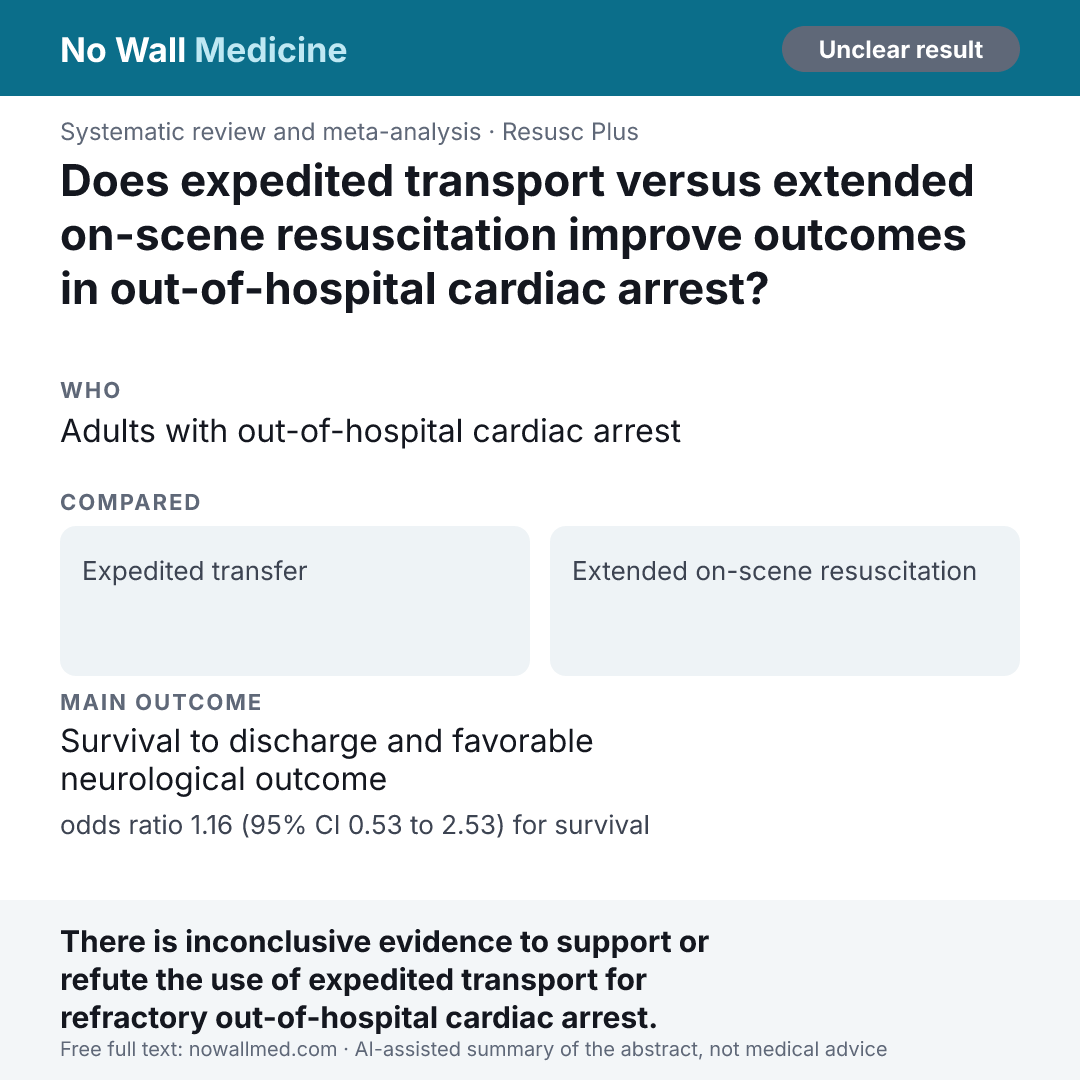
- Researchers analyzed nine studies, including one randomized controlled trial and eight cohort studies, comparing rapid transport to extended on-scene resuscitation for adults in out-of-hospital cardiac arrest.
- Expedited transfer was not predictive of survival to discharge (odds ratio 1.16, 95% confidence interval 0.53 to 2.53) or favorable neurological outcome (odds ratio 1.06, 95% confidence interval 0.48 to 2.37).
- The certainty of evidence across the included studies was assessed as very low with a moderate risk of bias.
Limitation the authors note: The certainty of evidence was very low with a moderate risk of bias and significant heterogeneity caused by the region of publication.
Discussion prompts
- Would these patients look like yours? Who was left out?
- Is the main outcome one that matters to patients?
- Is the difference large enough to change what you do?
Cite: Burns B, Hsu HR, Keech A, et al. Expedited transport versus continued on-scene resuscitation for refractory out-of-hospital cardiac arrest: A systematic review and meta-analysis. Resusc Plus. 2023;16:100482. doi:10.1016/j.resplu.2023.100482
Free full text: PubMed Central · Summary and visual abstract: nowallmed.com/a/expedited-transport-versus-continued-on-scene-resuscitation-for-drh6s0/ (AI-assisted from the abstract; check the paper before relying on it).