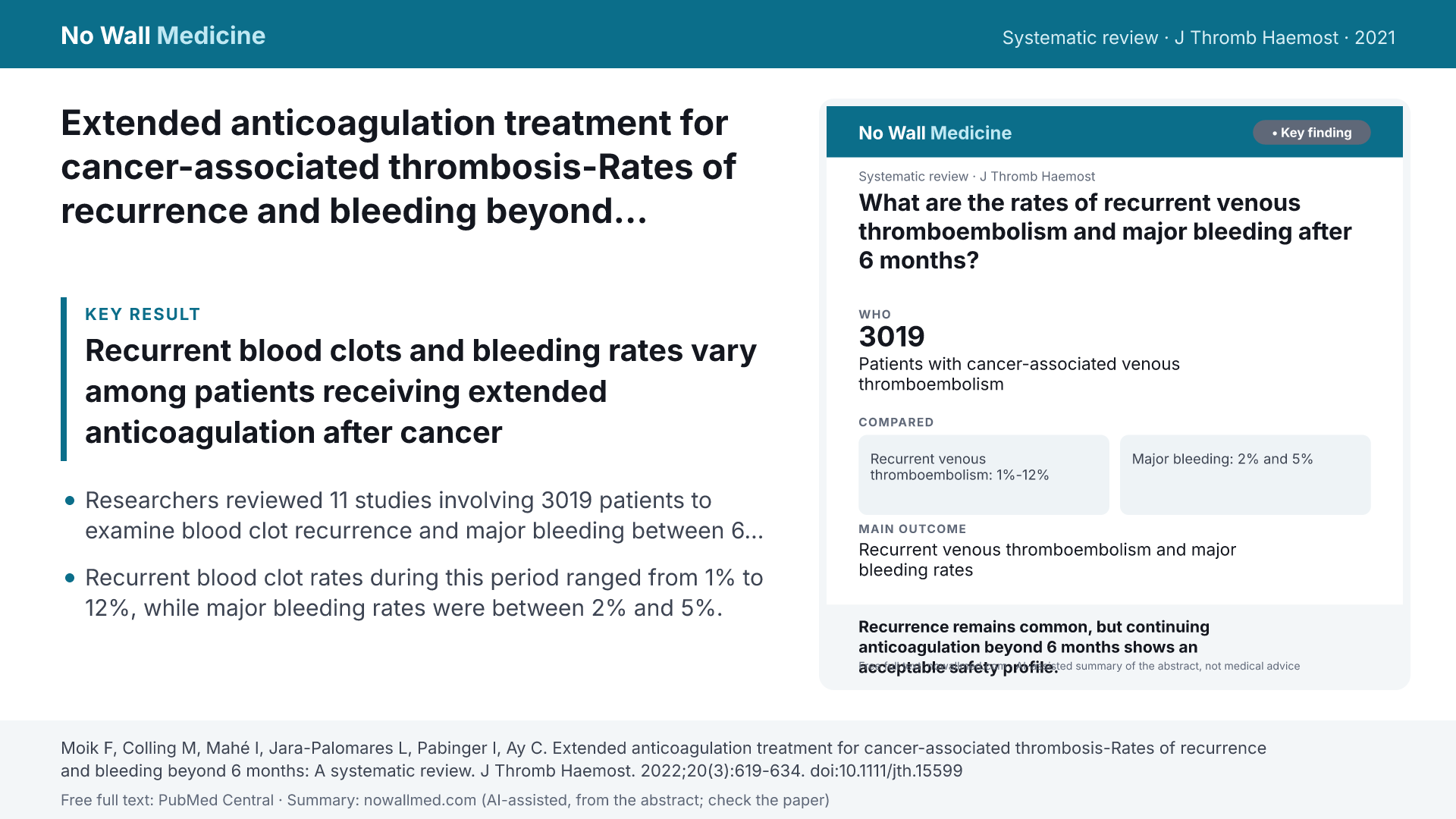
Extended anticoagulation treatment for cancer-associated thrombosis-Rates of recurrence and bleeding beyond 6 months: A systematic review
Key result: Recurrent blood clots and bleeding rates vary among patients receiving extended anticoagulation after cancer
Key points
- Researchers reviewed 11 studies involving 3019 patients to examine blood clot recurrence and major bleeding between 6 and 12 months after a cancer-associated venous thromboembolism diagnosis.
- Recurrent blood clot rates during this period ranged from 1% to 12%, while major bleeding rates were between 2% and 5%.
- The highest risk of recurrent blood clots was 13% to 15% in patients with residual vein thrombosis at 6 months who were randomized to receive no anticoagulation.
Why it matters: Little data exist regarding the incidence of recurrent venous thromboembolism and major bleeding during extended treatment beyond 6 months for patients with cancer-associated blood clots.
Limitation the authors note: No overall quantitative estimate of outcome rates could be calculated due to observed heterogeneity in study design, setting, patient characteristics, anticoagulation strategies, and outcome rates.
Discussion prompts
- Would these patients look like yours? Who was left out?
- Is the main outcome one that matters to patients?
- Is the difference large enough to change what you do?
Cite: Moik F, Colling M, Mahé I, Jara-Palomares L, Pabinger I, Ay C. Extended anticoagulation treatment for cancer-associated thrombosis-Rates of recurrence and bleeding beyond 6 months: A systematic review. J Thromb Haemost. 2022;20(3):619-634. doi:10.1111/jth.15599
Free full text: PubMed Central · Summary and visual abstract: nowallmed.com/a/extended-anticoagulation-treatment-for-cancer-associated-thrombosis-1bxii5a/ (AI-assisted from the abstract; check the paper before relying on it).