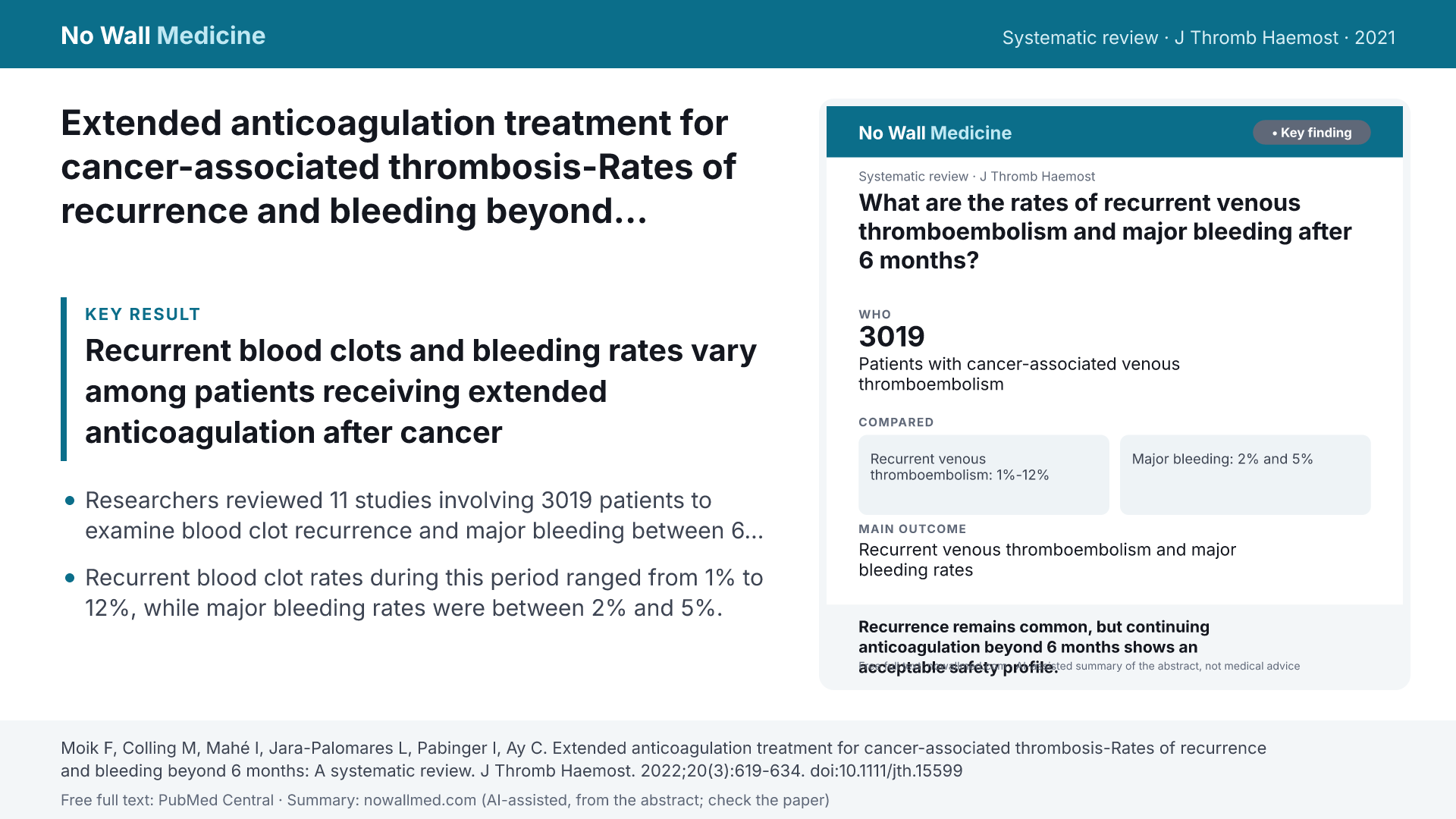
Recurrent blood clots and bleeding rates vary among patients receiving extended anticoagulation after cancer
Extended anticoagulation treatment for cancer-associated thrombosis-Rates of recurrence and bleeding beyond 6 months: A systematic review
Systematic reviewBenefit found
What are the rates of recurrent venous thromboembolism and major bleeding after 6 months?
Who
3019
Patients with cancer-associated venous thromboembolism
Compared
Recurrent venous thromboembolism: 1%-12%
Major bleeding: 2% and 5%
Main outcome
Recurrent venous thromboembolism and major bleeding rates
Bottom line: Recurrence remains common, but continuing anticoagulation beyond 6 months shows an acceptable safety profile.
J Thromb Haemost · 2021-12-08Download image
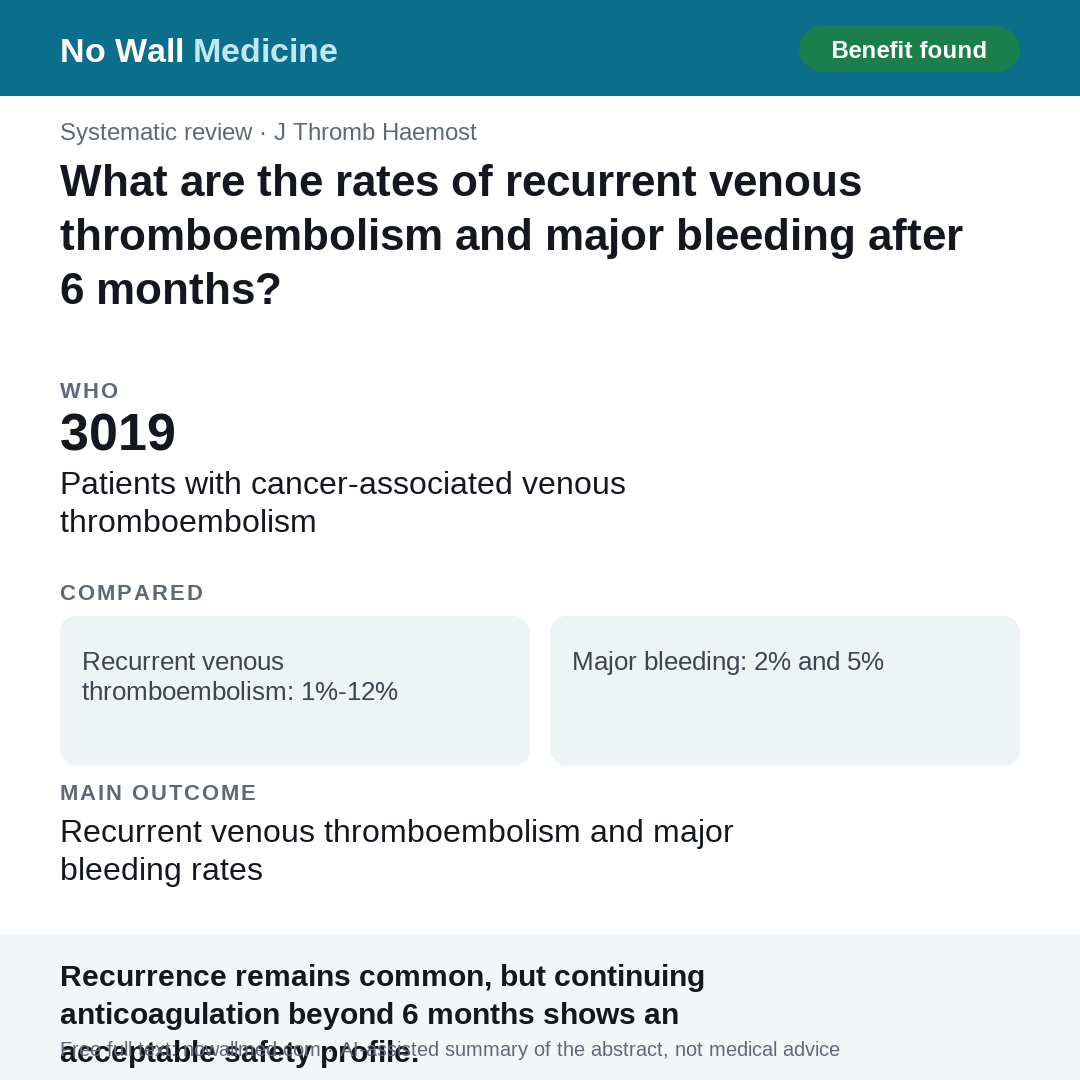
Clinical question: What are the rates of recurrent venous thromboembolism and major bleeding after 6 months?
Why it matters: Little data exist regarding the incidence of recurrent venous thromboembolism and major bleeding during extended treatment beyond 6 months for patients with cancer-associated blood clots.
Key points
- Researchers reviewed 11 studies involving 3019 patients to examine blood clot recurrence and major bleeding between 6 and 12 months after a cancer-associated venous thromboembolism diagnosis.
- Recurrent blood clot rates during this period ranged from 1% to 12%, while major bleeding rates were between 2% and 5%.
- The highest risk of recurrent blood clots was 13% to 15% in patients with residual vein thrombosis at 6 months who were randomized to receive no anticoagulation.
Limitation the authors note: No overall quantitative estimate of outcome rates could be calculated due to observed heterogeneity in study design, setting, patient characteristics, anticoagulation strategies, and outcome rates.
Headline and key points written with AI from the paper’s abstract, with every number checked against it. Read the paper before relying on them.
Was this summary helpful?
Subject terms
Cite this article
Moik F, Colling M, Mahé I, Jara-Palomares L, Pabinger I, Ay C. Extended anticoagulation treatment for cancer-associated thrombosis-Rates of recurrence and bleeding beyond 6 months: A systematic review. J Thromb Haemost. 2021. doi:10.1111/jth.15599
Spotted a mistake? Suggest a correction