Extended Reality Interventions for Health and Procedural Anxiety: Panoramic Meta-Analysis Based on Overviews of Reviews
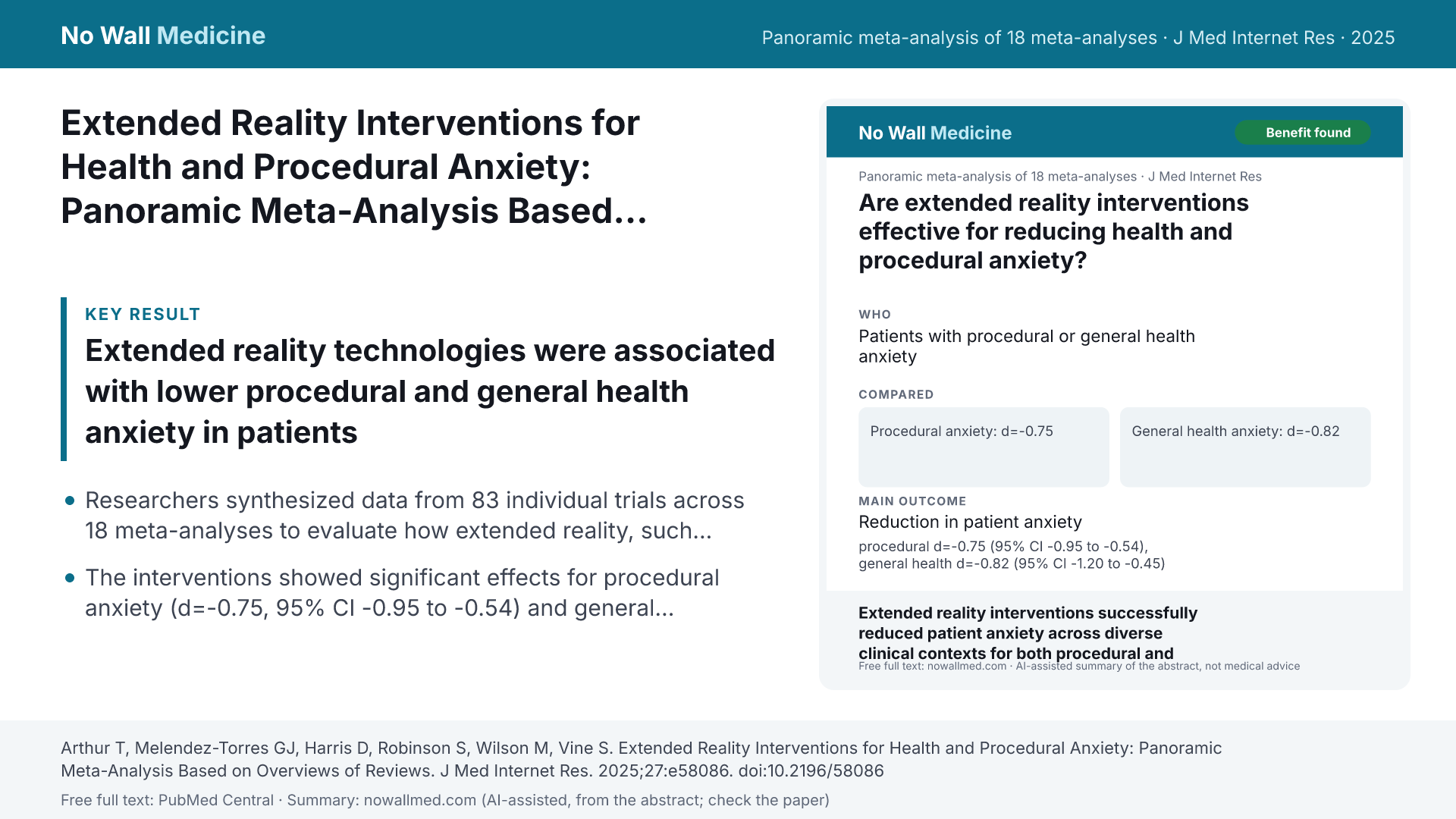
Key result: Extended reality technologies were associated with lower procedural and general health anxiety in patients
Key points
- Researchers synthesized data from 83 individual trials across 18 meta-analyses to evaluate how extended reality, such as virtual or augmented reality, affects patient anxiety.
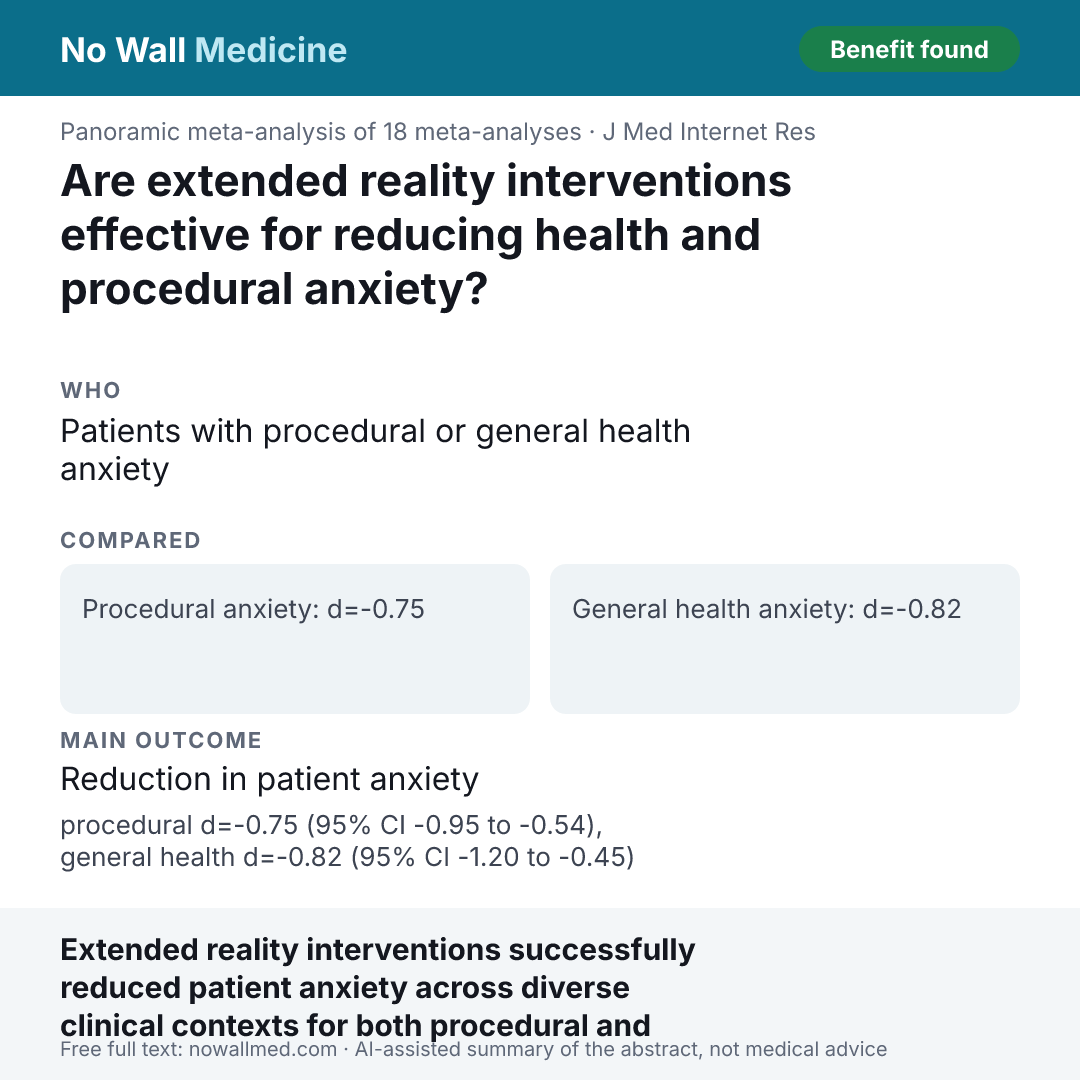
- The interventions showed significant effects for procedural anxiety (d=-0.75, 95% CI -0.95 to -0.54) and general health anxiety (d=-0.82, 95% CI -1.20 to -0.45) compared to usual care.
- For procedural anxieties, effects appeared more pronounced for children compared to adults and for nonimmersive technology compared to immersive technology.
Why it matters: The global effectiveness of extended reality interventions for health and procedural anxiety is uncertain and patient outcomes may vary between different contexts and modalities.
Limitation the authors note: Existing evidence is limited in methodological quality and significant uncertainty remains about the generalizability of effects within various unexplored indications.
Discussion prompts
- Would these patients look like yours? Who was left out?
- Is the main outcome one that matters to patients?
- Is the difference large enough to change what you do?
Cite: Arthur T, Melendez-Torres GJ, Harris D, Robinson S, Wilson M, Vine S. Extended Reality Interventions for Health and Procedural Anxiety: Panoramic Meta-Analysis Based on Overviews of Reviews. J Med Internet Res. 2025;27:e58086. doi:10.2196/58086
Free full text: PubMed Central · Summary and visual abstract: nowallmed.com/a/extended-reality-interventions-for-health-and-procedural-anxiety-66irvy/ (AI-assisted from the abstract; check the paper before relying on it).