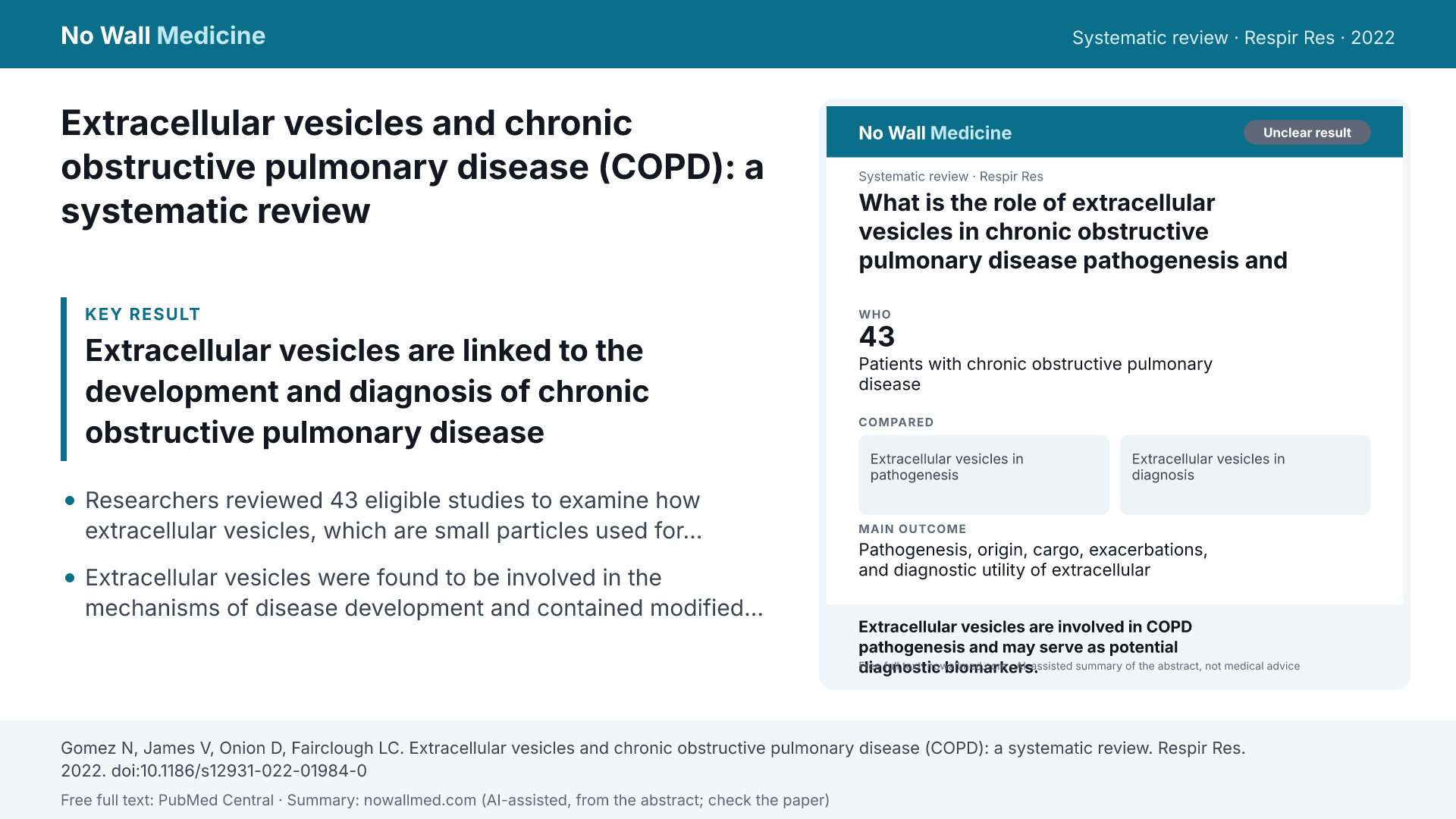
Extracellular vesicles and chronic obstructive pulmonary disease (COPD): a systematic review
Key result: Extracellular vesicles are linked to the development and diagnosis of chronic obstructive pulmonary disease
Key points
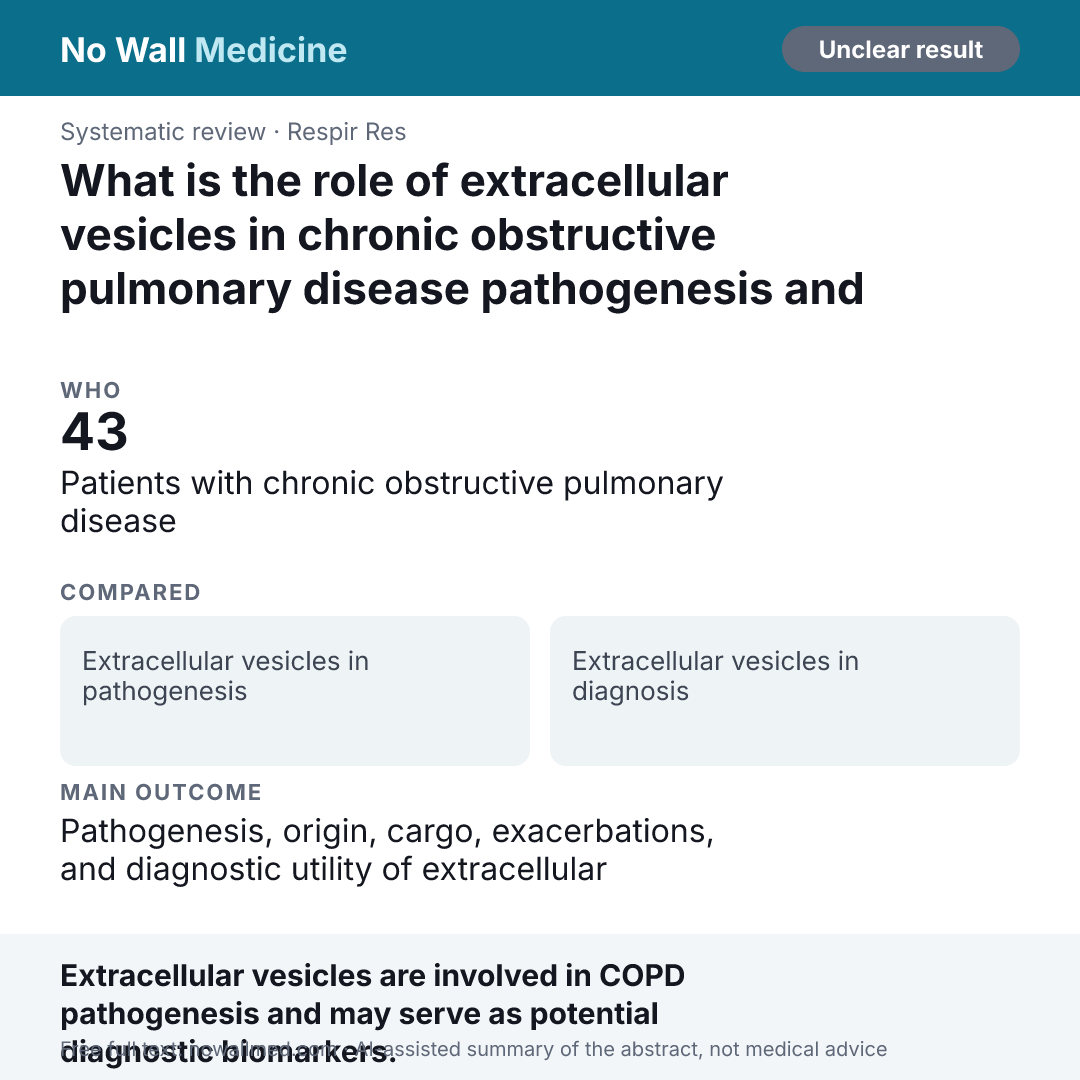
- Researchers reviewed 43 eligible studies to examine how extracellular vesicles, which are small particles used for cell communication, relate to chronic obstructive pulmonary disease.
- Extracellular vesicles were found to be involved in the mechanisms of disease development and contained modified levels of microRNA, a type of molecule that regulates genes.
- The characteristics of these vesicles varied based on the status of the disease, which was associated with potential methods for diagnosis and monitoring disease progress.
Why it matters: The specific role of extracellular vesicles in the development and diagnosis of chronic obstructive pulmonary disease remains to be fully defined.
Limitation the authors note: The authors note that current research on the role of extracellular vesicles in chronic obstructive pulmonary disease is limited.
Discussion prompts
- Would these patients look like yours? Who was left out?
- Is the main outcome one that matters to patients?
- Is the difference large enough to change what you do?
Cite: Gomez N, James V, Onion D, Fairclough LC. Extracellular vesicles and chronic obstructive pulmonary disease (COPD): a systematic review. Respir Res. 2022. doi:10.1186/s12931-022-01984-0
Free full text: PubMed Central · Summary and visual abstract: nowallmed.com/a/extracellular-vesicles-and-chronic-obstructive-pulmonary-disease-copd-smkbsx/ (AI-assisted from the abstract; check the paper before relying on it).